



If you’ve spent any time in your garden over the past couple of summers, chances are you’ve spotted a lanternfly or heard a neighbor complain about them. These striking but troublesome insects have made their way into Maryland, and they’re quickly becoming one of the most talked-about pests among home gardeners and landscapers. Here’s what you need to know to protect your plants and keep these unwelcome visitors from taking over your outdoor space.
What Are Lanternflies and Where Did They Come From?
The Spotted Lanternfly (Lycorma delicatula) is an invasive planthopper native to parts of Asia. It was first detected in the United States, in Pennsylvania, back in 2014, likely arriving amongst shipping containers carrying imported stone or agricultural stock. Since then, it has spread steadily through the Mid-Atlantic region, and Maryland is now well within its established range. Because lanternflies have no natural predators here, populations can grow quickly once they settle into an area.
Life Cycle: Eggs to Nymphs to Adults
Lanternflies typically lay their egg masses in the fall and hatch the following spring. Nymphs emerge and begin feeding through late spring and summer, molting through several stages before reaching adulthood by mid to late summer. Adults are most active from July through the first hard frost, feeding heavily and laying next year’s eggs before the season ends.
How to Identify Them
Spotted Lanternflies go through a dramatic transformation as they grow, so knowing what to look for at each stage is key.
- Eggs: Laid in flat, grayish-brown masses that resemble dried mud or putty, often found on tree trunks, rocks, or outdoor furniture.
- Nymphs (early stage): Small, black bodies with white spots.
- Nymphs (later stage): Turn bright red with black and white markings before maturing.
- Adults: About an inch long, with tan forewings covered in black spots and hindwings that flash bright red and black when in flight.


The Dangers of Lanternflies
Lanternflies feed by piercing plant tissue and sucking out the sap, which weakens plants by draining them of vital nutrients. As they feed, they excrete a sticky substance called honeydew, which coats leaves, patios, and outdoor furniture. This honeydew often leads to sooty mold growth and attracts bees, wasps, ants, and other insects looking for an easy meal. While a single season of feeding may not kill an established plant, heavy infestations over multiple years can seriously stress and weaken host trees and shrubs.
Where they attack: Lanternflies show a strong preference for Tree-of-Heaven (Ailanthus altissima), an invasive tree that also happens to be their favorite host. Beyond that, they’ll feed on landscape trees, fruit crops like grapes and stone fruits, and many ornamental plants.
What This Means for Your Garden
Lanternflies primarily target trees, shrubs, and woody plants and are far less interested in most herbaceous perennials and annual flowers. That said, home landscapes with mature trees, grapevines, or a nearby Tree-of-Heaven are especially attractive to them, so those properties tend to see the heaviest activity.
What You Can Do
- Destroy egg masses. From fall through early spring, scrape egg masses off trees and hard surfaces into a container of rubbing alcohol to kill them before they hatch.
- Kill nymphs and adults. Stomping on them, spraying soapy water directly onto them, or vacuuming them up are all effective methods. A water bottle with a bit of soapy water can also work well for catching ones that crawl.
- Remove host plants. Getting rid of Tree-of-Heaven and other heavily infested host plants reduces local populations, but be sure to get them removed properly, by a professional (cutting alone can cause regrowth, so stump treatment with herbicide is often necessary).
- Watch what you move. Avoid transporting lanternflies in vehicles, on outdoor equipment, or in firewood, since this is one of the main ways they spread to new areas.
- Use this checklist from the Maryland Department of Agriculture to help ensure you don’t accidentally transport a spotted lanternfly.
Safe Management Options
- Keep plants healthy. Well-watered, properly fertilized plants are better able to withstand feeding pressure.
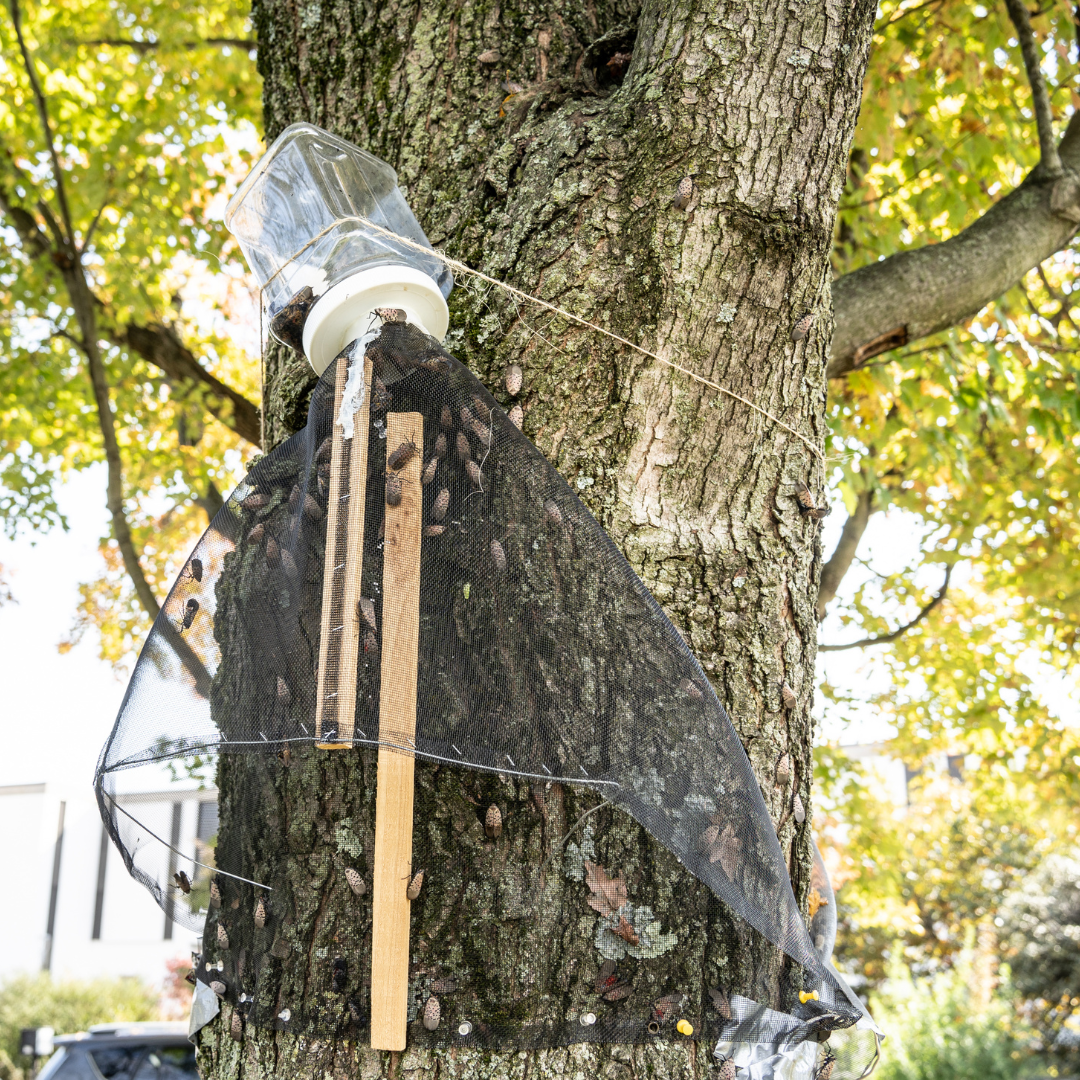
- Mechanical controls. Circle traps and sticky bands wrapped around tree trunks can catch nymphs as they climb. Just be sure to use bands with wildlife guards to prevent accidentally trapping birds and other animals.
- Chemical controls. Insecticides can be effective for severe infestations. We carry a variety of treatment options, and our team is happy to help you choose the right product for your situation. Always read and follow label instructions carefully, and reserve chemical treatments for cases where populations are truly out of hand.
- Some of the products we carry are:
- Concentrates: Bonide Systemic Insect Control, Bonide Pyrethrin Garden Spray Concentrate
- Spray Bottles: Bonide Eight Insect Control for Garden & Home, Bonide Japanese Beetle Killer
- Hose End: Amdro Quick Kill Insect Killer for Lawn & Landscape, Garden Tech Sevin Insect Killer, Bonide Eight Yard & Garden
- Some of the products we carry are:
FAQ
Do spotted lanternflies bite or sting? No. They feed on plants, not people or animals, and pose no direct physical threat to humans or pets.
Can they fly? They can, though not particularly well. Lanternflies are better known for hopping and gliding short distances than for sustained flight.
Do they kill trees or host plants? Rarely outright, but repeated heavy feeding over several seasons can stress and weaken trees, making them more vulnerable to disease and other pests.
Should I report sightings? Yes. Maryland’s Department of Agriculture encourages residents to report sightings, which helps track the spread and target management efforts. You can report spotted lanternfly sightings through the Maryland Department of Agriculture’s form.
-
- Note: The Maryland Department of Agriculture does not have the resources for any residential treatment of spotted lanternflies at this time.
Tips for Protecting Your Landscape
- Inspect trees regularly for signs of feeding or egg masses.
- Remove egg masses whenever you find them.
- Eliminate Tree-of-Heaven (Ailanthus altissima) from your property when possible.
- Keep your plants healthy to help them withstand stress.
- Monitor closely from late spring through fall, when lanternflies are most active.
- Learn to identify each life stage so you can act early.

Monitor Early, Manage Effectively
Spotted Lanternflies are here to stay in Maryland, but with a little vigilance, you can keep them from doing serious damage to your garden. Regular inspections, prompt removal of egg masses, and healthy plant care go a long way toward protecting your landscape. If you’re dealing with a heavy infestation or just want help choosing the right treatment, stop by our nursery, where our team is always here to help you keep your garden thriving!
Leave a Comment
You must be logged in to post a comment.