



For decades, Maiden Grass (Miscanthus) and Fountain Grass (Pennisetum alopecuroides) have been go-to ornamental grasses for Maryland landscapes. It’s easy to see why: both form dense, arching clumps that move beautifully in the wind, and both have showy plumes in late summer that catch the light and hold through fall. They tolerate poor soil, are drought-tolerant once established, and deer leave them alone. For a plant that requires so little maintenance and delivers so much movement and texture, it’s no wonder these grasses have shown up in foundation beds, borders, and mass plantings across the region for generations.
The trouble is what happens after those plumes go to seed. Both grasses are prolific self-seeders, and their lightweight, wind-borne seeds don’t stay where they’re planted. They travel into meadows, roadsides, stream corridors, and forest edges, where they germinate readily and form dense monocultures that crowd out native grasses and wildflowers. What looks like a well-behaved clump in your border is, at the landscape scale, a seed source working against the natural areas around it.
Maryland has been tightening the rules around both grasses. The Maryland Department of Agriculture’s July 2026 update to the Prohibited Invasive Plant List confirmed both species as prohibited, joining Nandina and Burning Bush among others. The good news is that nothing about the look you love has to disappear from your garden. Maryland’s native grasses match or beat these two on movement, texture, fall color, and winter interest, without the seeding problem. Here’s what to plant instead.
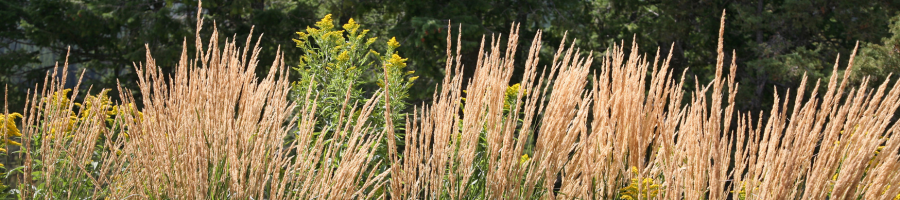

Switchgrass (Panicum virgatum)
Switchgrass is the most direct native swap for Maiden Grass (Miscanthus sinensis) in terms of size and landscape presence. It forms tall, upright clumps of fine-textured blue-green foliage that turn gold, orange, or burgundy depending on the cultivar, and by late summer it sends up airy, cloud-like seed heads that catch light the same way Miscanthus plumes do. It’s deeply rooted and drought-tolerant, tolerates both wet and dry sites, and stands up well to winter storms without flopping. As a bonus, its seed is a genuine food source for native birds rather than a liability.
Indian Grass (Sorghastrum nutans)
For gardeners who loved Miscanthus for its height and its warm, golden late-season color, Indian grass is the closest match on this list. It grows in tall, narrow, upright clumps of blue-green foliage that turns a rich copper-gold in fall, topped by feathery, coppery-bronze seed plumes that hold their color well into winter. It’s a true prairie native, so it’s built for tough sites: full sun, poor soil, and drought are exactly where it performs best.


Karl Foerster Feather Reed Grass (Calamagrostis x acutiflora ‘Karl Foerster’)
This is the grass to reach for when you want the strict, vertical accent that Fountain and Maiden Grasses sometimes provide, without any risk of it spreading. Karl Foerster is a sterile cultivar, meaning it produces its narrow, upright, wheat-colored seed plumes purely for show. It holds a tight, columnar form from early summer through winter, never flops, and works equally well as a single accent or a repeated screen along a border.
Muhly Grass (Muhlenbergia capillaris)
If Fountain Grass’s soft, plumy texture is what you’re after, Muhly grass delivers it and then some. In fall, this native grass throws up a cloud of airy, pink-to-purple seed heads that seem to hover above the foliage, giving beds and mass plantings a haze of color that few other plants can match. It’s compact, drought-tolerant once established, and just as low-maintenance as fountain grass, but it stays where you put it.


Prairie Dropseed (Sporobolus heterolepis)
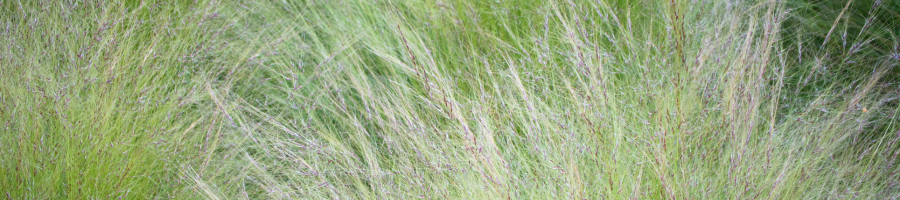
Prairie dropseed is a Maryland native that forms a fine-textured, graceful mound of arching foliage, and in late summer it sends up delicate, airy flower heads that hover above the leaves like a fine mist. It brings the texture and movement of fountain grass without the bulk, making it a great fit for smaller beds, borders, or any area where a lighter touch is needed. It’s tough, drought-tolerant, and holds its shape through winter.
Autumn Moor Grass (Sesleria autumnalis)
Autumn moor grass isn’t native to Maryland, but it’s well-behaved and non-invasive, forming a neat, clumping mound of bright chartreuse-green foliage. In late summer, it produces airy flower heads that rise just above the foliage, offering a softer, more refined alternative to fountain grass. It’s compact, adaptable to sun or part shade, and works well as edging or in mass plantings where a tidier, more restrained texture is the goal.


Bonus Plant: Northern Sea Oats (Chasmanthium latifolium)
Northern Sea Oats fill a niche neither Maiden nor Fountain Grasses handle well: shade. Where those two grasses need full sun to perform, this native thrives in part shade to shade, making it a strong option for the woodland edges and shadier borders where gardeners sometimes stretch Maiden Grass’s tolerance. Its broad, bamboo-like foliage turns copper in fall, and its dangling, oat-like seed heads add movement and sound in even a light breeze, drying beautifully for use in arrangements.
Making the Swap
Every grass on this list gives you what drew you to Maiden and Fountain Grasses in the first place, whether that’s height, movement, feathery plumes, or fall color, without sending seed into the meadows and stream banks around your property. With both species now confirmed for the state’s prohibited-for-sale list, this is a good season to get ahead of the phase-out and start replacing them with native grasses that will keep doing the job in your landscape for decades to come.
As always, our nursery staff is available for assistance with any garden needs.
Leave a Comment
You must be logged in to post a comment.