



Virginia Bluebells
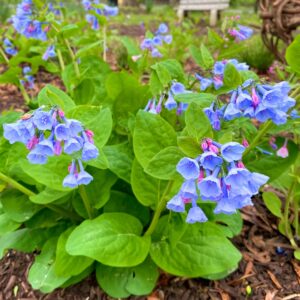
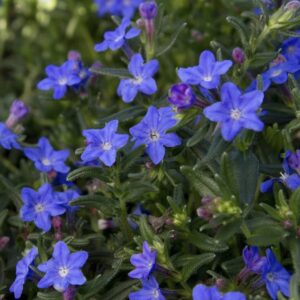
Mertensia virginicaVirginia Bluebells are a beloved native woodland perennial known for their soft, bell-shaped blooms and ability to brighten shaded garden areas in early spring. This plant produces clusters of nodding, tubular flowers that open pink in bud and quickly mature to a clear sky blue. The color transition often creates a mixed display of pink, lavender, and blue tones on the same plant at the same time, giving it a delicate, watercolor-like effect in the landscape.
As a spring ephemeral, Virginia Bluebells emerge early in the season, form foliage and flowers quickly, then naturally go dormant by early to mid-summer as temperatures rise. The foliage consists of smooth, oval-shaped leaves in a soft green shade that forms attractive mounds before dying back. Because of this growth cycle, they are best paired with later-emerging perennials that will fill in the space once they go dormant.
Virginia Bluebells thrive in partial shade to full shade and prefer rich, moist, well-drained soil high in organic matter. They are especially well-suited for woodland gardens, shaded borders, and naturalized plantings where soil moisture remains consistent in spring. Once established, they can slowly spread through self-seeding and rhizomes, forming beautiful drifts over time without becoming aggressive.
Care Instructions:
Planting: Plant in partial to full shade in a location with moist, rich soil.
Soil: Use humus-rich, well-drained soil that retains moisture in spring.
Watering: Keep soil evenly moist during active spring growth and reduce watering as plants go dormant.
Fertilizing: Generally not required in fertile soil. Amend the soil with compost if needed.
Pruning: Do not cut back foliage until it has fully yellowed and died back naturally.
Spacing: Space plants 12–18 inches apart to allow for natural spreading.
Maintenance: Allow natural dieback in summer and avoid disturbing dormant crowns.
These plants are an important early-season nectar source for pollinators, especially honey bees and butterflies emerging in spring. Their natural woodland habit also makes them an excellent choice for supporting native plant ecosystems and enhancing biodiversity in shaded garden spaces.