

Caucasian Stonecrop
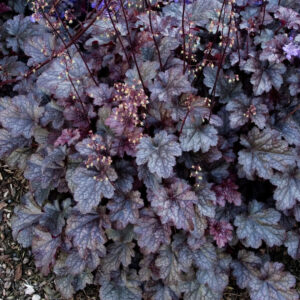
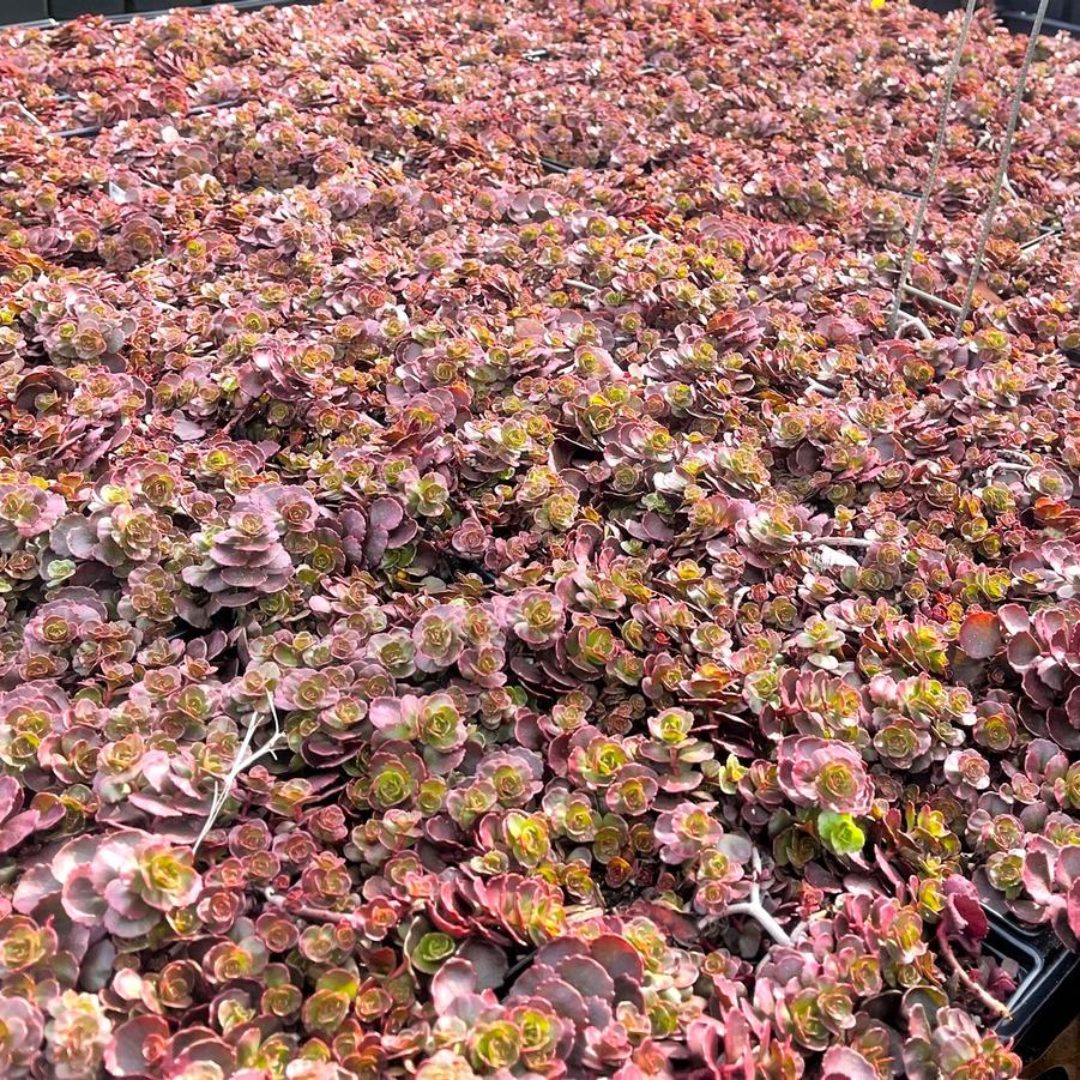
Sedum spurium 'Fuldaglut', Sedum spurium, Phedimus spuriusCaucasian Stonecrop (Sedum spurium ‘Fuldaglut’) is a low-growing, mat-forming perennial with circular leaves arranged along spreading, rooting stems. Medium green foliage develops reddish margins and can deepen to burgundy in fall, while small, star-shaped pinkish-red flowers appear above the foliage in summer. Its succulent texture and creeping habit give it a tidy, durable appearance suited to areas where a low-growing plant is needed.
Reaching only about 3–6 inches tall, Caucasian Stonecrop spreads to roughly 18–24 inches wide, forming a dense carpet as stems root where they contact the soil. Its compact growth makes it useful along the front of beds and borders, around rocks, on sunny banks and slopes, and in small spaces where taller plants would overwhelm the area. It can also be grown in containers or allowed to trail over stone walls, adding low-maintenance texture to hardscape plantings.
This stonecrop performs best in full sun and well-drained soil, particularly sandy, gravelly, shallow, or rocky conditions. It tolerates dry soil and drought and should not be overwatered, making good drainage especially important. Acidic, neutral, or alkaline conditions can be tolerated, depending on the growing site. Watering should be reduced once established, and fertilizer is generally unnecessary in average soils. Trim plants after flowering when needed to maintain their shape and remove stems that extend beyond the desired planting area.
Care Instructions:
Planting: Plant in full sun with the crown at soil level and allow room for its creeping stems to spread.
Soil: Use well-drained loam or sand. Avoid consistently wet conditions.
Watering: Water during establishment, then allow soil to dry between waterings.
Fertilizing: Fertilize sparingly; overly rich conditions are unnecessary.
Pruning: Trim back after flowering to maintain a neat shape.
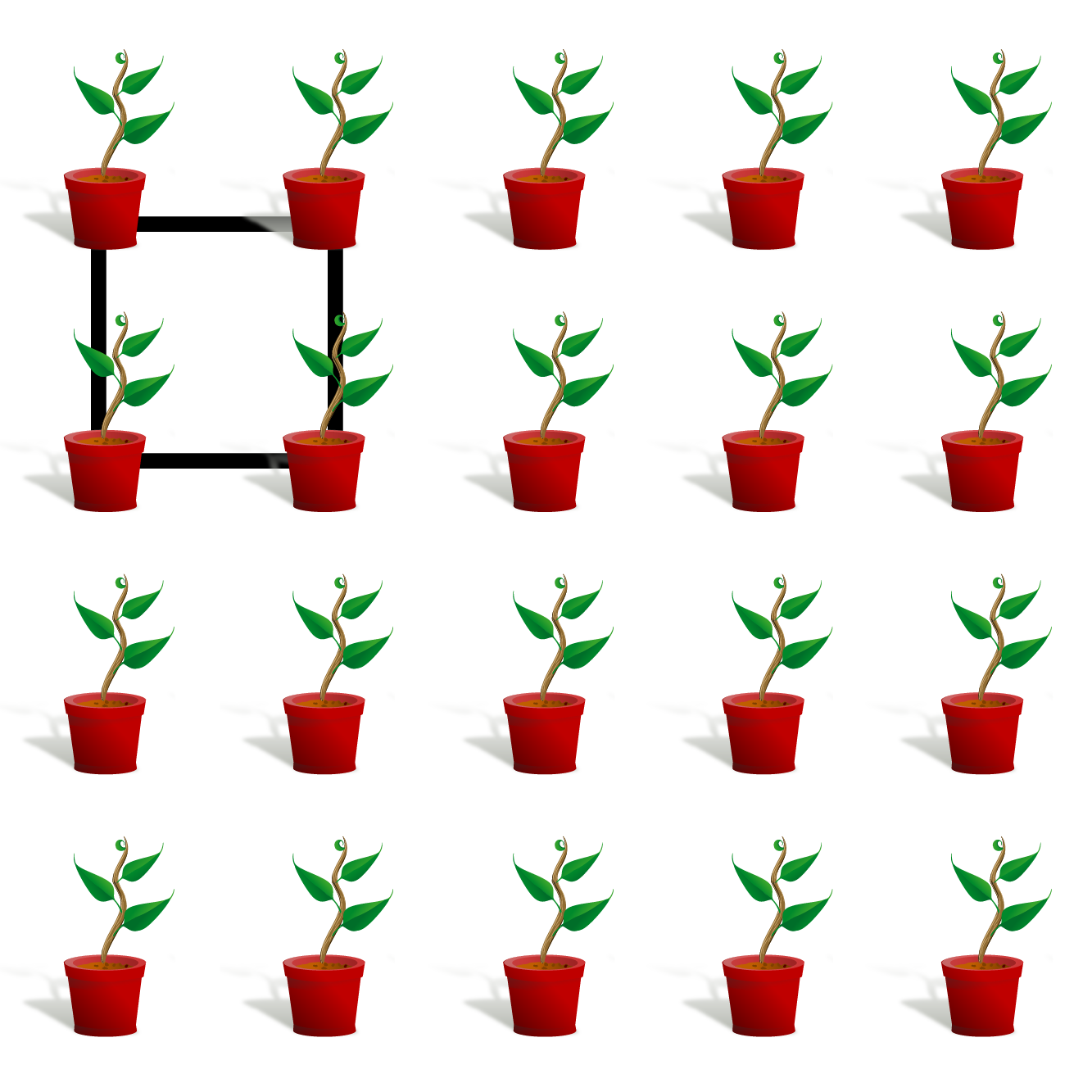
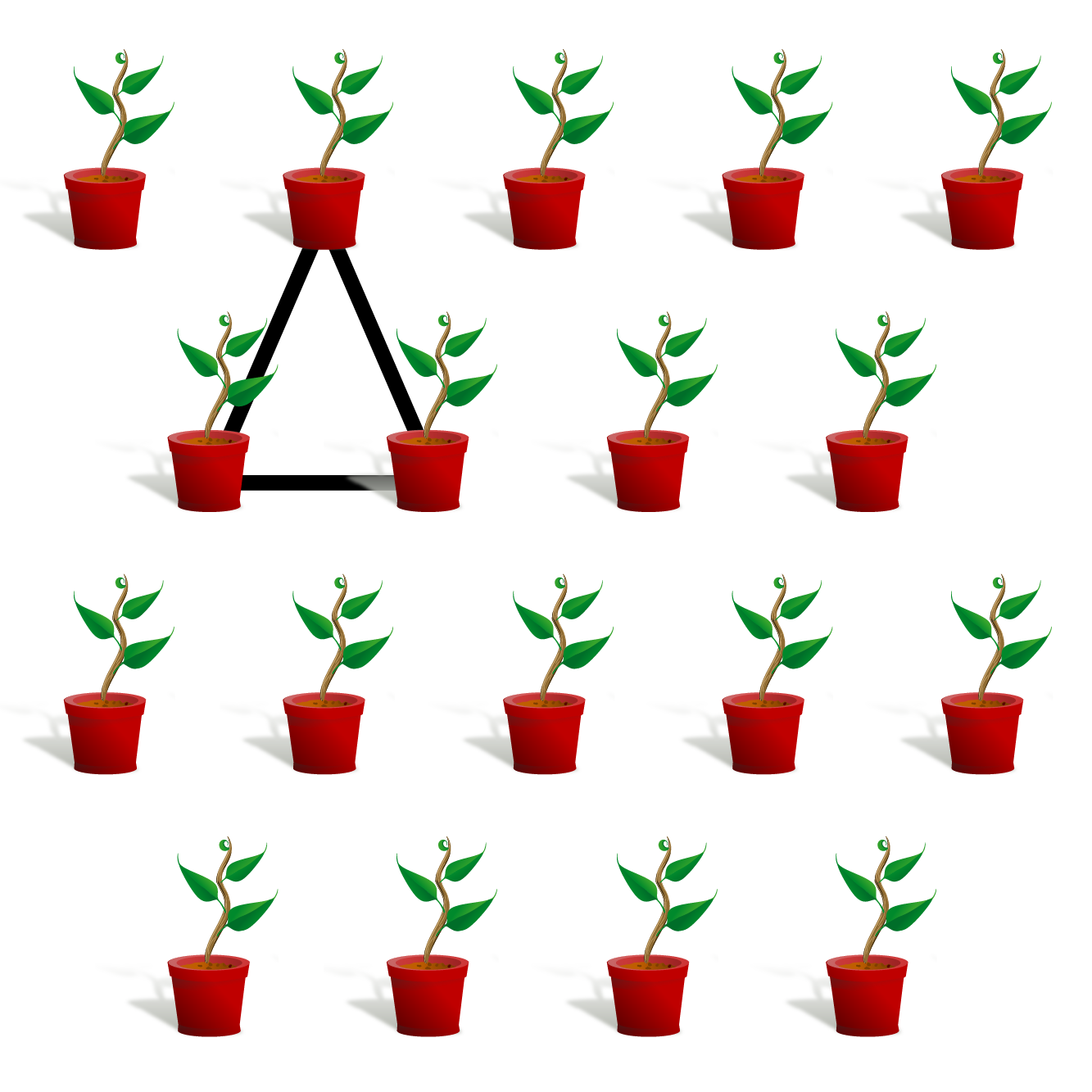
Spacing: Plant 1′ – 2′ (ft) apart.
Maintenance: Remove damaged or unwanted stems and trim spreading growth when it moves beyond the intended planting area.
Its combination of succulent foliage, spreading growth, drought tolerance, and summer flowers makes Caucasian Stonecrop a dependable choice for challenging sunny spaces. The plant is especially valuable where a low groundcover is needed without introducing a tall or demanding perennial. Its ability to tolerate dry, poor, sandy, and rocky conditions also makes it well suited to rock-oriented plantings and difficult slopes. Butterflies are attracted to its flowers, adding seasonal wildlife interest to its compact footprint.
Landscape Solutions
- Helps cover sunny banks and slopes with a spreading, rooting growth habit.
- Adds vegetation to dry, rocky, sandy, or shallow-soil locations.
- Provides a compact option for patio containers and stone-wall plantings.