

Jewel Black Raspberry
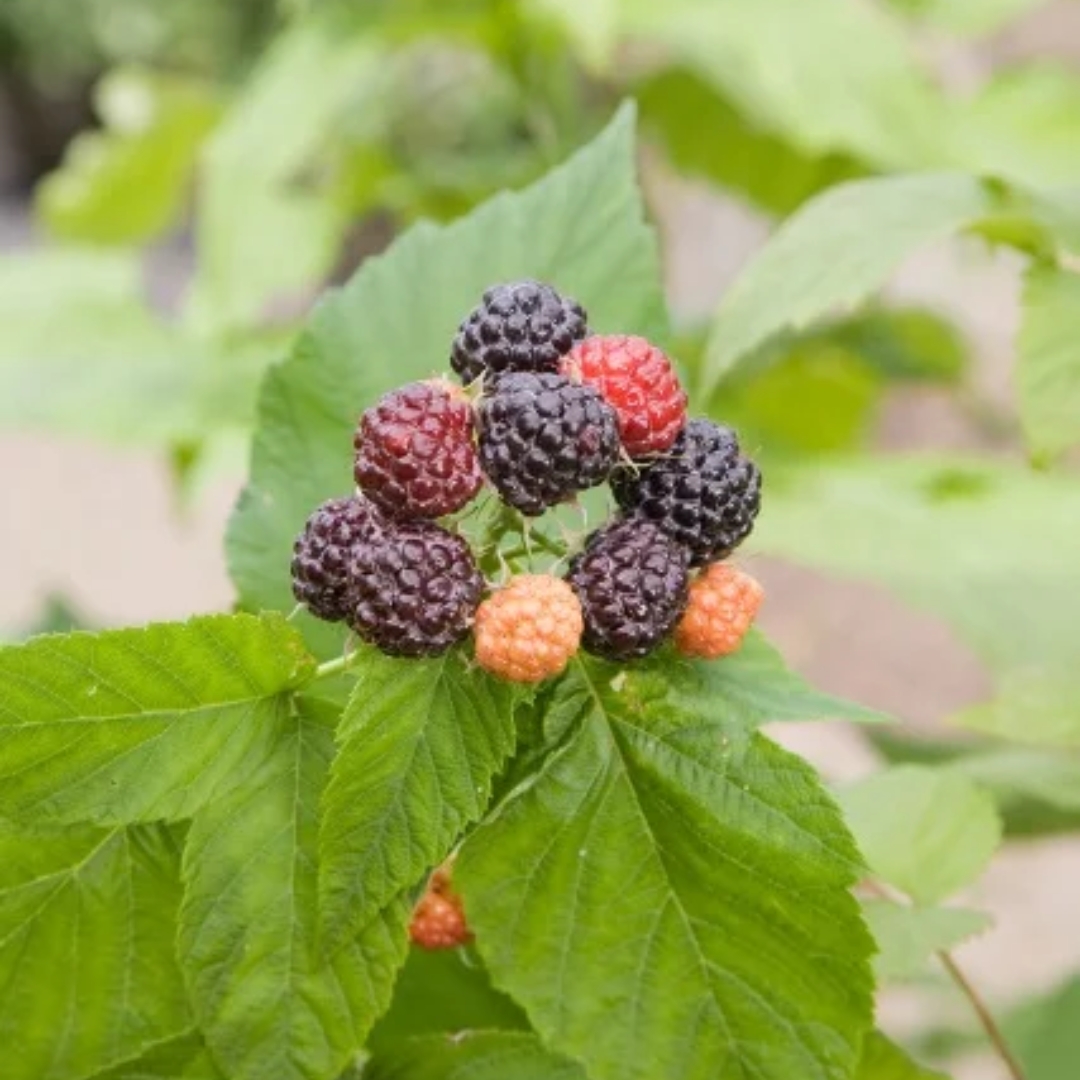
Rubus occidentalis ‘Jewel’Jewel Black Raspberry is a classic, highly productive berry shrub known for its large, glossy black fruit and rich, sweet flavor. This dependable cultivar produces abundant harvests of black raspberries that are excellent for fresh eating, baking, jams, jellies, and preserves. The fruit’s striking dark color and juicy sweetness make it extremely versatile in the kitchen and a favorite among home gardeners and berry enthusiasts alike.
In spring, Jewel produces a profusion of small, delicate white blossoms that attract pollinators such as bees, enhancing both the garden’s ecological value and its ornamental appeal. As the season progresses, those flowers give way to fruit in mid-summer, often ripening from June into early July in many climates. The berries are typically glossy and firm, with a berry-sweet flavor that stands out in both fresh applications and cooked or preserved preparations.
Jewel Black Raspberry generally forms a vigorous, upright shrub. Mature plants often reach 3–5 feet tall and 3–4 feet wide, depending on site conditions and pruning, and fit well into edible gardens, mixed borders, or berry patches. Its vigorous canes and strong growth make it suitable for trellising or support if desired, though it can also stand alone in rows or as part of multi-variety berry plantings.
A North American native species, Rubus occidentalis forms the genetic background for Jewel and other black raspberry cultivars, lending regional adaptability and hardiness. Jewel’s strong disease resistance and winter hardiness make it a reliable choice for diverse growing regions, provided basic soil and moisture needs are met.
Care Instructions:
Planting: Choose a location with full sun exposure for best berry production and branch strength. Partial sun is tolerated but may reduce fruit yields.
Soil: Plant in fertile, mildly acidic, well-drained soil rich in organic matter. Raspberries dislike soggy or poorly drained conditions.
Watering: Water deeply and regularly during the first growing season to establish a strong root system, then maintain even moisture during flowering and fruit development.
Fertilizing: Apply a balanced, slow-release fertilizer for fruiting plants in early spring before new growth begins. Avoid high nitrogen late in the season.
Mulching: Apply a 2–3″ layer of organic mulch around the base to conserve moisture and suppress weeds. Keep mulch away from canes.
Pruning: After harvest, prune back older canes that have fruited down to the ground, leaving the vigorous one-year-old canes to produce next season’s crop.
Spacing: Space plants 3–4 ft apart to allow airflow and room for mature growth.
Maintenance: Remove dead canes yearly and monitor for common raspberry pests such as cane borers or fungal diseases.
Pollinator Required: Yes. This plant is self-fertile but benefits from pollinator activity. Planting companion raspberry varieties nearby can enhance yields.
Whether you’re establishing a productive berry patch, enriching a pollinator garden, or planting an edible border, Jewel Black Raspberry offers exceptional flavor, ecological value, and seasonal interest from flower to fruit.