

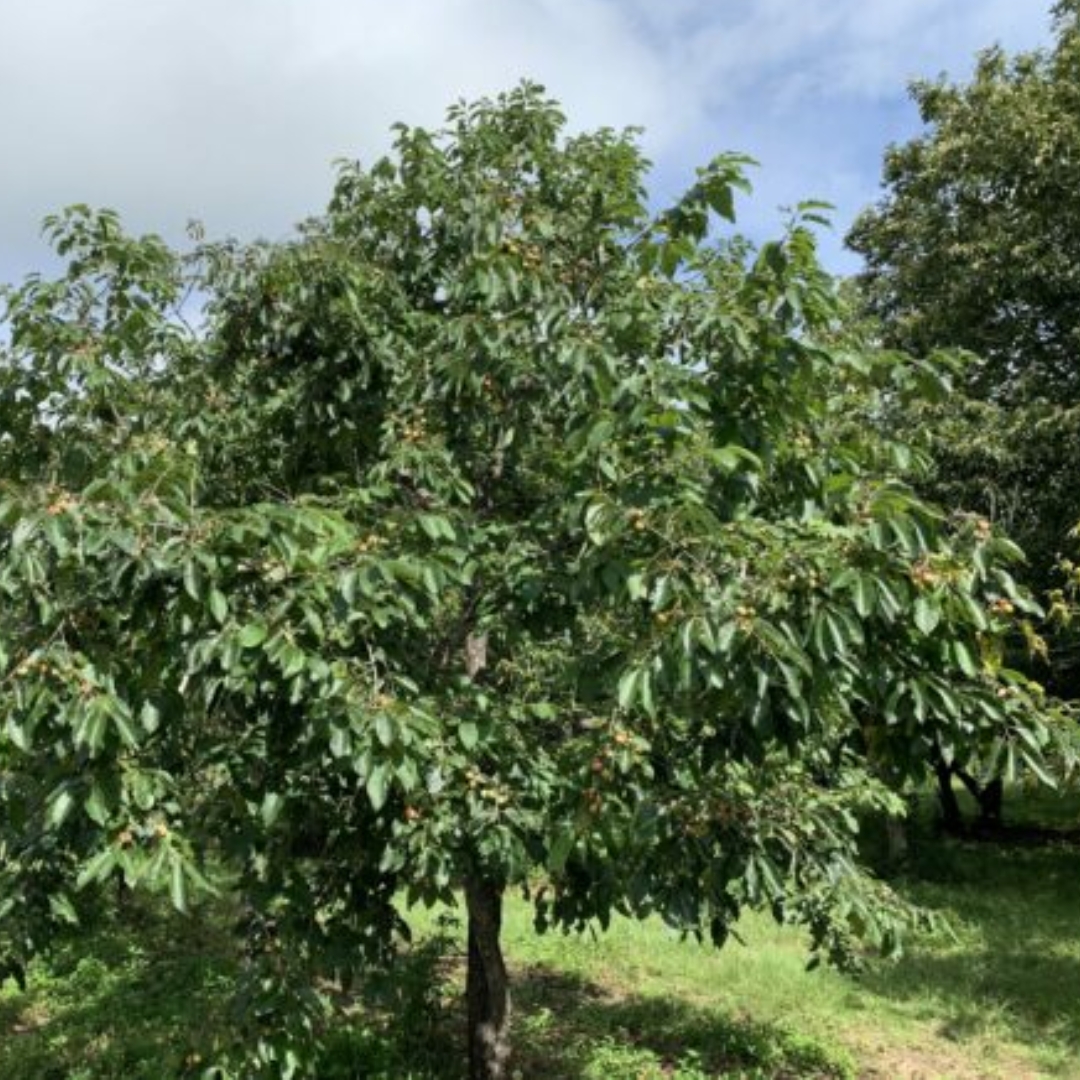
American Persimmon
Diospyros virginianaAmerican Persimmon is a native North American fruit tree valued for its unique, richly sweet fruit, ornamental beauty, and exceptional adaptability to a wide range of growing conditions. Long appreciated for both culinary and wildlife uses, this species produces fruit with a honey-like sweetness when fully ripe and offers a strong landscape presence throughout every season. Its durability, low-input nature, and ecological value make it an excellent choice for home orchards, naturalized plantings, and edible landscapes.
In spring, American Persimmon develops modest, creamy white flowers that emerge as foliage begins to fill in. While not showy from a distance, these blooms play an important ecological role, attracting pollinators and supporting native wildlife. The tree’s glossy green leaves form a dense, rounded canopy through summer, creating shade and a clean, classic tree silhouette. In fall, the foliage often turns soft yellow, adding subtle seasonal interest before leaf drop reveals the tree’s distinctive branching structure.
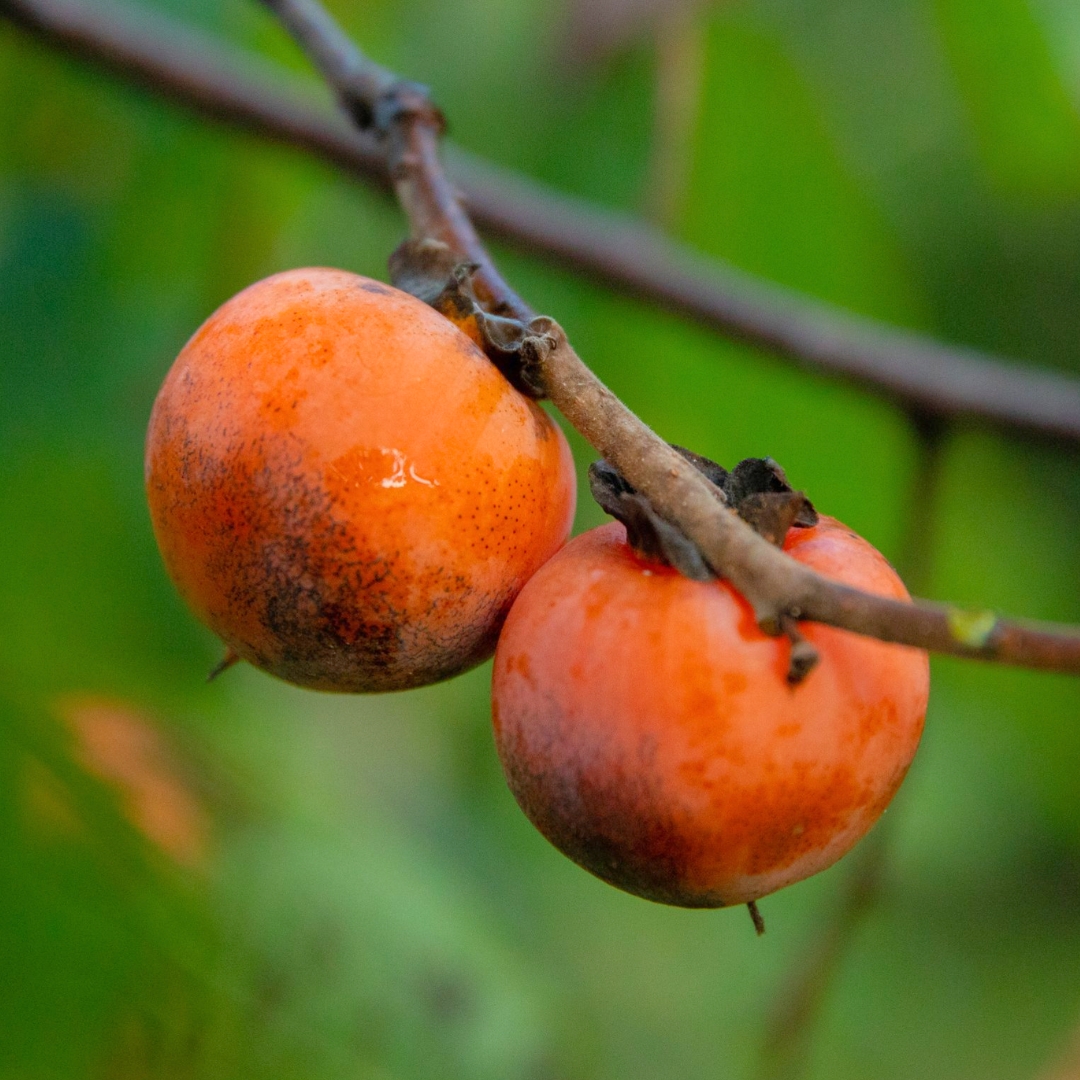
The fruit ripens in mid to late fall and is round to slightly oval with orange to deep reddish-orange skin. When fully ripe, the flesh becomes soft, jelly-like, and intensely sweet with complex flavor notes often compared to honey, apricot, or brown sugar. Unripe fruit is extremely astringent, but after frost or full ripening, American persimmons are excellent for fresh eating, baking, puddings, breads, and preserves. The fruit is also highly attractive to birds and wildlife, enhancing the tree’s value in natural settings.
Care Instructions:
Planting: Choose a full sun location with at least 6–8 hours of direct sunlight daily for best growth and fruiting.
Soil: Plant in well-drained soil. It adapts well to loam or clay soils once established.
Watering: Water regularly during establishment. It is drought-tolerant once mature, but benefits from supplemental water during prolonged dry periods.
Fertilizing: Fertilize lightly in early spring if needed. Excessive fertilization is unnecessary.
Pruning: Prune minimally in late winter or early spring to remove dead or damaged branches and maintain structure.
Spacing: Space trees 30–40 ft apart to allow for mature size and airflow.
Maintenance: Mulch during establishment, monitor moisture, and prune sparingly.
Pollinator Required: Yes, this variety requires cross-pollination. It is compatible varieties include Early Golden, Meader (male), Yates, or other male American persimmon selections.
American Persimmon typically grows 35–60 feet tall and wide at maturity, forming a strong central trunk with an upright, spreading habit. It thrives in full sun and adapts well to a range of soil types, including clay and dry soils once established. Trees are generally dioecious, meaning male and female flowers are often borne on separate trees, so cross-pollination is necessary for fruit production. Selecting known female cultivars and planting compatible pollinators ensures reliable harvests. With minimal pruning and moderate care, American Persimmon is a long-lived, resilient tree that provides beauty, fruit, and ecological benefits for generations.