

Witch Hazel
Common Witch Hazel, Hamamelis virginianaWitch Hazel is a unique and highly ornamental flowering shrub prized for its unusual blooms, late-season interest, and strong architectural form. Known for flowering when most other plants have gone dormant, this distinctive shrub adds unexpected color and texture to fall and winter landscapes. Its adaptability, native heritage, and multi-season appeal make it an excellent choice for woodland gardens, naturalized settings, and mixed borders.
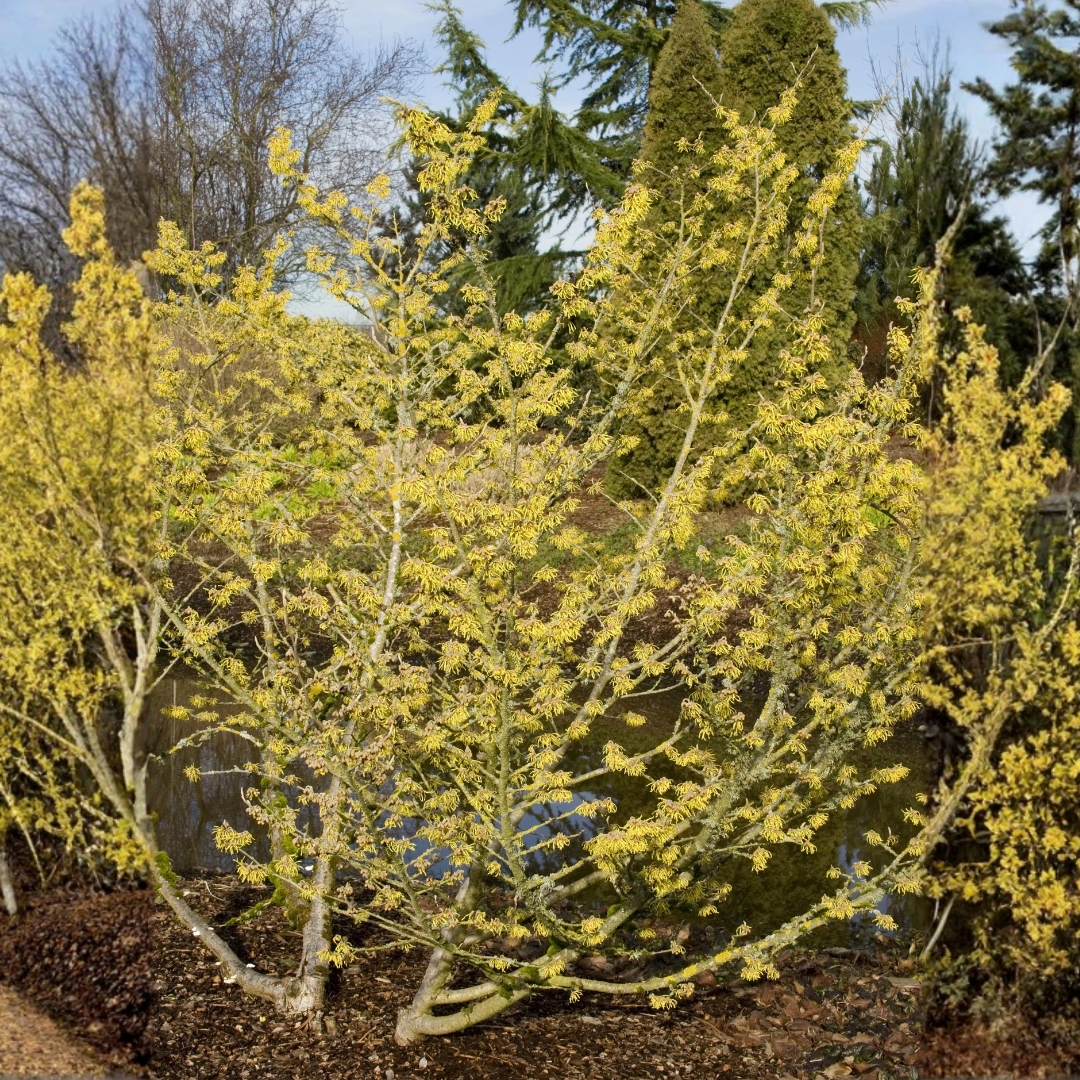
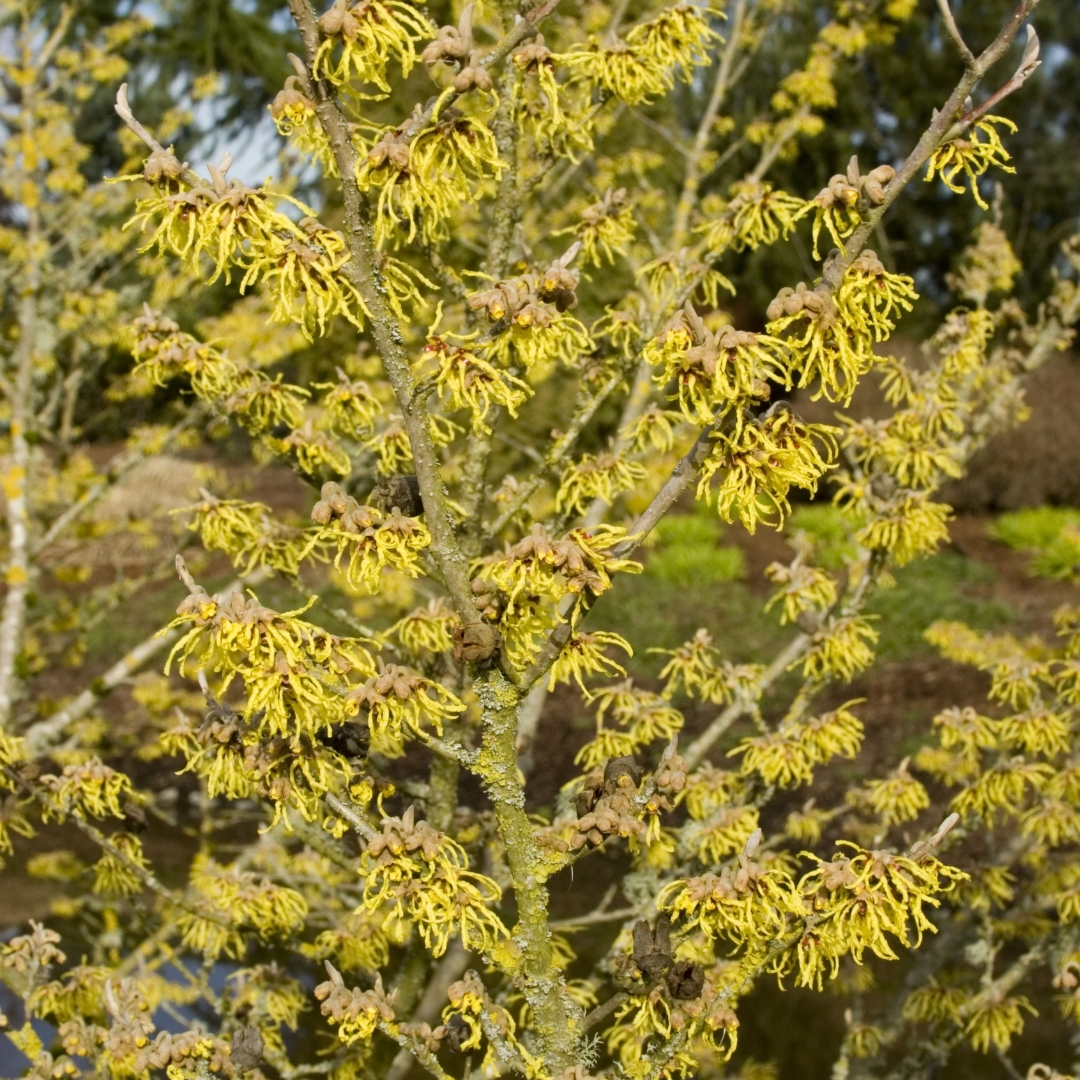
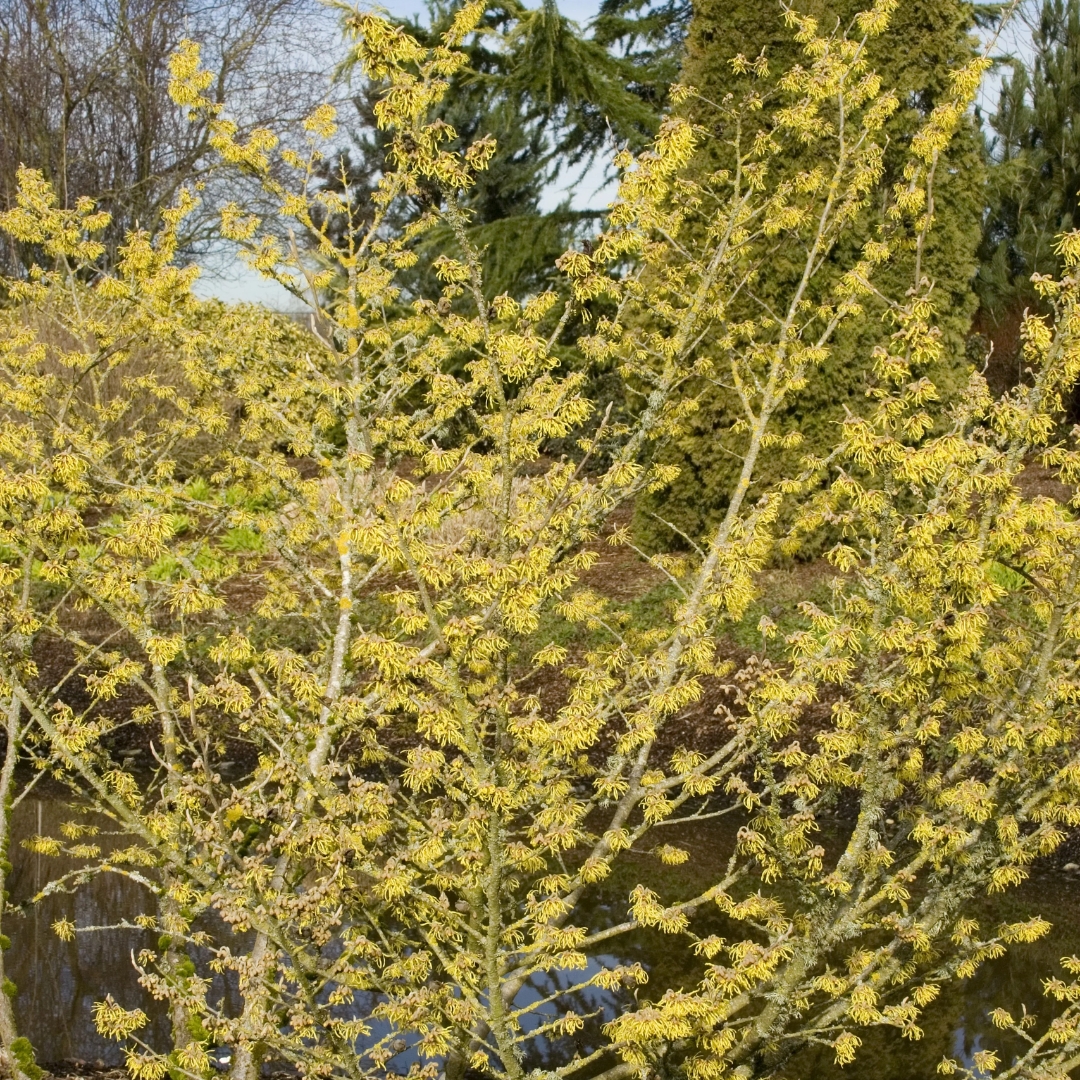
In fall, Witch Hazel produces fragrant, spidery yellow flowers with narrow, ribbon-like petals that appear along bare or lightly leafed branches. The blooms create a striking display against the autumn landscape and can persist well into early winter. Their subtle fragrance adds another layer of sensory interest, while the late bloom time provides valuable nectar for pollinators when few other sources are available.
Throughout the growing season, Witch Hazel features broad, oval green leaves that form a dense, rounded canopy. In autumn, the foliage transitions to shades of golden yellow, enhancing its seasonal impact before leaf drop reveals the plant’s strong branching structure. The shrub’s naturally open yet layered habit provides year-round visual interest, making it a reliable structural element in the landscape.
Typically reaching 15–20 feet tall and wide at maturity, Witch Hazel can be grown as a large shrub or trained into a small multi-stemmed tree. It thrives in full sun to partial shade and performs best in well-drained, slightly acidic soil. Its moderate growth rate and low-maintenance needs make it a practical yet visually compelling addition to both residential and commercial landscapes.
Care Instructions:
Planting: Choose a full sun to partial shade location for best flowering and fall color.
Soil: Plant in well-drained, slightly acidic soil enriched with organic matter.
Watering: Water regularly during establishment. Once established, water during extended dry periods.
Fertilizing: Apply a balanced fertilizer in early spring if needed to support healthy growth.
Pruning: Prune lightly after flowering to maintain shape and remove dead or crossing branches.
Spacing: Space plants 15–20 ft apart to allow for mature spread.
Maintenance: Mulch annually to conserve moisture and protect roots.
With proper siting and minimal pruning, Witch Hazel delivers dependable performance, vibrant fall color, and distinctive blooms during a time of year when the garden often lacks floral interest. Its combination of structure, fragrance, and seasonal uniqueness makes it a standout ornamental shrub for long-term landscape value.