

Tifblue Blueberry
Vaccinium ashei ‘Tifblue’Tifblue Blueberry is a vigorous and traditional Rabbiteye blueberry cultivar that has stood the test of time as a dependable choice for edible landscapes, berry patches, and home orchards. Originally developed and widely planted throughout the southeastern United States, this variety is celebrated for its adaptability, high productivity, and classic blueberry flavor. Tifblue typically blooms in early spring from February through March, with clusters of delicate white bell-shaped flowers that attract bees and other beneficial pollinators to support fruit set.
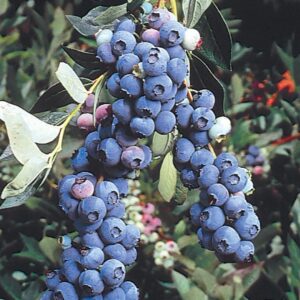
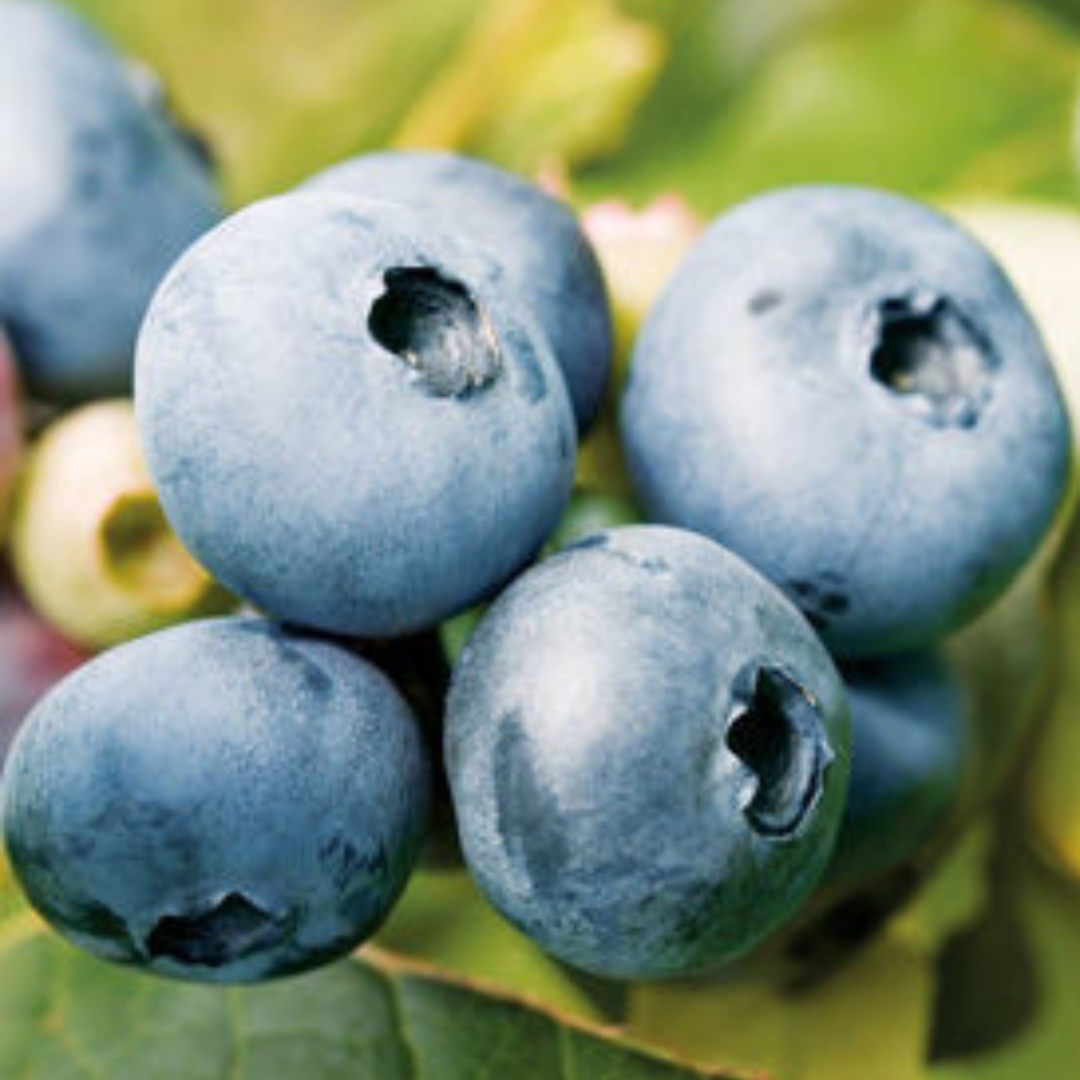
Unlike some highbush blueberries, Tifblue is a Rabbiteye type (Vaccinium ashei), which makes it especially well-suited to USDA Hardiness Zones 7–9, where it thrives in warm, humid climates with good sun exposure. The shrub forms an open, vase-like habit and can grow to a substantial size, often 6–10 feet tall and wide in favorable conditions, providing ample fruiting wood for abundant harvests. With proper care, a mature plant can yield generous crops of medium-sized, light blue berries in mid to late summer (typically June through July), with a sweet-tart flavor that is excellent for fresh eating, baking, jams, preserves, and freezing.
One of Tifblue’s defining strengths is its disease resistance and heat tolerance, traits that have made it a standard commercial and backyard variety in the South for decades. While berries may be somewhat tart until fully ripe (a characteristic of many rabbiteye types), leaving fruit on the shrub until sweeter ensures the best flavor and texture. Its foliage often turns attractive burgundy tones in autumn, adding seasonal color interest to garden beds even after fruiting.
Care Instructions:
Planting: Choose a location with full sun exposure (at least 6+ hours of direct sunlight daily) to maximize flower production and berry yield.
Soil: Plant in acidic, well-drained soil rich in organic matter. Blueberries perform best with a soil pH of about 4.5–5.5.
Watering: Water deeply and regularly during establishment and dry spells. Keep soil evenly moist but not waterlogged.
Fertilizing: Apply an acid-forming, slow-release fertilizer designed for blueberries or other acid-loving plants in early spring as growth begins.
Mulching: Apply a 2–3″ layer of organic mulch (such as pine bark or pine needles) around the base to retain moisture and moderate soil temperature; keep mulch a few inches from stems.
Pruning: Prune in late winter or early spring while dormant to remove dead or weak wood, open up the canopy, and encourage vigorous new canes for fruiting.
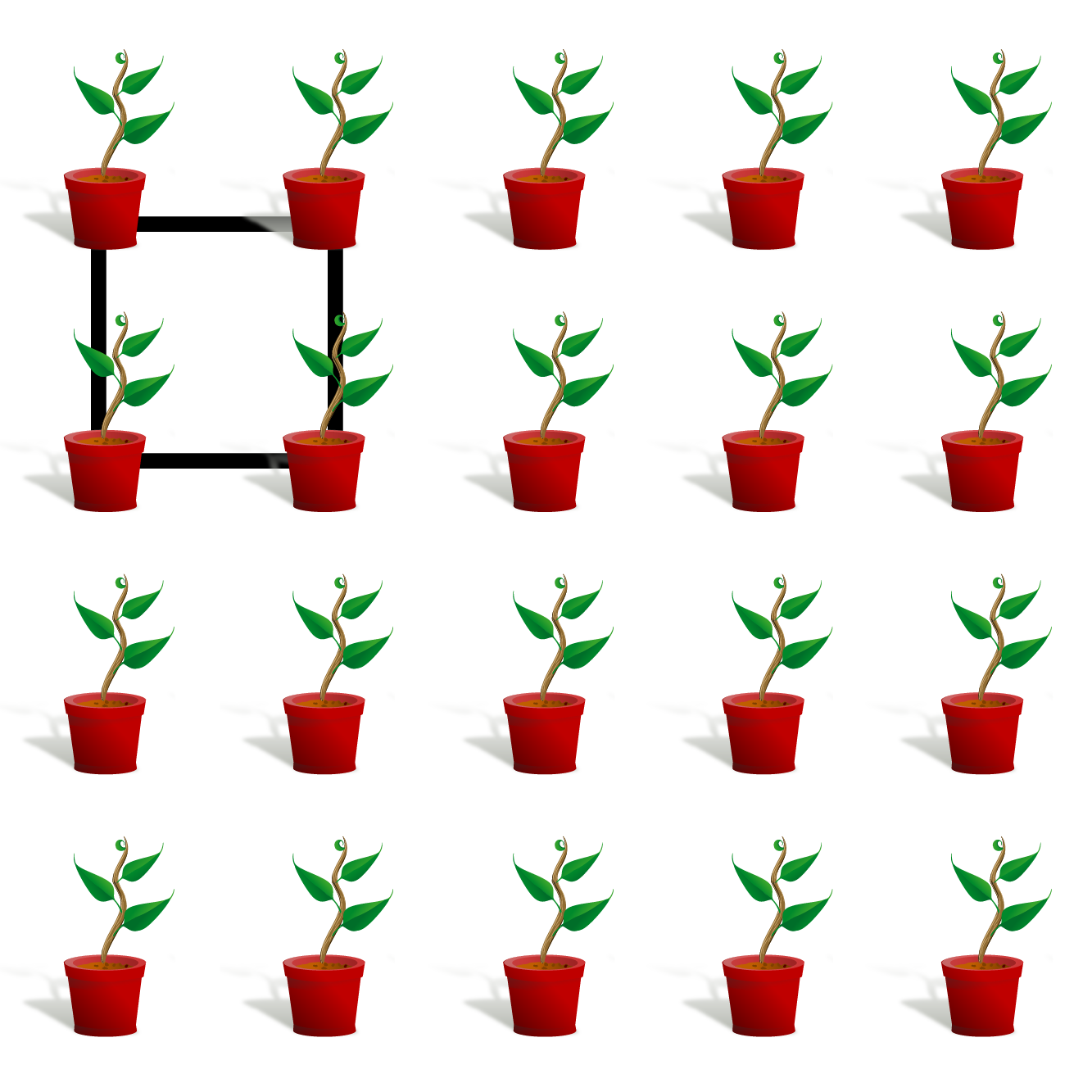
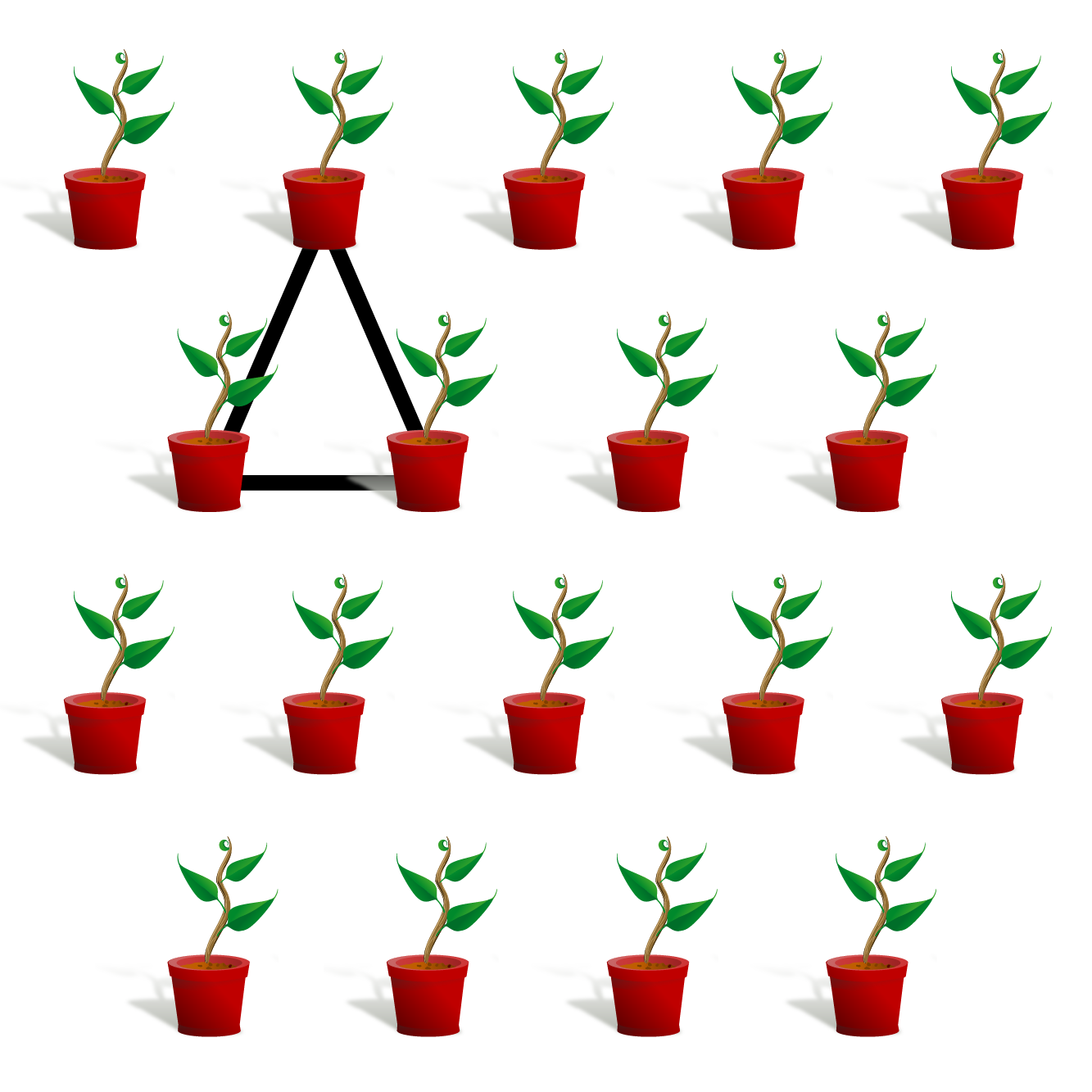
Spacing: Space plants 6–8 ft apart for room to grow, airflow, and easy harvest access.
Maintenance: Monitor soil acidity, water regularly during dry periods, and prune annually to maintain size and productivity.
Pollinator Required: Yes. Requires cross-pollination with another Rabbiteye blueberry variety (e.g., Brightwell, Climax, or Powderblue) for best fruit set and yields.
Tifblue is most effective in a designed berry planting where it can cross-pollinate with other Rabbiteye varieties, helping improve fruit set and overall yields. Whether grown as a single specimen in a pollinator garden or as part of a mixed berry patch, Tifblue delivers multiseason interest and delicious results for edible gardening enthusiasts.