

Silver Gem Violet
Viola walteri ‘Silver Gem’Silver Gem Violet is a charming native groundcover prized for its delicate flowers, attractive foliage, and ability to spread gracefully through shaded gardens and woodland settings. A selection of the native Walter’s Violet, this compact perennial is valued both for its ornamental appeal and its ecological importance. With its low-growing habit and softly colored blooms, Silver Gem Violet provides a gentle, natural look that blends beautifully into woodland landscapes, shaded borders, and native plant gardens.
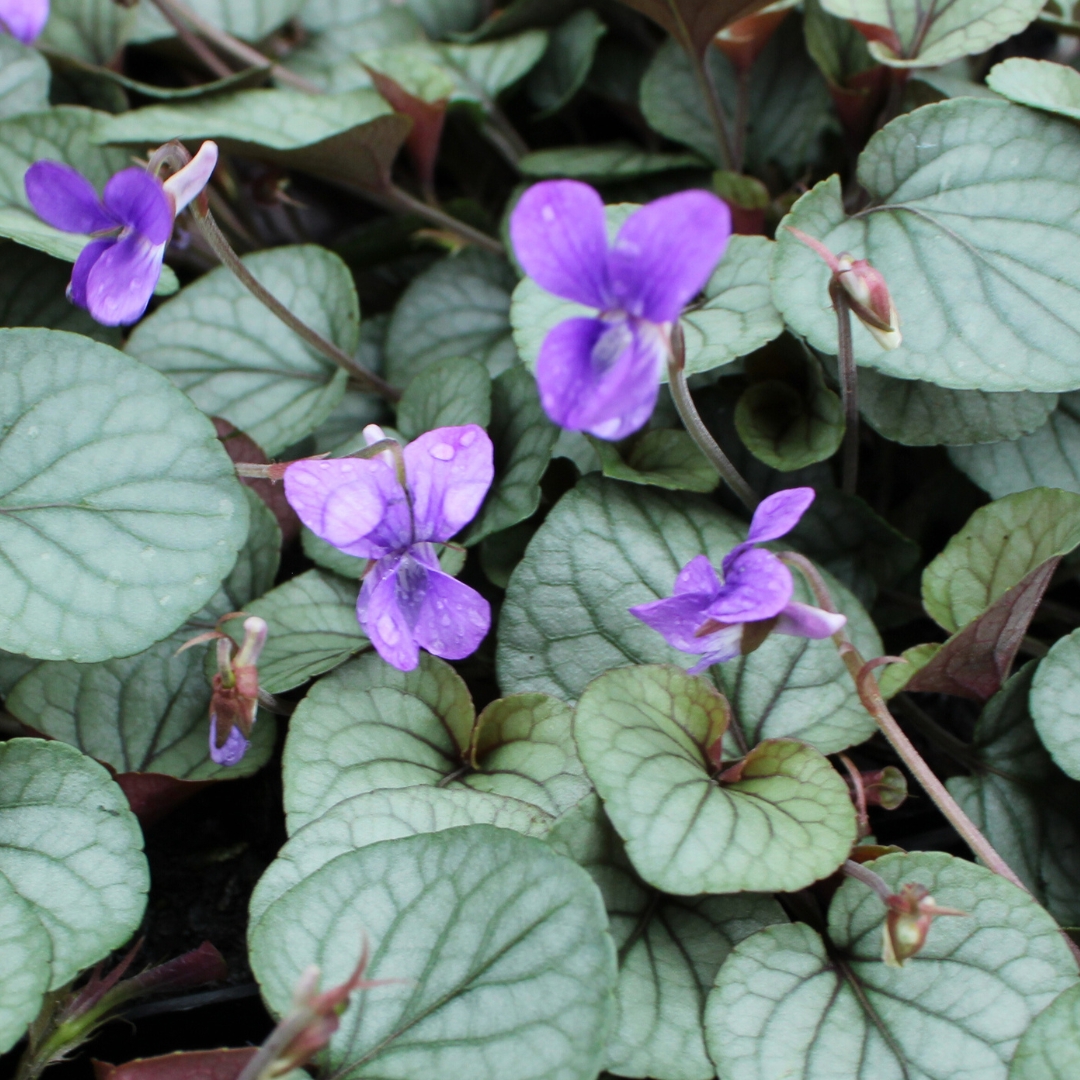
In early to mid-spring, Silver Gem Violet produces dainty lavender-violet flowers that rise slightly above the foliage on slender stems. Though small, the blooms appear in abundance and create a soft carpet of color across the ground. The flowers are lightly fragrant and serve as an early nectar source for small pollinators. Their delicate appearance adds a subtle but charming presence to the garden during the early growing season when many shade plants are just beginning to emerge.
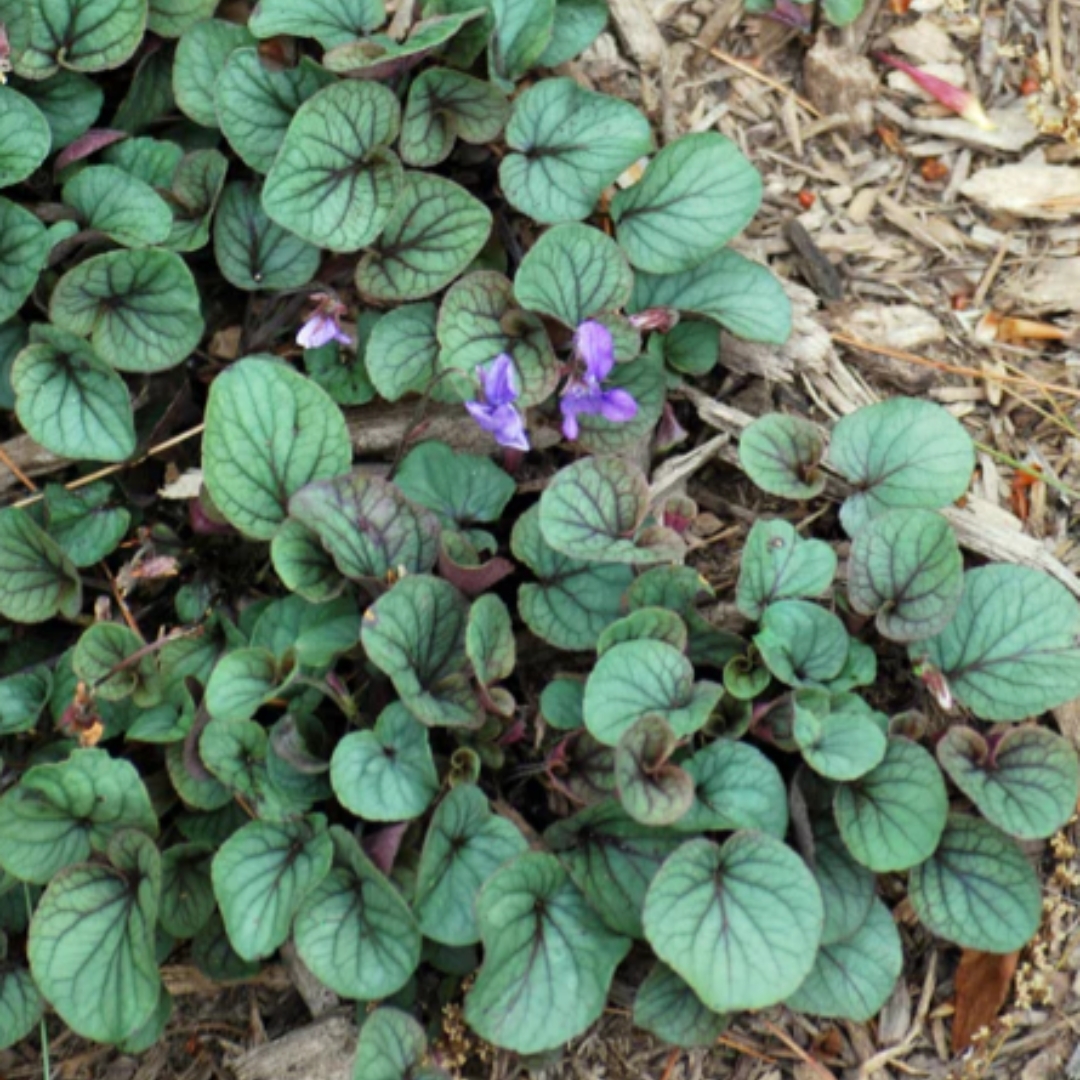
The foliage is one of the plant’s most attractive features. Silver Gem Violet forms a dense mat of small, heart-shaped leaves that are a soft green color with a distinctive silvery overlay or sheen. This shimmering effect gives the cultivar its name and adds visual interest even when the plant is not in bloom. As the plant spreads slowly by short rhizomes, it creates a tidy, low carpet of foliage that helps suppress weeds and stabilize soil in shaded areas.
Silver Gem Violet typically grows only a few inches tall but spreads gradually to form a lush groundcover. It thrives in partial to full shade and prefers moist, humus-rich soils similar to those found in woodland environments. Once established, it is relatively easy to maintain and can naturalize gently in suitable conditions. Because it is a native violet, it also serves as a host plant for several species of fritillary butterflies, making it a valuable addition to pollinator-friendly and wildlife gardens.
Care Instructions:
Planting: Choose a part-shade to full-shade location, such as woodland gardens, shaded beds, or beneath trees and shrubs.
Soil: Prefers rich, humus-filled, well-drained soil but adapts to a range of garden soils with adequate moisture.
Watering: Water regularly during establishment. Keep soil evenly moist, especially during dry periods.
Fertilizing: Generally not necessary in fertile soils, though a light application of compost in spring can encourage healthy growth.
Pruning: Minimal pruning is required. Remove spent foliage or trim lightly if plants spread beyond desired areas.
Spacing: Space plants 10–12 inches apart to allow them to spread and form a dense groundcover.
Maintenance: Low once established.
This versatile groundcover is well suited for woodland plantings, shaded borders, and naturalized landscapes. It works beautifully beneath trees and shrubs, along shaded pathways, or as a soft filler between larger shade-loving perennials. With its delicate blooms, attractive silvery foliage, and ecological benefits, Silver Gem Violet offers both beauty and environmental value in the garden.