

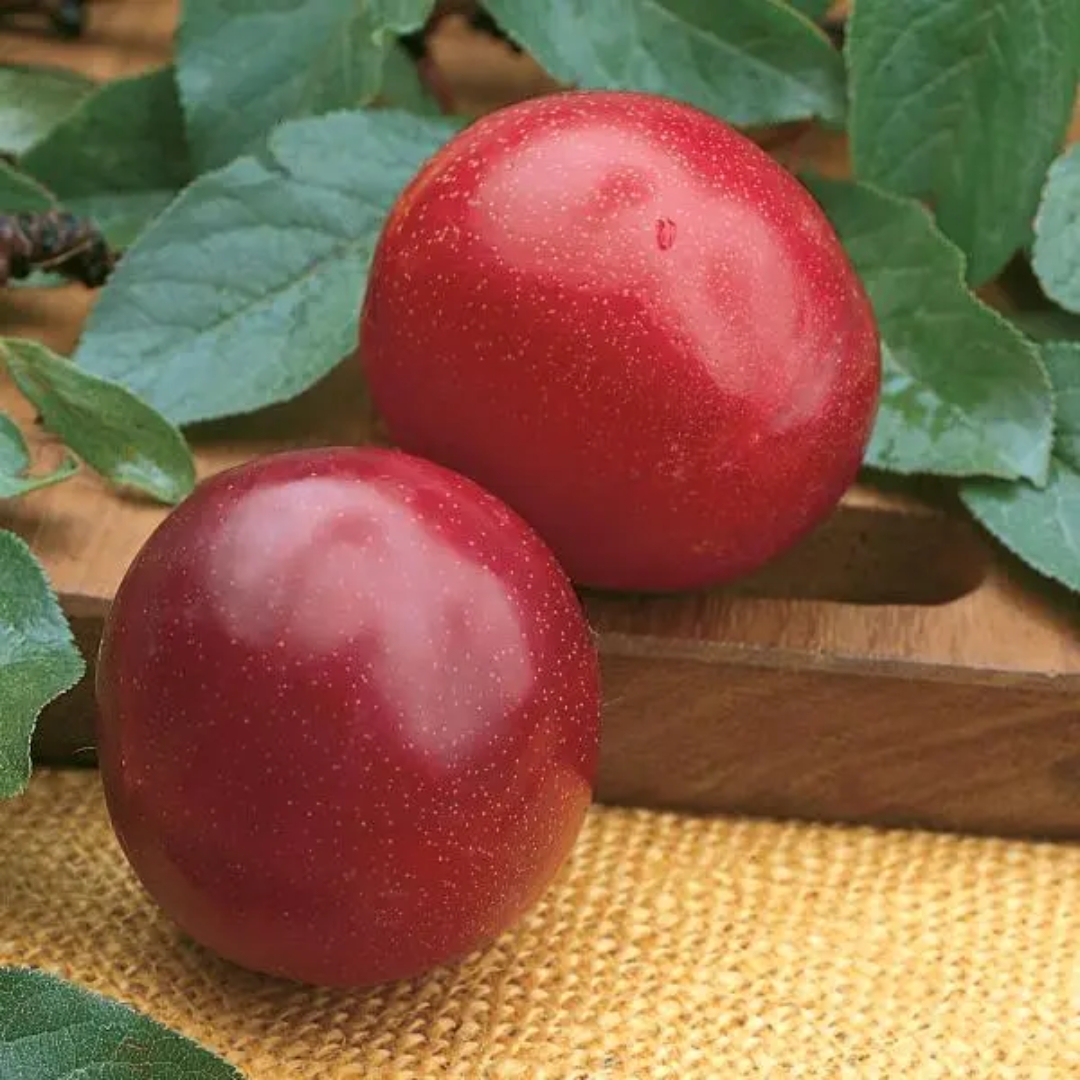
Santa Rosa Plum
Prunus salicina ‘Santa Rosa’Santa Rosa Plum is one of the most widely grown and recognized Japanese plum varieties, valued for its exceptional flavor, heavy production, and ornamental appeal. Introduced as a premium dessert plum, this cultivar is prized by home gardeners and orchardists alike for its reliability and versatility. With showy spring blooms, attractive foliage, and richly flavored fruit, Santa Rosa Plum offers multi-season interest and strong performance in edible landscapes.
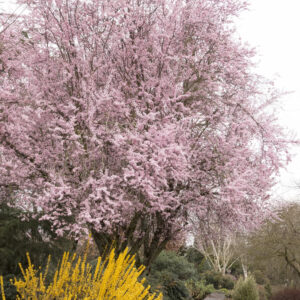
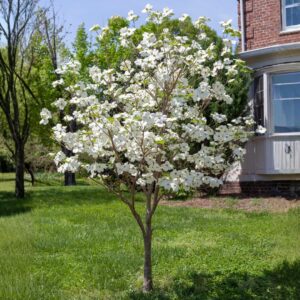
In early spring, Santa Rosa Plum produces masses of fragrant white flowers that cover the branches before leaf emergence. This dramatic bloom period attracts bees and other pollinators while adding bright seasonal interest to the garden. As the season progresses, lush green foliage fills in, forming a rounded, spreading canopy that provides structure and shade through summer. The tree’s balanced growth habit makes it suitable for both standalone specimen planting and integration into mixed orchard plantings.
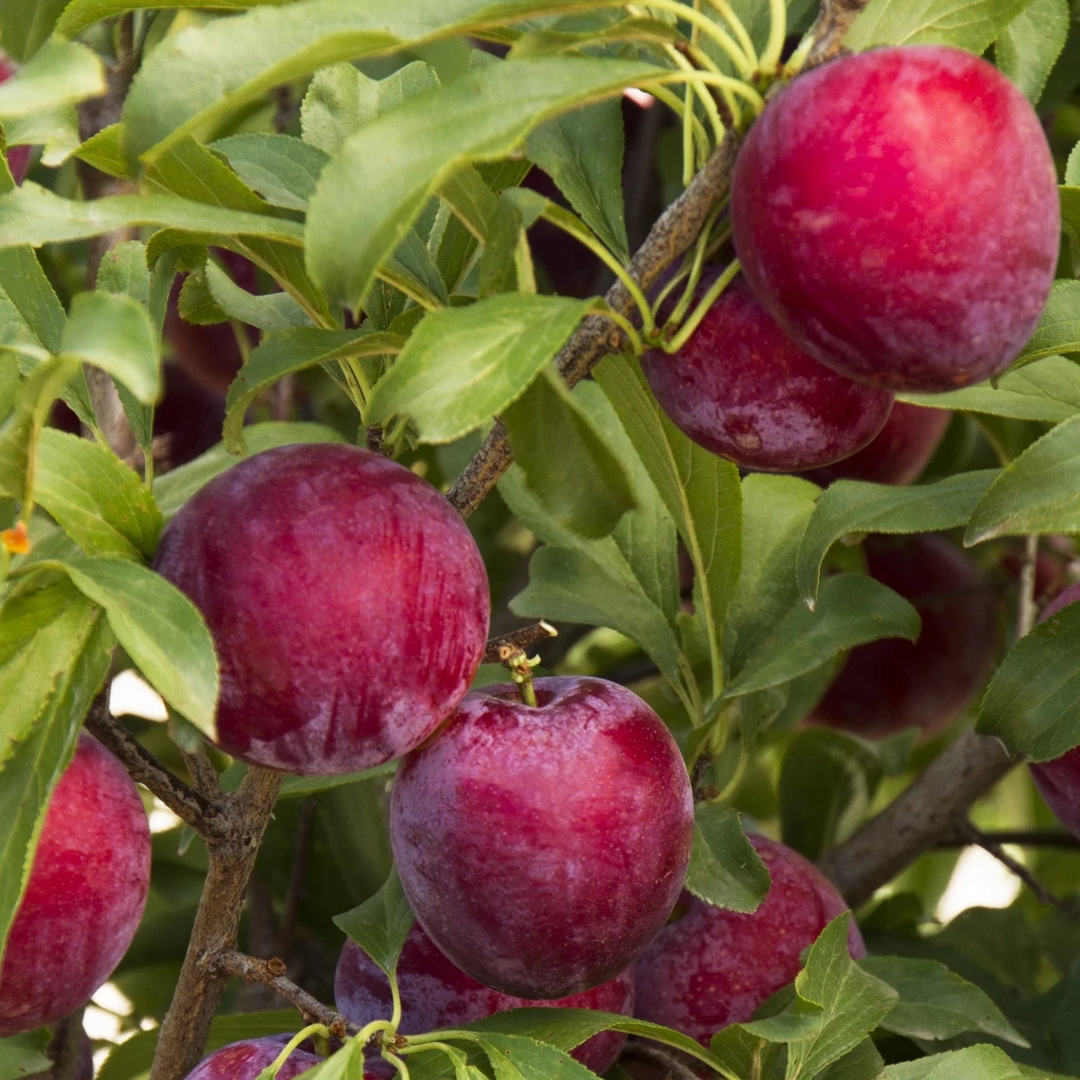
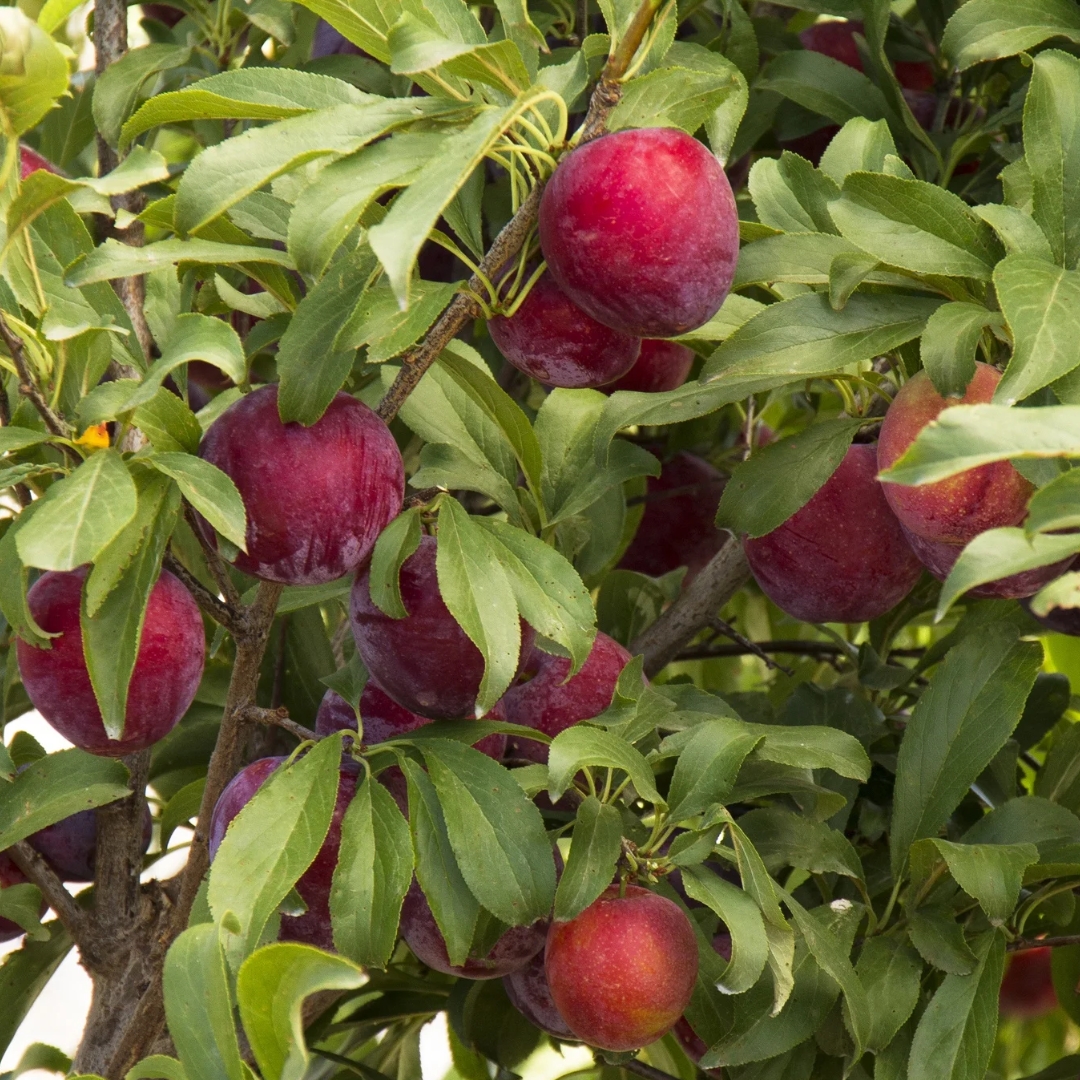
The fruit ripens in early to mid-summer and is medium to large with reddish-purple skin and amber to reddish flesh. The flesh is juicy, aromatic, and richly flavored, offering a balance of sweetness and mild acidity that makes Santa Rosa plums excellent for fresh eating. They are also well suited for baking, jams, sauces, drying, and preserves. The fruit’s complex flavor and attractive coloration have made it a long-standing favorite for home use and local markets alike.
Care Instructions:
Planting: Choose a Full Sun location with at least 6–8 hours of direct sunlight daily to encourage strong flowering and fruit development.
Soil: Plant in well-drained soil; amend heavier soils to improve drainage and root establishment.
Watering: Water regularly during establishment and maintain consistent moisture during dry periods, especially while fruit is developing.
Fertilizing: Apply a balanced fertilizer in early spring before new growth begins; avoid excessive nitrogen.
Pruning: Prune in late winter or early spring to remove dead or crossing branches and maintain an open canopy.
Thinning: Thin fruit after set to improve size, reduce limb stress, and promote even ripening.
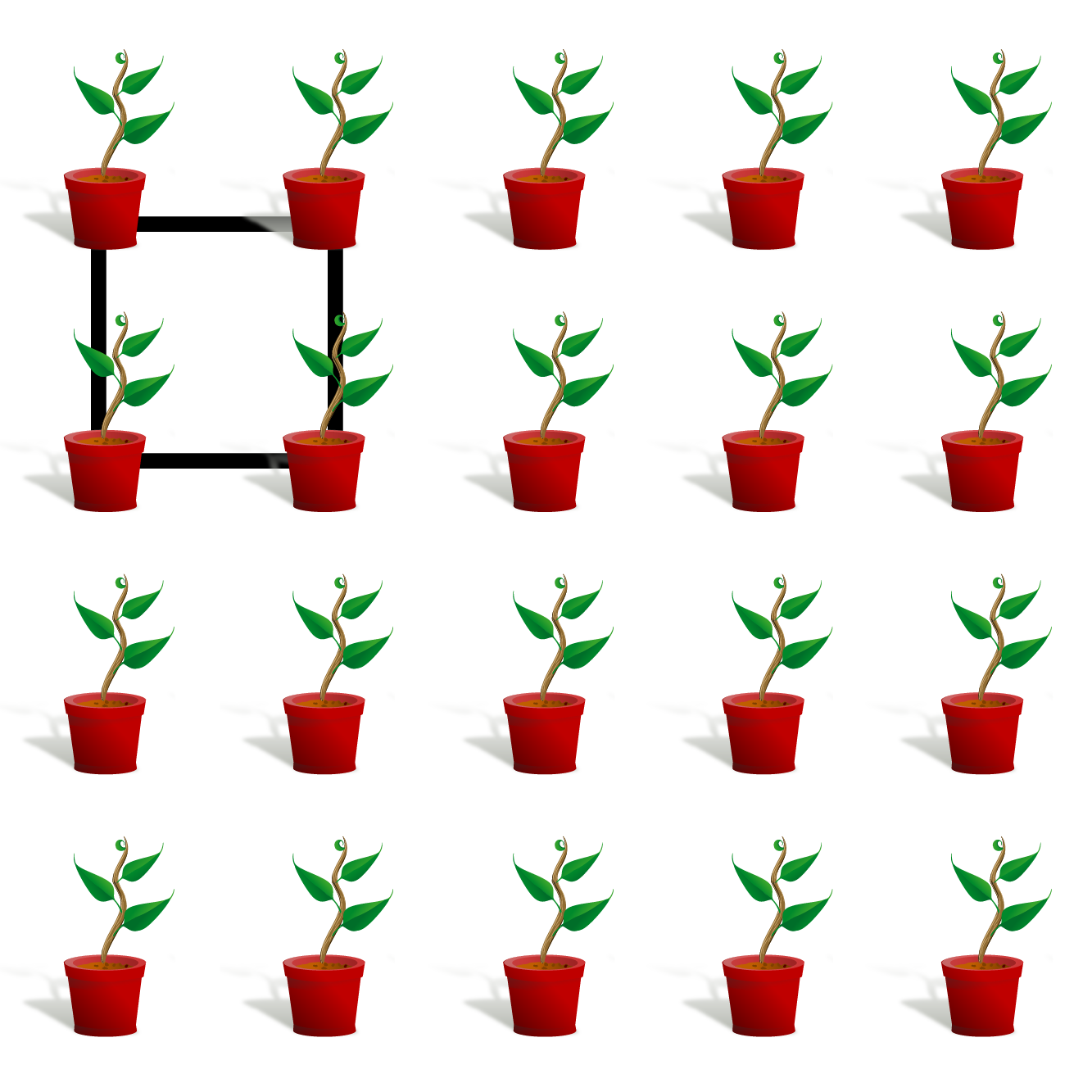
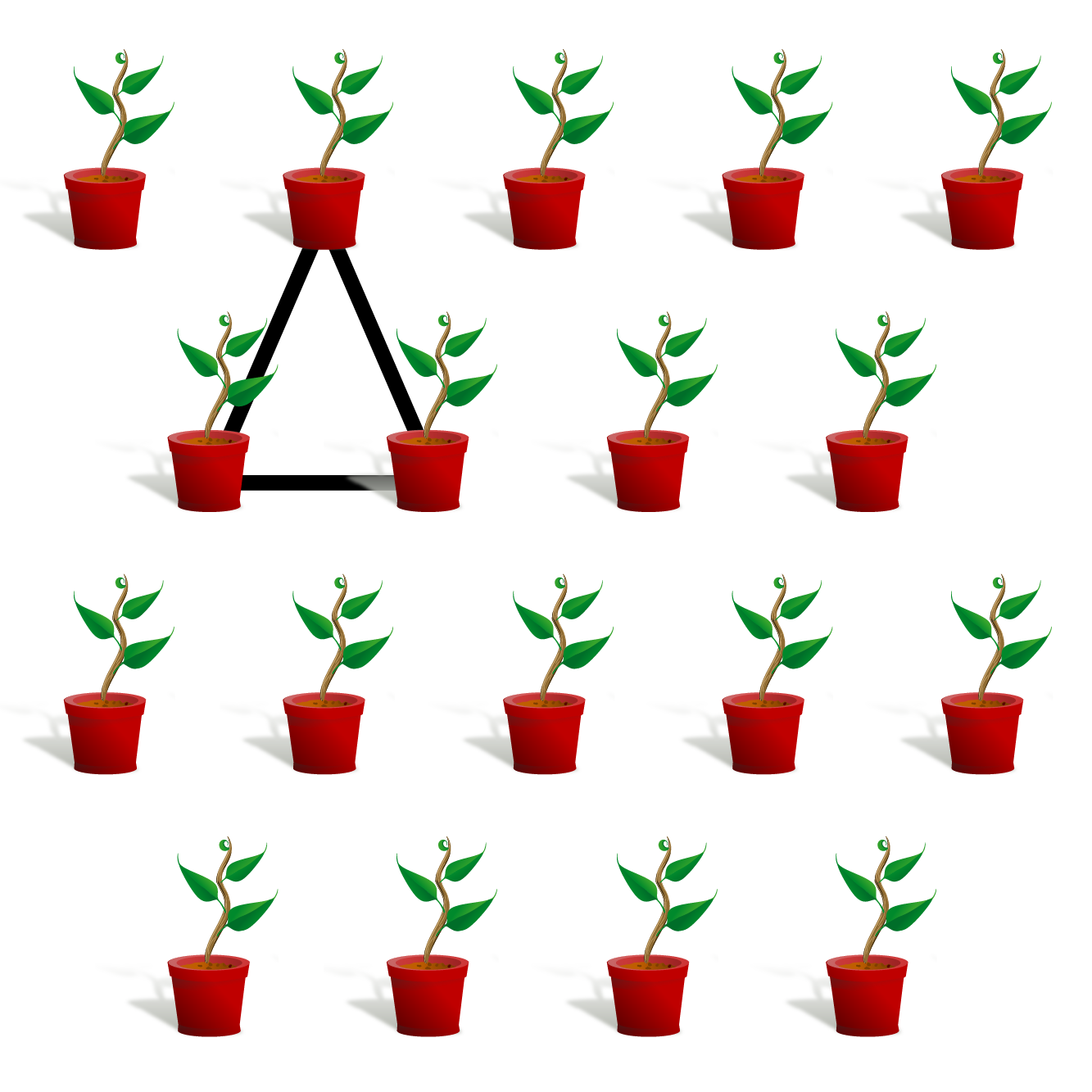
Spacing: Space trees 12–15 ft apart to allow room for mature size and airflow.
Maintenance: Moderate; mulch annually, monitor for pests and disease, and prune as needed.
Pollinator Required: Yes, while this variety is partially self-fertile, fruit set and yields improve when planted near compatible varieties such as Methley, Shiro, or Beauty plum.
Santa Rosa Plum typically matures at 12–18 feet tall and wide, forming a moderately vigorous tree that is manageable with routine pruning. It thrives in full sun and well-drained soil, where consistent moisture supports healthy growth and fruit development. While Santa Rosa is partially self-fertile, planting it with compatible Japanese plum varieties significantly improves fruit set and yield. With moderate care and annual pruning, this plum tree delivers dependable harvests and lasting ornamental value.