

Regina Sweet Cherry
Prunus avium ‘Regina’Regina Sweet Cherry is a late-season sweet cherry variety highly valued for its exceptional fruit quality, firm texture, and resistance to cracking. Bred in Germany for superior performance, this cultivar is especially prized in regions with summer rainfall where fruit splitting can be a concern. Regina produces large, richly flavored cherries and has become a favorite among growers seeking dependable harvests with outstanding eating quality. Its ornamental spring bloom and handsome growth habit further enhance its appeal in home orchards and edible landscapes.
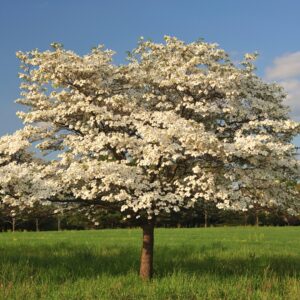
In spring, Regina Sweet Cherry is covered in abundant white blossoms, creating a bright, elegant floral display. These blooms attract honey bees and other pollinators, supporting healthy fruit development while adding seasonal interest to the garden. As leaves emerge, the tree develops a dense canopy of deep green foliage, providing structure and shade throughout the summer months. The tree’s upright, spreading form integrates well into mixed plantings or as a standalone specimen.
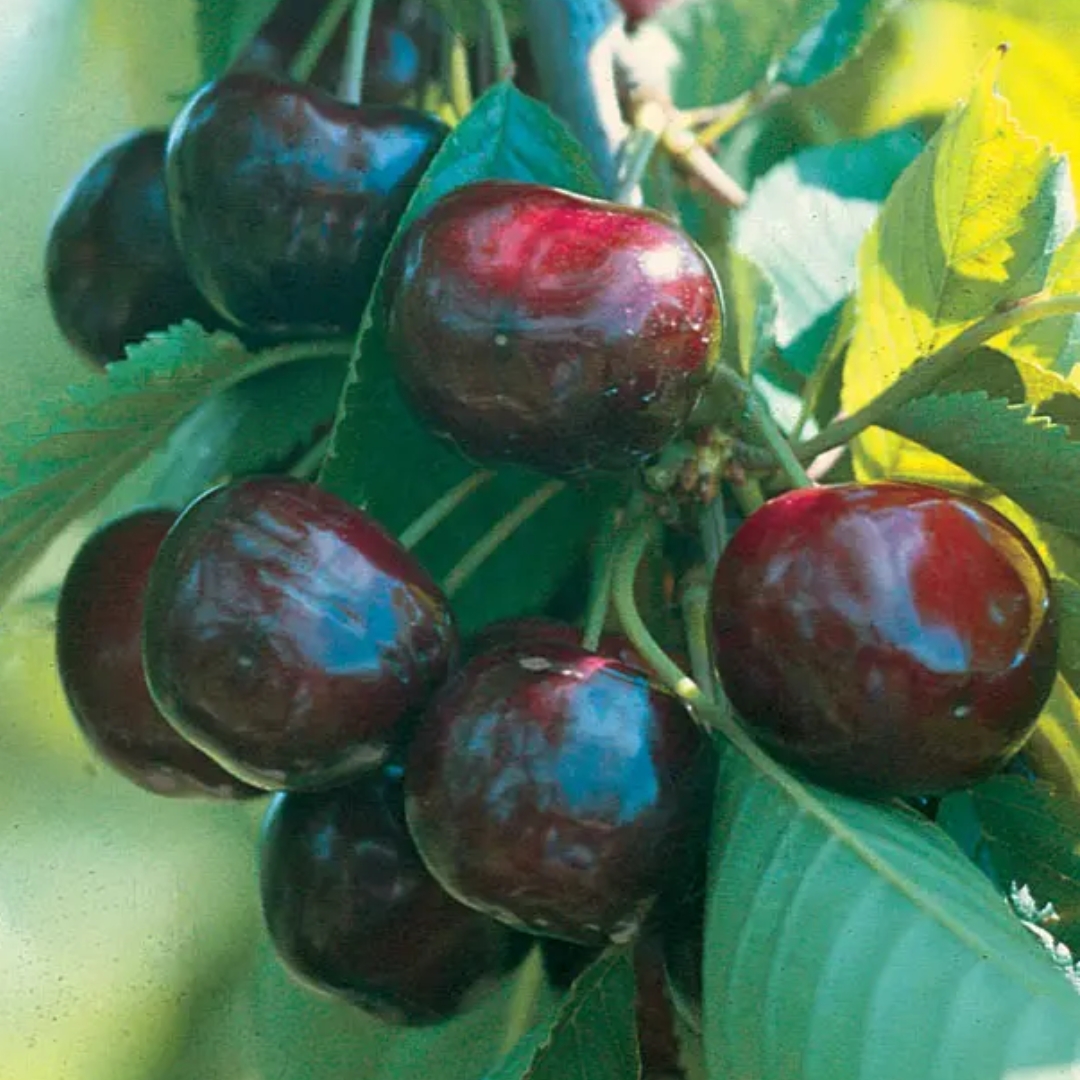
Fruit ripens late in the sweet cherry season, extending the harvest window after many other varieties have finished. The cherries are large with deep red to dark mahogany skin and exceptionally firm, juicy flesh. Its flavor is richly sweet with excellent depth, making Regina cherries ideal for fresh eating, desserts, and short-term storage. The firm texture also allows the fruit to withstand harvesting and transport, making it a reliable option for home growers who want premium-quality cherries.
Care Instructions:
Planting: Select a full sun location with at least 6–8 hours of direct sunlight daily for strong flowering and fruit development.
Soil: Plant in well-drained soil. Amend heavier soils to improve drainage and root establishment.
Watering: Water regularly during establishment and maintain consistent moisture during dry periods, especially while fruit is developing.
Fertilizing: Apply a balanced fertilizer in early spring before new growth begins. Avoid excessive nitrogen.
Pruning: Prune in late winter or early spring to remove dead or crossing branches and maintain an open canopy.
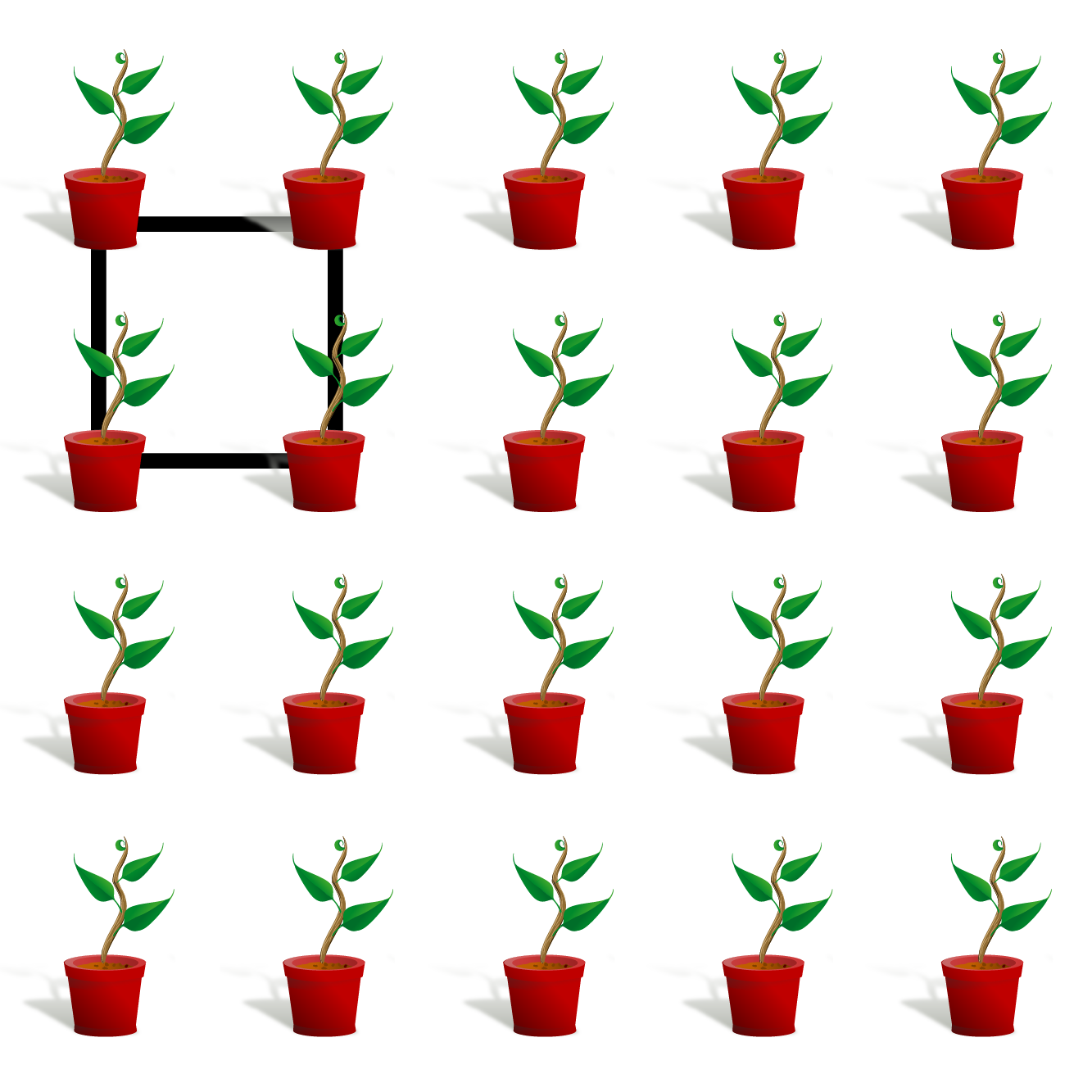
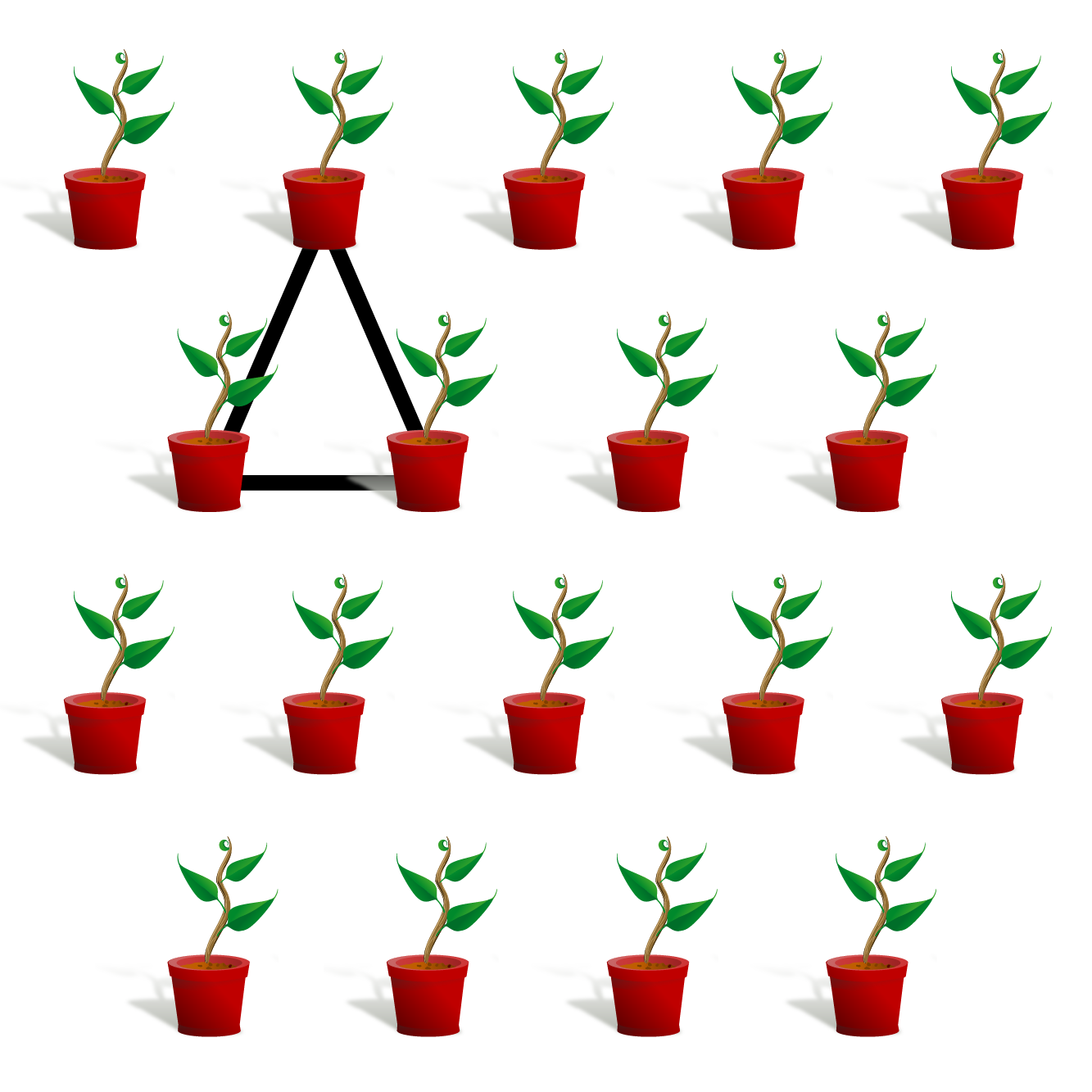
Spacing: Space trees 15–18 ft apart to allow room for mature size and airflow.
Maintenance: Mulch annually, monitor for pests and disease, and prune as needed.
Pollinator Required: Yes, this variety requires cross-pollination. Its compatible varieties include Bing, Stella, Lapins, Sweetheart, or BlackGold sweet cherry.
Regina Sweet Cherry typically matures at 15–20 feet tall and wide, forming a moderately vigorous tree that responds well to routine pruning. It thrives in full sun and well-drained soil, where consistent moisture and good airflow promote healthy growth and fruit quality. Regina is not self-fertile and requires cross-pollination with compatible sweet cherry varieties to produce fruit. When paired with appropriate pollinators and maintained with moderate care, this variety delivers excellent yields and long-term garden performance.