

Powderblue Blueberry
Vaccinium ashei ‘Powderblue’Powderblue Blueberry is a classic and widely adapted Rabbiteye blueberry cultivar prized for its vigorous growth, abundant mid- to late-season fruit, and ornamental appeal in edible landscapes and berry gardens. Developed for resilient performance in warm climates, this variety is well suited to USDA Hardiness Zones 5–9, and is especially popular in the southeastern United States for its heat tolerance and reliable productivity.
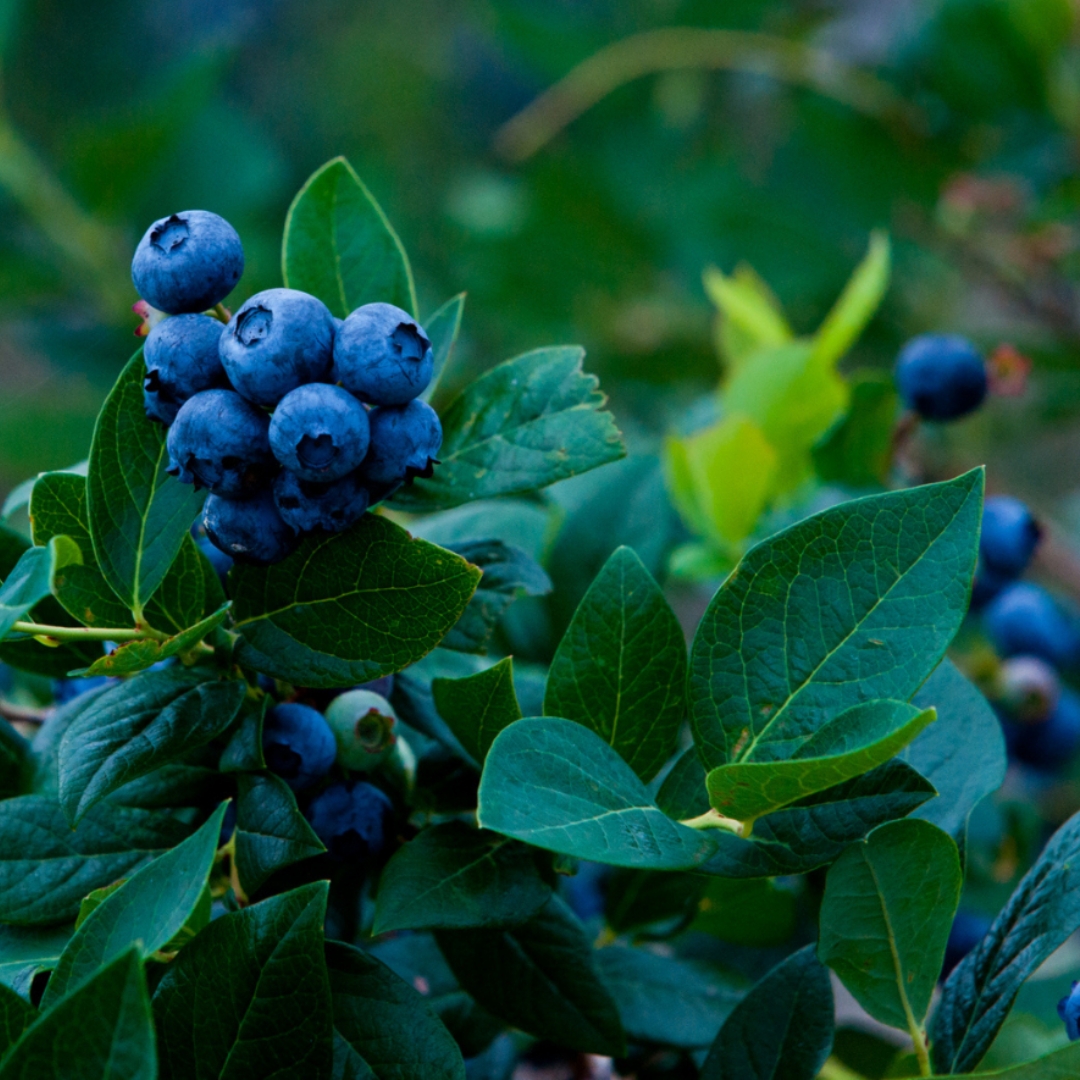
In spring, Powderblue produces clusters of small white, bell-shaped flowers that attract bees and other beneficial pollinators to the garden, increasing ecosystem value while laying the groundwork for a plentiful fruit set. As the season progresses, medium- to large-sized berries develop and ripen in mid- to late summer, displaying a distinctive powder-blue finish that gives the cultivar its name. These berries are firm, sweet, and juicy, making them excellent for fresh eating, baking, preserving, or freezing.
The shrub forms an open, vase-like habit with an upright growth pattern that typically reaches 8–12 feet tall and 8–12 feet wide at maturity, offering both substantial fruit production and garden presence. Its robust size makes it suitable for use in mixed edible borders, pollinator gardens, fruit hedges, or as a centerpiece in backyard berry patches. Powderblue’s foliage may also develop attractive autumn coloration, adding seasonal interest even after fruiting has completed.
Care Instructions:
Planting: Choose a location with full sun exposure. At least 6–8 hours of direct sunlight daily for best fruit production and plant vigor.
Soil: Plant in acidic, well-drained, fertile soil with a pH around 4.5–5.5. Amend heavy or alkaline soils with organic matter such as peat or pine bark to improve acidity and drainage.
Watering: Water deeply and regularly during establishment and dry spells. Maintain evenly moist soil without waterlogging.
Fertilizing: Apply an acid-forming, slow-release fertilizer designed for blueberries or other acid-loving plants in early spring before new growth begins.
Mulching: Spread a 2–3″ layer of organic mulch (such as pine bark or pine needles) around the base to conserve moisture, suppress weeds, and help maintain soil acidity. Keep mulch a few inches away from stems.
Pruning: Prune in late winter or early spring while dormant to remove dead or weak wood, open up the canopy, and encourage vigorous new fruiting canes.
Spacing: Space plants 5–6 ft apart to allow room for mature size, good airflow, and easy harvest access.
Maintenance: Monitor soil acidity and moisture, mulch annually, and remove older branches as needed to sustain plant health and productivity.
Pollinator Required: Yes. Requires cross-pollination with another Rabbiteye blueberry variety (such as Tifblue, Brightwell, or Climax) for best fruit set and highest yields.
Because Powderblue belongs to the Rabbiteye group, it thrives under full sun and performs best in acidic, well-drained soil with a pH around 4.5–5.5. These conditions are typical of blueberry plantings. While it can produce fruit on its own, optimal yields and larger, higher-quality berries are achieved when planted alongside compatible Rabbiteye pollinators that bloom concurrently. These qualities make Powderblue Blueberry both a productive and beautiful addition to landscapes where edible plants and wildlife habitat are priorities.