

Golden Rocket Barberry
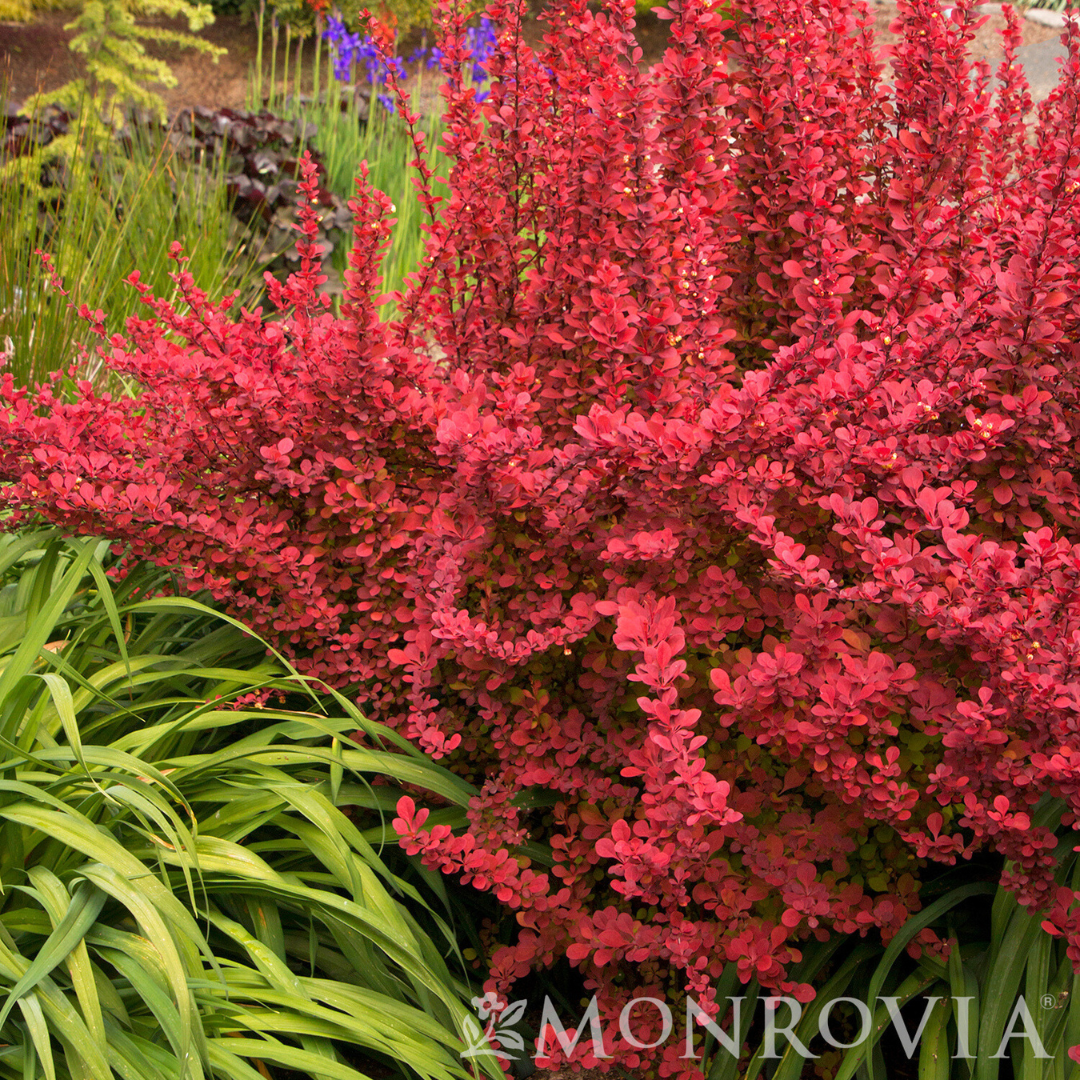
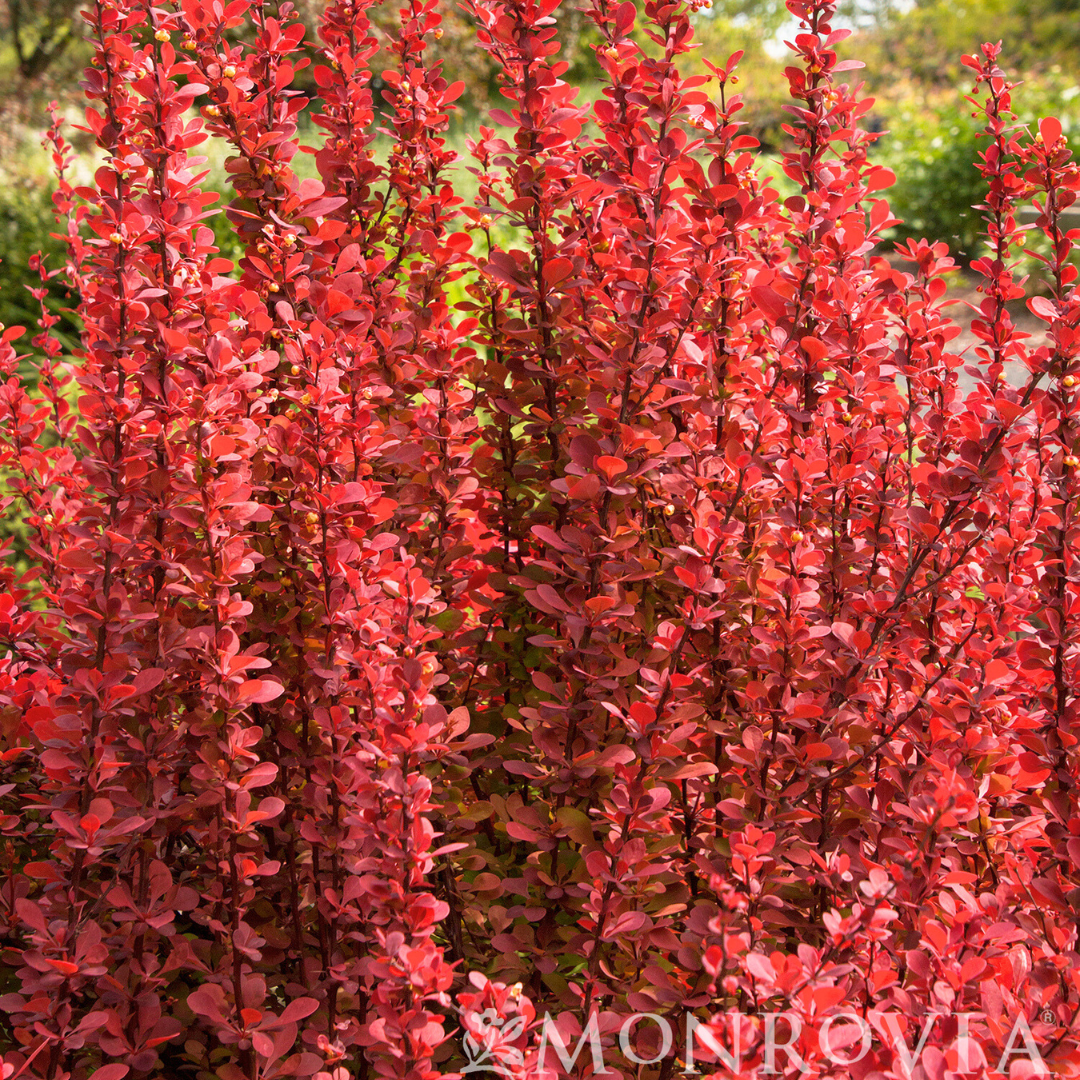
Berberis thunbergii 'Orange Rocket'Orange Rocket Barberry is a standout ornamental shrub prized for its dynamic seasonal foliage and upright, columnar habit. In spring, new leaves emerge in a vibrant coral-orange, immediately energizing the landscape palette. As the season progresses, the foliage ages to medium green and then transitions into warm ruby-red tones by fall, offering multi-season color from the moment leaves emerge until they drop.
This barberry’s upright and narrow silhouette makes it an excellent choice for small gardens, tight spaces along foundations, or as a vertical accent in mixed borders or mass plantings. The compact yet vigorous growth habit typically reaches around 4–5 feet tall with a 2–3 feet spread at maturity, providing plenty of visual impact without overtaking nearby plants.
While the flowers of Orange Rocket Barberry are inconspicuous, its foliage is truly the star. Small, pale yellow flowers may appear in spring, but most gardeners plant this shrub for its foliage drama rather than its floral display. By autumn, the plant develops small red berries that add another layer of seasonal interest, though they are primarily ornamental rather than a harvested fruit.
This cultivar combines ornamental beauty with dependable performance. Selected for improved rust resistance and overall hardiness, Orange Rocket performs well in a variety of soils and climates, thriving in USDA Hardiness Zones 4–9. Its deciduous nature yields striking fall color that enhances garden compositions late in the season, when many plants begin to fade.
Care Instructions:
Planting: Select a location with full to partial sun for best foliage color intensity and overall vigor.
Soil: Prefers average, well-drained soil. Avoid poorly drained or waterlogged sites.
Watering: Water deeply and regularly during the first growing season to establish strong roots. Once established, it can tolerate prolonged dry spells and some drought.
Fertilizing: Apply a balanced, slow-release fertilizer in early spring before new growth begins.
Mulching: Apply a 2–3″ layer of organic mulch around the base to conserve moisture and moderate soil temperature. Keep mulch a few inches away from stems.
Pruning: Minimal pruning is needed. If shaping is desired, prune lightly in late winter or early spring before new growth.
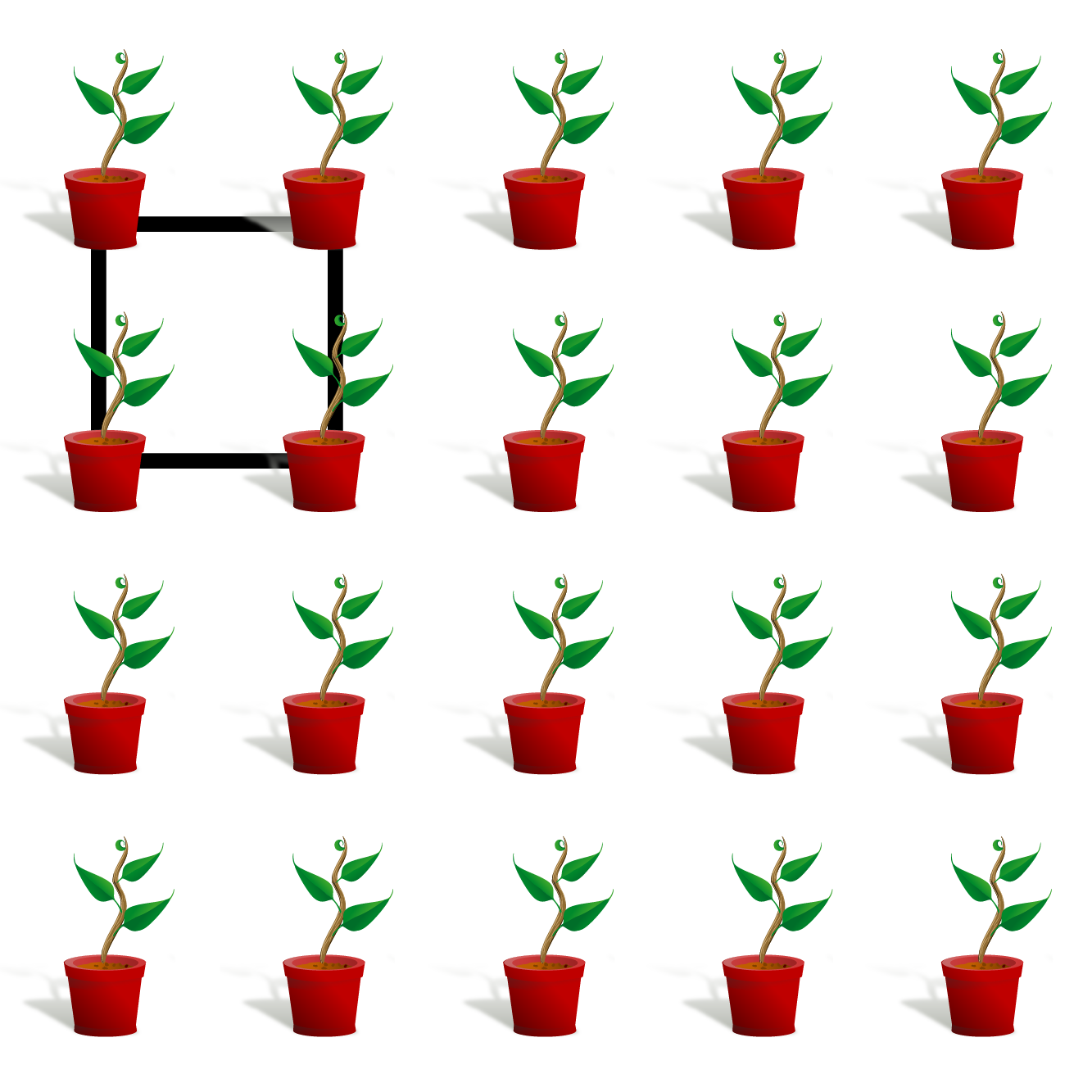
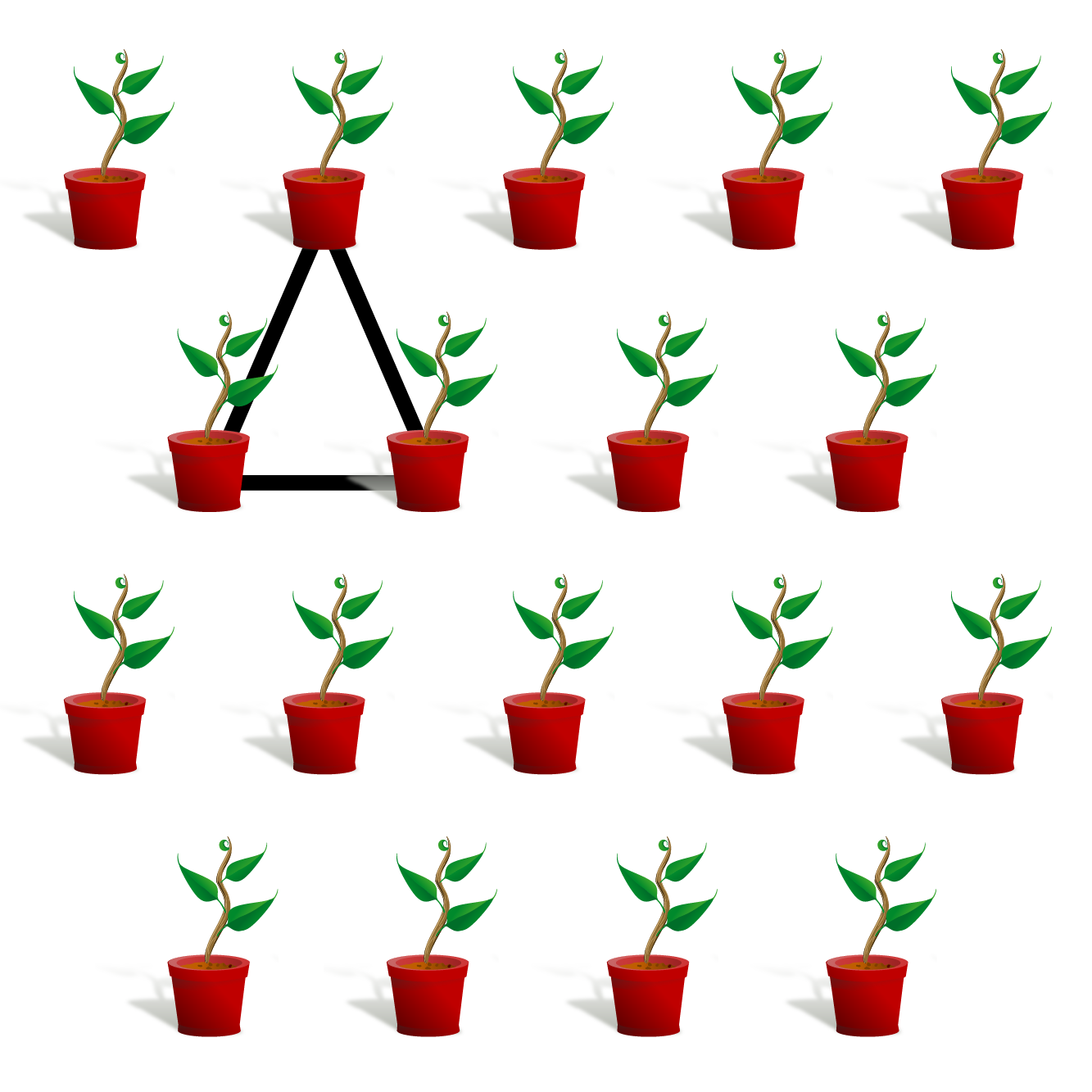
Spacing: Space plants about 2–3 ft apart to allow airflow and room for mature growth.
Maintenance: Occasional thinning of crowded stems maintains plant health.
A versatile landscaping choice, Orange Rocket Barberry fits into formal or informal designs with equal success. Whether planted as a border accent, a narrow hedge, a specimen in a small garden, or even in containers, its bold vertical presence and changing foliage hues make it a valuable and low-maintenance addition to many settings