

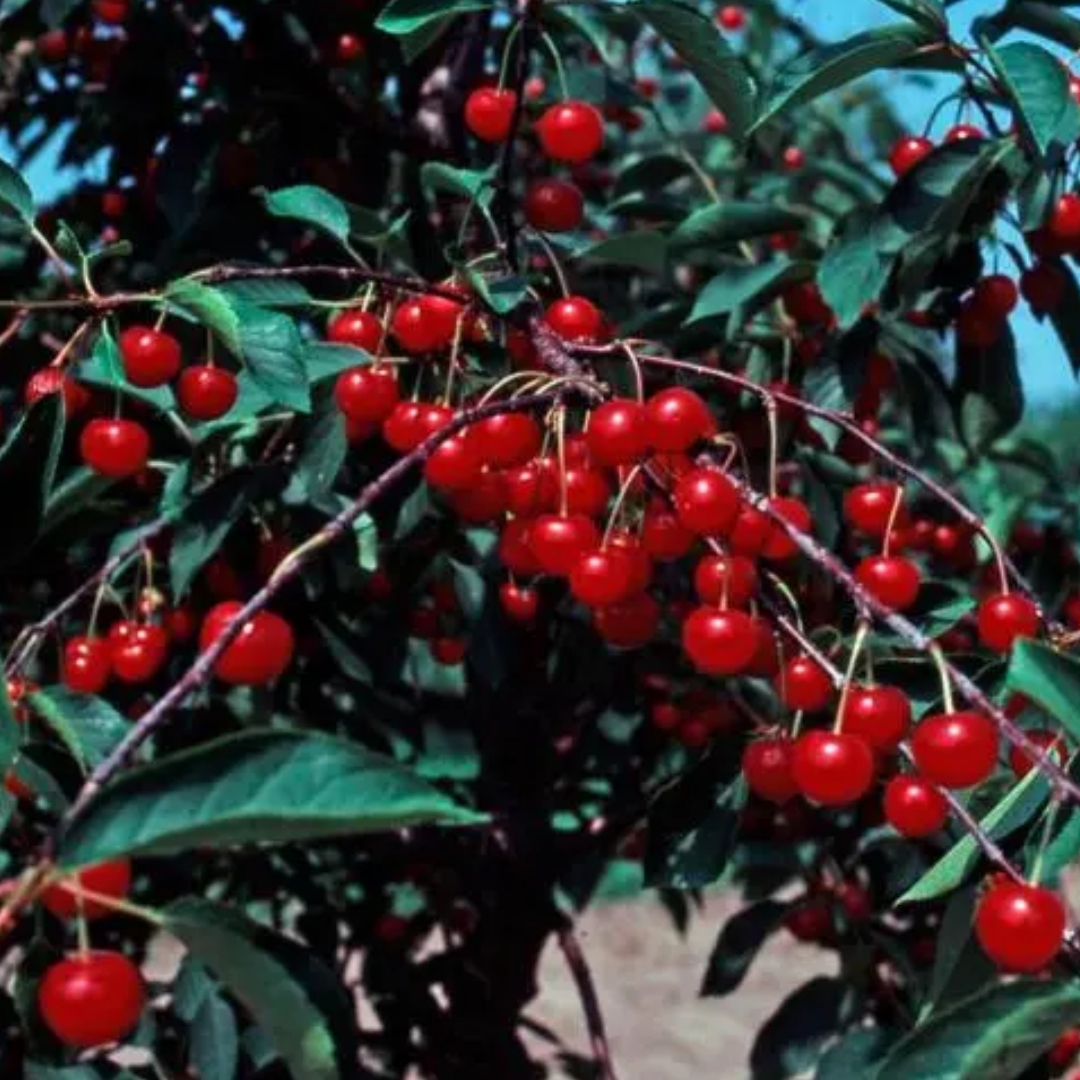
Montmorency Sour Cherry
Prunus cerasus ‘Montmorency’Montmorency Sour Cherry is the most widely grown and recognized tart cherry variety in North America, prized for its reliable production, classic flavor, and exceptional versatility. Often considered the industry standard for sour cherries, this cultivar is valued by home gardeners and commercial growers alike for its adaptability, cold hardiness, and consistent performance. Montmorency delivers dependable harvests and ornamental appeal, making it a cornerstone tree for edible landscapes and home orchards.
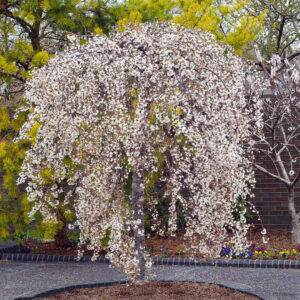
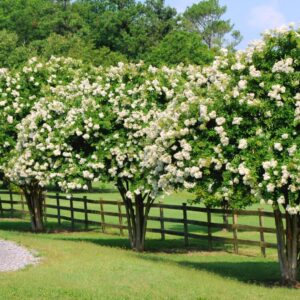
In early spring, Montmorency Sour Cherry is covered in abundant white blossoms that create a bright, eye-catching floral display. These blooms attract honey bees and other beneficial pollinators, supporting strong fruit development while adding seasonal beauty to the landscape. As foliage emerges, the tree fills in with fresh green leaves that form a rounded, open canopy, maintaining a tidy appearance throughout the growing season and allowing good light penetration for fruit ripening.
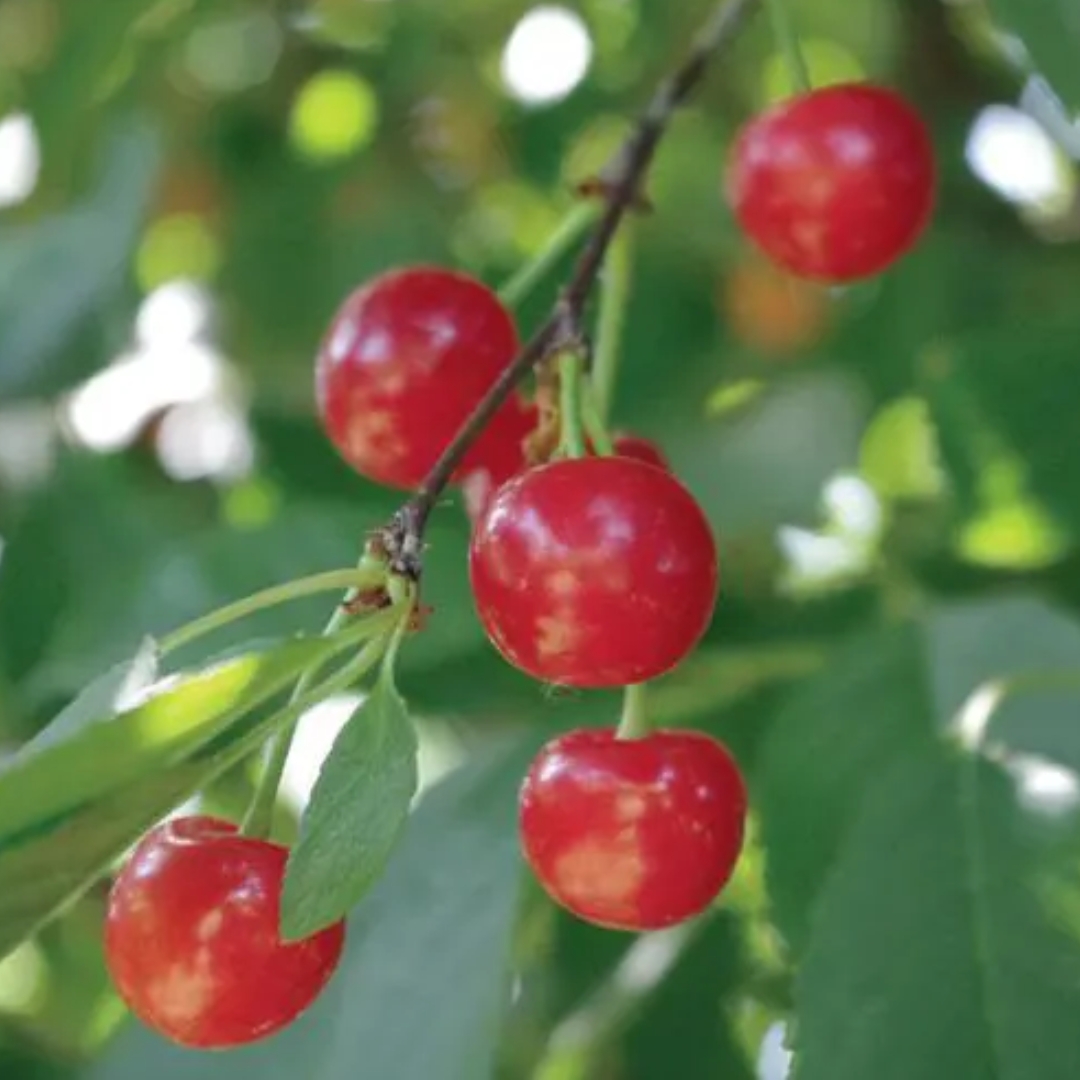
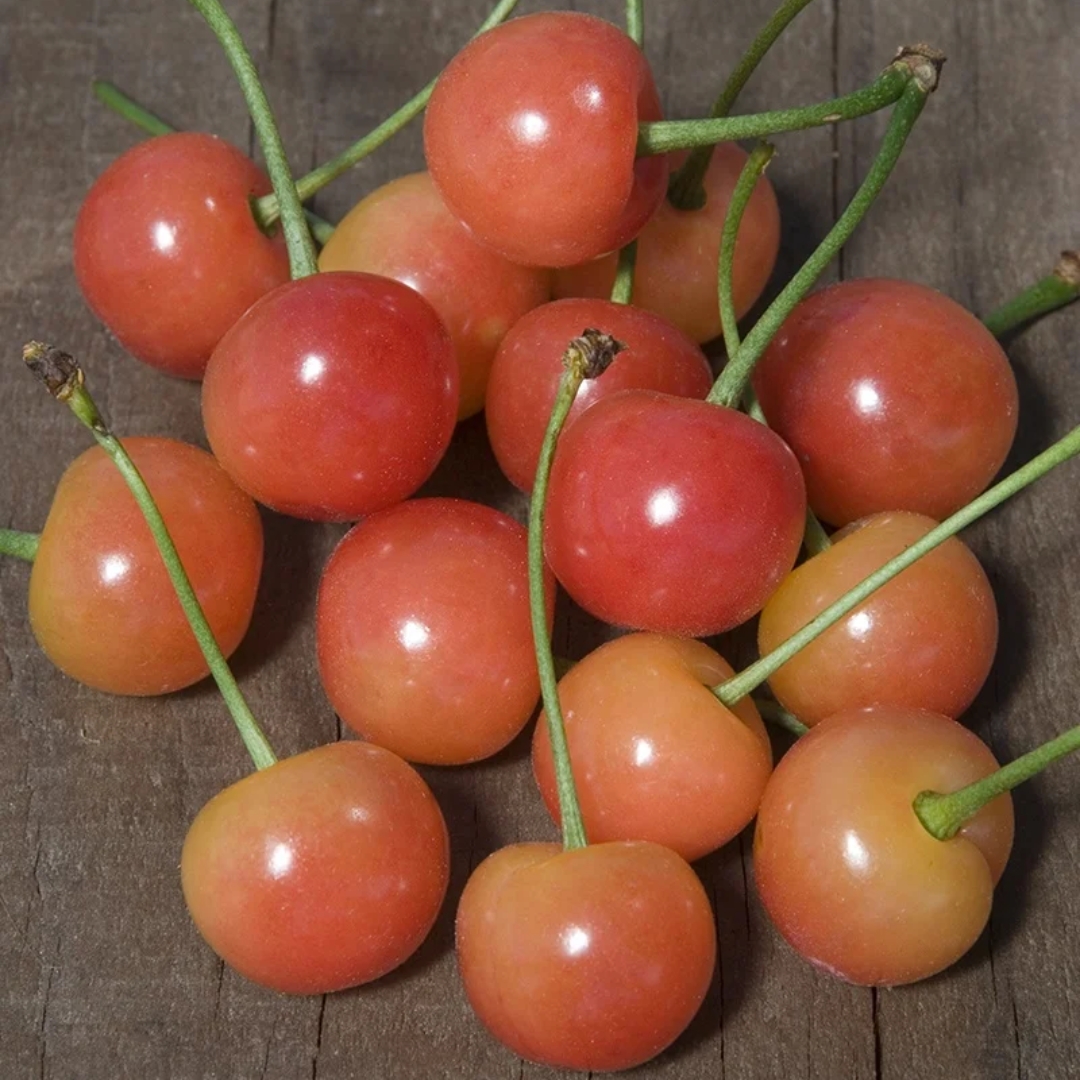
Fruit ripens in early to mid-summer and is medium-sized with bright red skin and pale yellow flesh. The cherries have a firm texture and a bold, tangy flavor that defines traditional sour cherry taste. Montmorency cherries are ideal for pies, tarts, sauces, jams, drying, and freezing, and they are also commonly used for juice and baking. Their balanced acidity and reliable quality have made them the preferred choice for both home kitchens and commercial processing.
Care Instructions:
Planting: Choose a full sun location with at least 6–8 hours of direct sunlight daily for optimal flowering and fruit production.
Soil: Plant in well-drained soil. Amend heavier soils to improve drainage and root development.
Watering: Water regularly during establishment and maintain consistent moisture during dry periods, especially during fruit development.
Fertilizing: Apply a balanced fertilizer in early spring before new growth begins. Avoid excessive nitrogen.
Pruning: Prune in late winter or early spring to remove dead or crossing branches and maintain an open canopy.
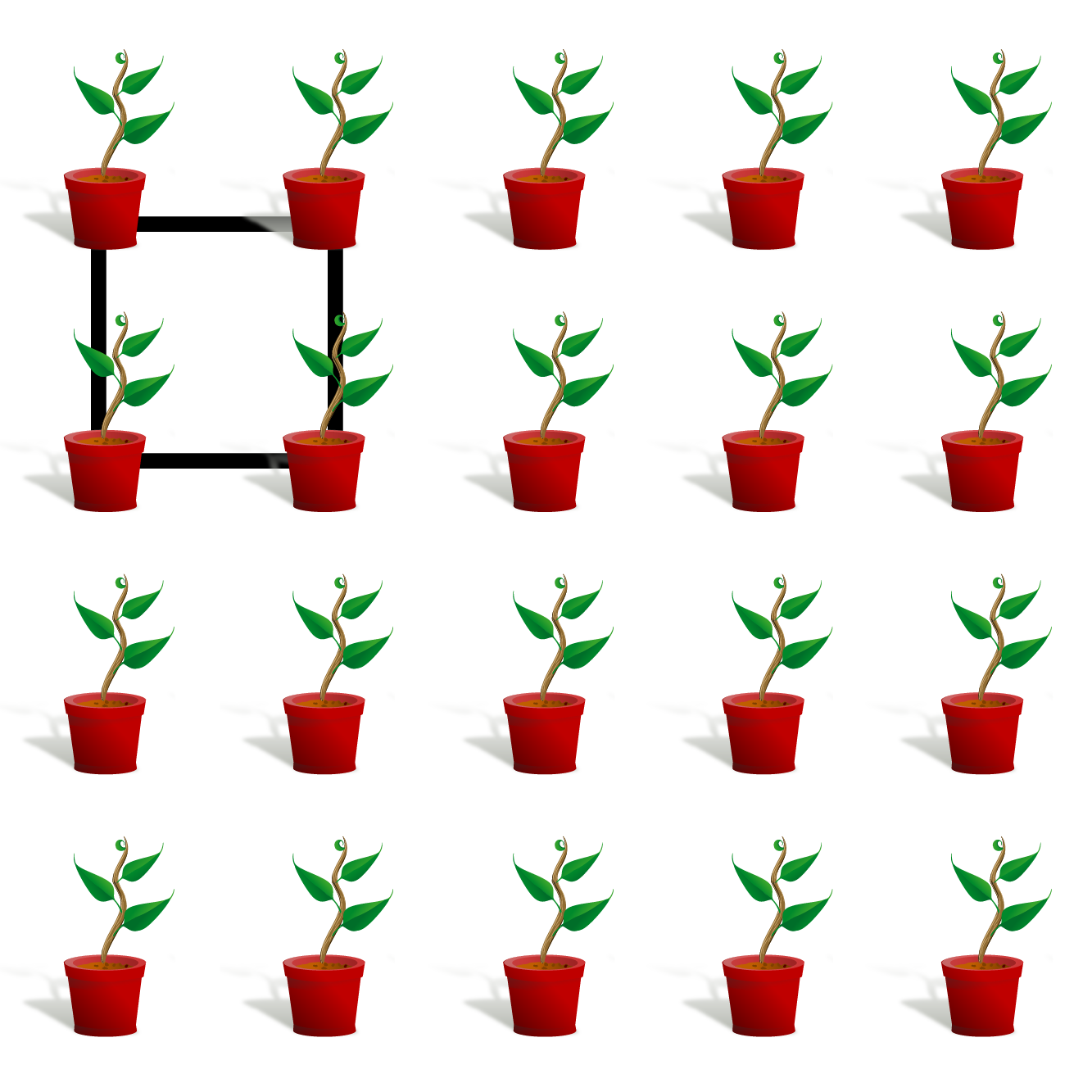
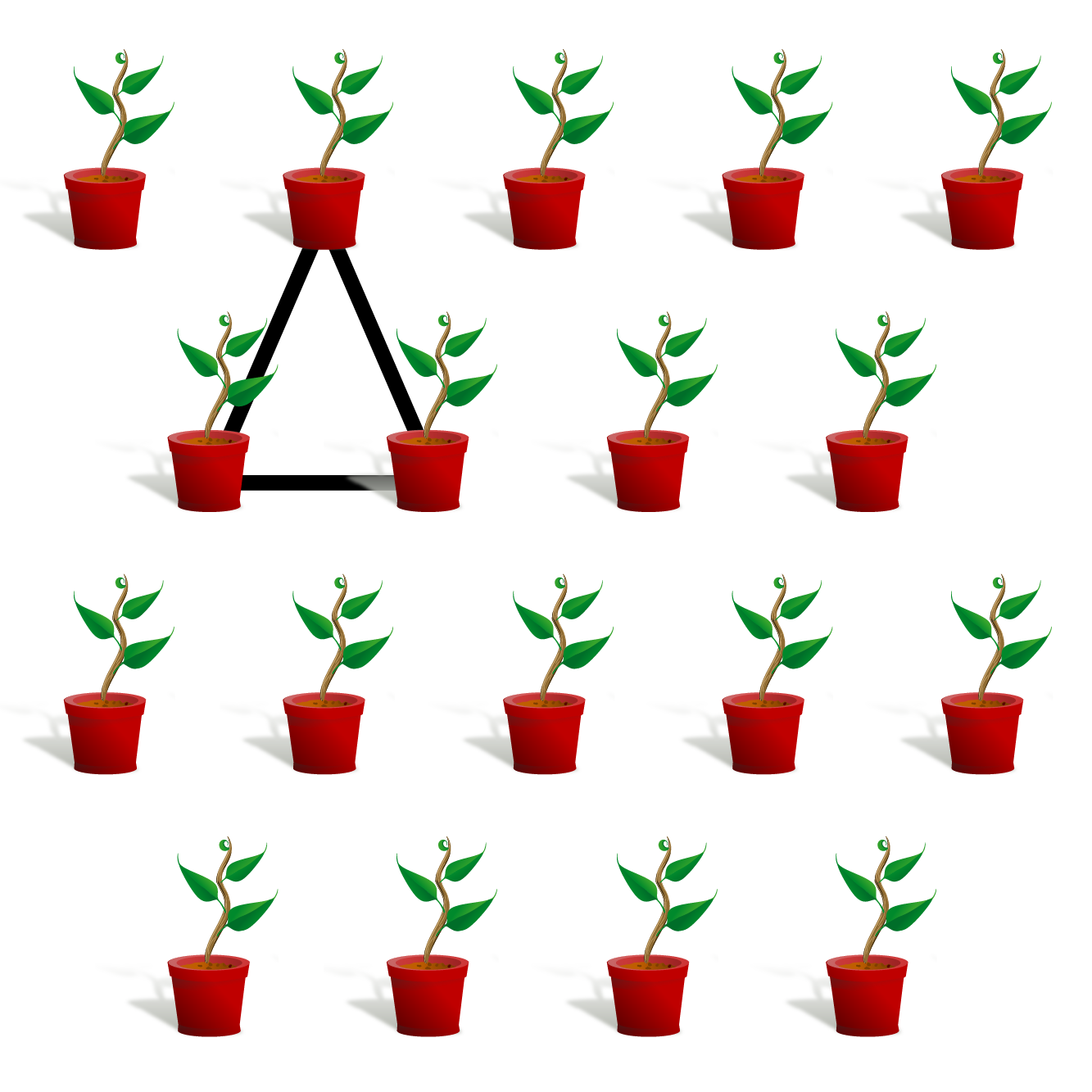
Spacing: Space trees 15–18 ft apart to allow room for mature size and airflow.
Maintenance: Mulch annually, monitor for pests and disease, and prune as needed to maintain structure and productivity.
Pollinator Required: No, this variety is self-fertile. It does not require another tree for pollination, but yields may improve when planted near compatible varieties such as Danube, Balaton, or North Star sour cherry.
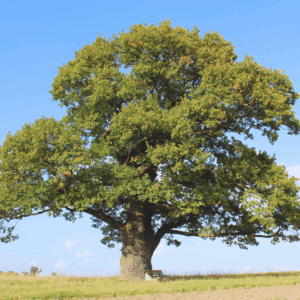
Montmorency Sour Cherry typically reaches 15–20 feet tall and wide at maturity, forming a manageable tree that is easier to care for than most sweet cherry varieties. It thrives in full sun and well-drained soil, where consistent moisture and good airflow promote healthy growth and dependable fruiting. While Montmorency is self-fertile, planting it near other sour cherry varieties can improve pollination efficiency and increase overall yield. With routine pruning and moderate care, this variety offers long-term productivity and classic orchard value.