

Fuyu Japanese Persimmon
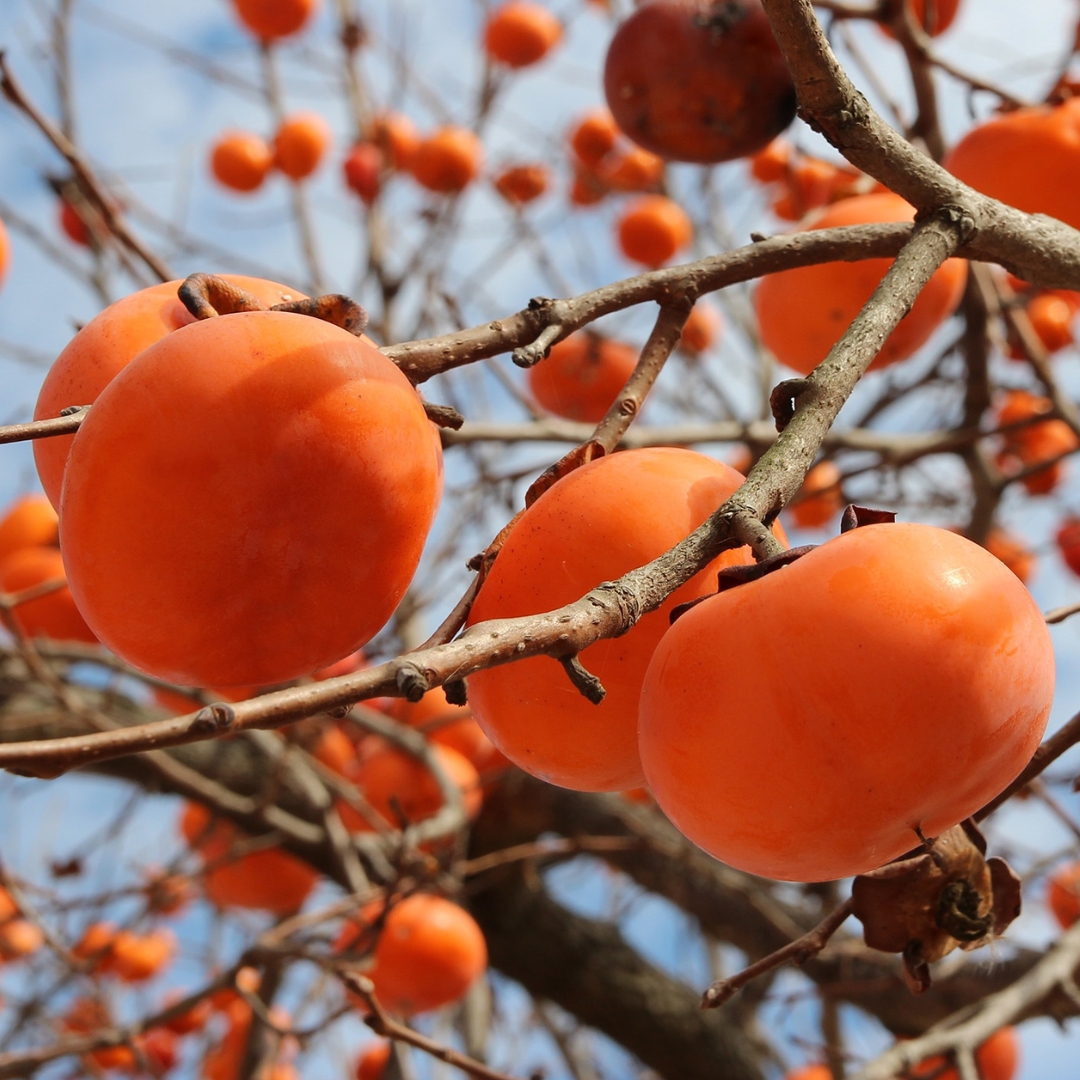
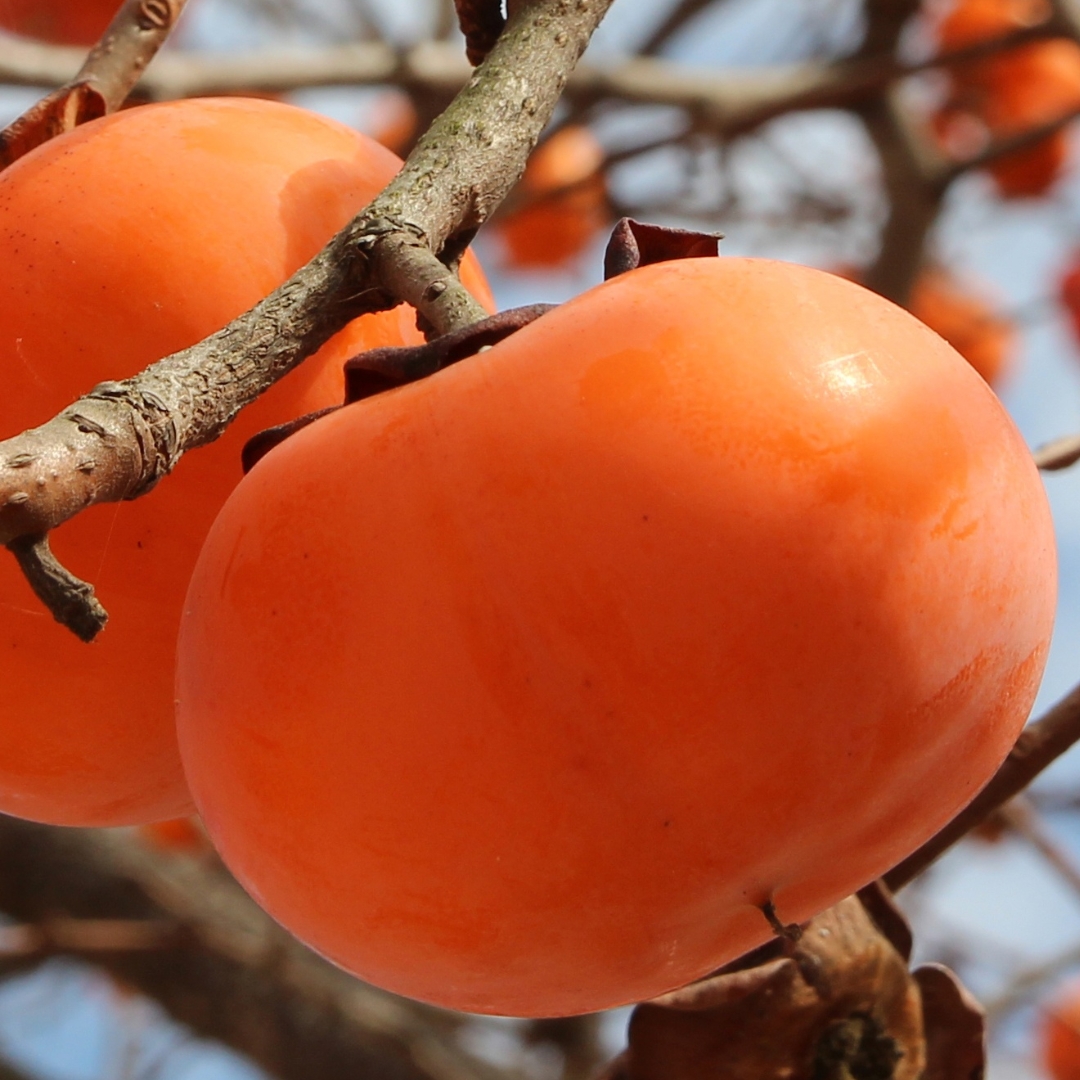
Diospyros kaki ‘Fuyu’Fuyu Japanese Persimmon is an exceptional fruit tree that combines ornamental beauty with delicious, early-to-late fall edible rewards. This outstanding deciduous tree produces abundant bright orange, non-astringent fruit that can be enjoyed crisp like an apple or left to soften for an even richer flavor. Because Fuyu fruit is non-astringent, it can be eaten at any stage once it turns deep orange. This trait makes it extremely popular for fresh eating, salads, baking, and preserving.
In spring, the tree bears inconspicuous yellowish-white flowers, attracting bees and other pollinators, though the floral display is subtle compared with the stunning fruit later in the season. In fall, the foliage transforms to brilliant shades of orange and red, providing attractive autumn color before leaves drop. Even after leaf drop, the showy orange fruit often remains on the bare branches into early winter, creating a striking visual effect in the landscape that resembles lanterns against the sky.
Fuyu Persimmon typically grows as a moderate-sized tree with a rounded, spreading canopy, often reaching 20–30 feet tall and wide in the landscape, though it can be kept smaller with pruning. Its balanced form allows it to serve as both a productive fruit tree and an ornamental focal point. While the tree is self-fertile, meaning a single tree will produce fruit without a pollinator, placing another kaki variety nearby can boost yields and fruit size.
Native to East Asia and widely grown in warm-temperate and subtropical regions, Fuyu thrives in full sun and moderate moisture. It is suitable for USDA Hardiness Zones 8–10 (and often successfully grown in Zone 7 with winter protection), making it a versatile choice for edible landscapes, orchard plantings, and specimen gardens.
Care Instructions:
Planting: Select a site with full sun exposure for best fruit production, flavor, and fall foliage color.
Soil: Plant in well-drained, fertile soil. Persimmons tolerate a range of soil types but dislike standing water.
Watering: Water deeply and regularly during establishment. Once mature, tolerate short drought periods but benefit from moisture during dry spells and fruit development.
Fertilizing: Apply a balanced, slow-release fertilizer in early spring before new growth begins. Avoid over-fertilizing foliage at the expense of fruit.
Mulching: Spread 2–3″ of organic mulch around the tree base to conserve moisture and moderate soil temperature. Keep mulch a few inches from the trunk.
Pruning: Prune in late winter or early spring while dormant to shape and remove dead, weak, or crossing branches; thinning helps light penetration.
Spacing: Space trees 20–30 ft apart to allow room for mature canopy and airflow.
Maintenance: Monitor for pests and diseases, and protect young trees from late spring frost or cold winter damage in marginal climates.
Pollinator Required: No. Fuyu is self-fertile and does not require a separate pollinator, though planting another persimmon nearby may improve yields. Compatible varieties include Chocolate, Coffee Cake, Gailey, Nishimura Wase, and Tamopan Persimmons.
Whether prized for its fruit, autumn color, or sculptural form, Fuyu Japanese Persimmon brings multiple seasons of appeal and culinary value, delighting gardeners and food lovers alike.