

Chinese Chestnut Tree
Castanea mollissimaThe Chinese Chestnut Tree is a long-lived, productive nut tree valued for its sweet, flavorful chestnuts, ornamental form, and resistance to chestnut blight. Native to Asia, this species has become the preferred chestnut for home orchards and edible landscapes in North America due to its adaptability, disease resistance, and consistent nut production. In addition to its edible value, the Chinese Chestnut offers a strong landscape presence with a broad canopy and attractive foliage.
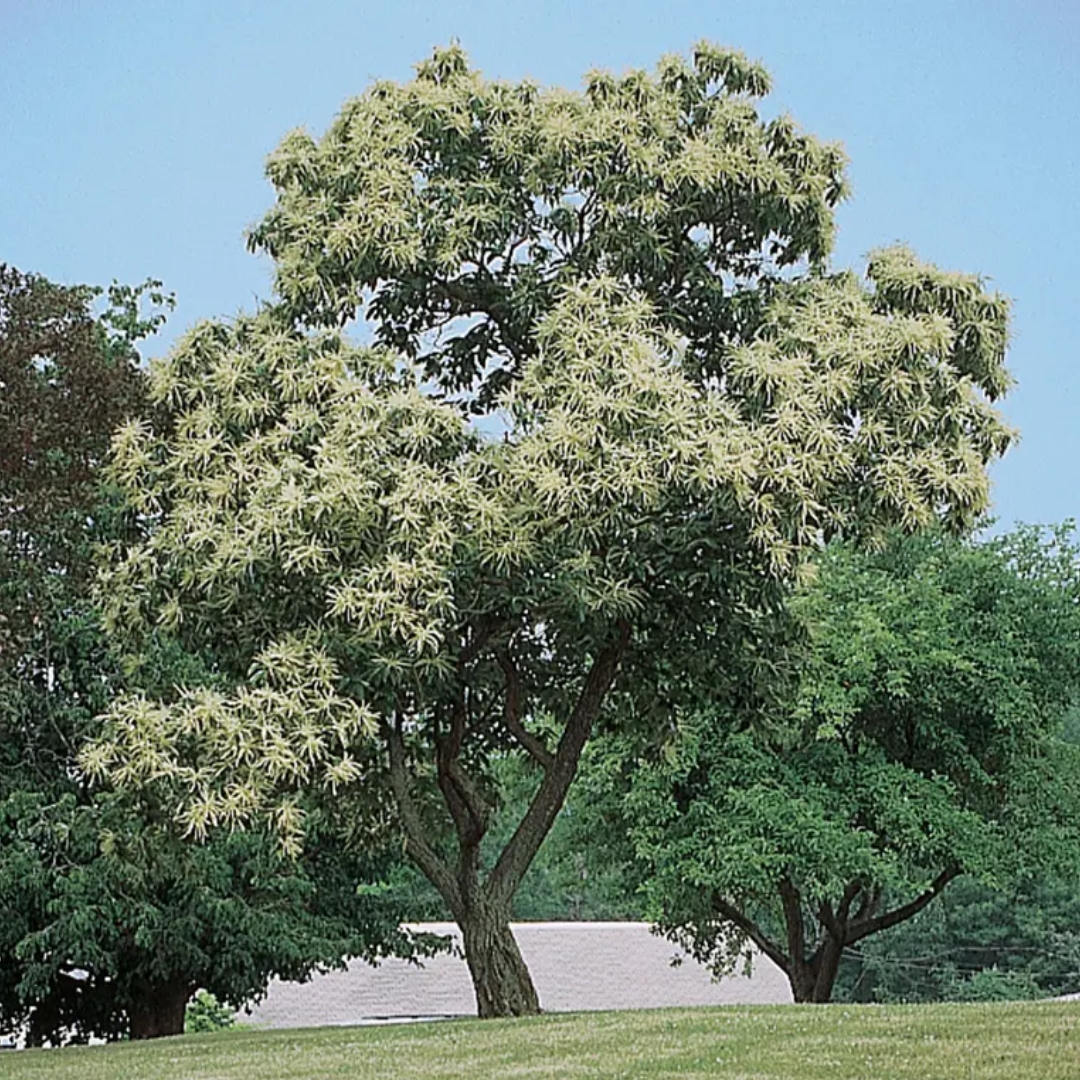
In late spring to early summer, Chinese Chestnut produces showy, creamy-white catkins that add visual interest and attract pollinators. These upright, lightly fragrant flowers contrast beautifully with the glossy green foliage and signal the beginning of nut development. Through summer, the tree forms a dense, rounded canopy that provides shade and structure in large landscapes.
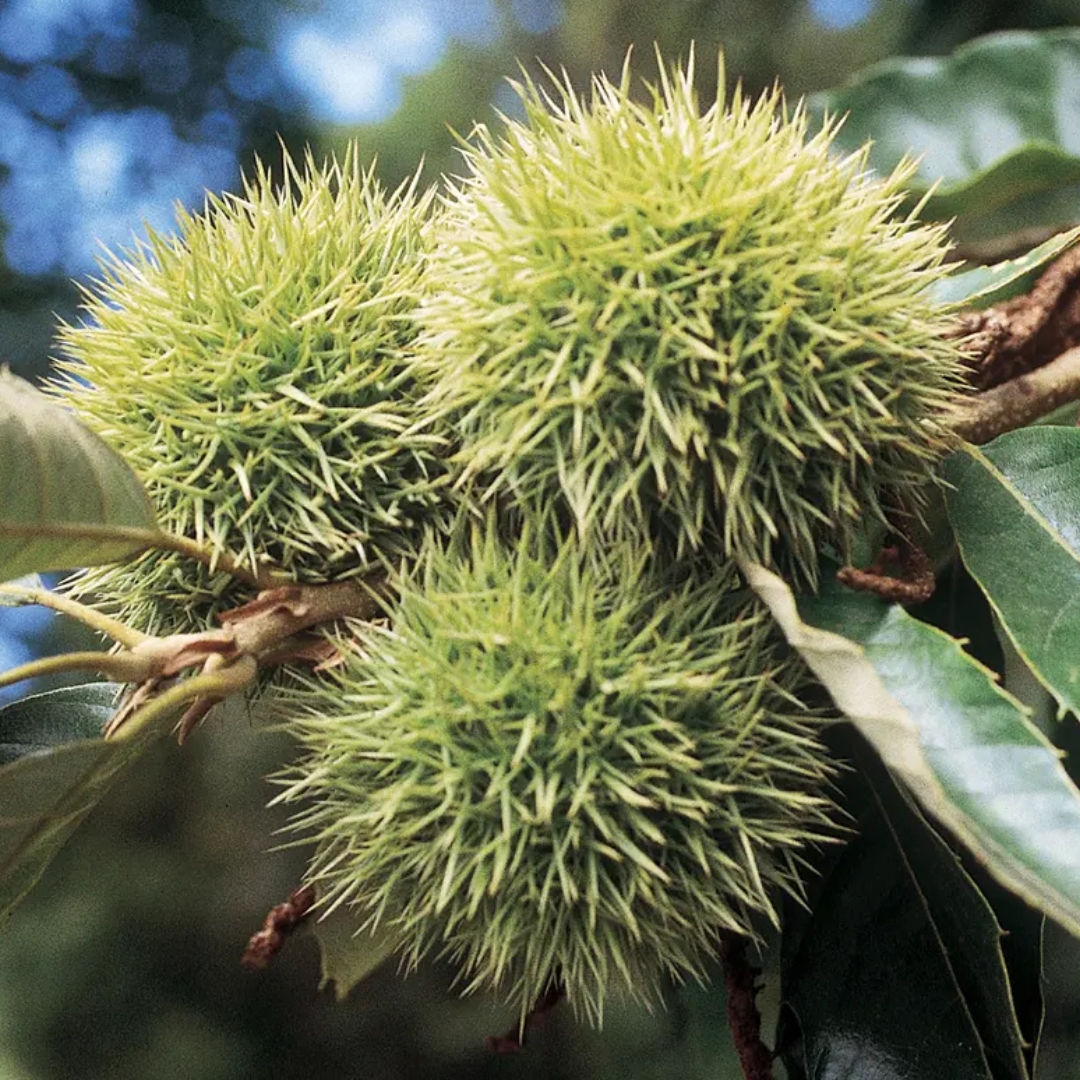
Chestnuts ripen in early to mid-fall and are enclosed in spiny green burs that split open when mature. The nuts inside are medium to large with smooth, dark brown shells and a sweet, rich flavor. Chinese chestnuts are excellent roasted, boiled, or used in stuffing, baking, and savory dishes. Compared to other chestnut species, they are easier to peel and have superior eating quality, making them especially desirable for home use.
Care Instructions:
Planting: Choose a full sun location with ample space for mature size and canopy spread.
Soil: Plant in well-drained soil. Avoid heavy clay or poorly drained sites.
Watering: Water regularly during establishment and during extended dry periods.
Fertilizing: Apply a balanced fertilizer in early spring based on soil test recommendations.
Pruning: Minimal pruning is required. Remove dead or damaged branches in late winter.
Spacing: Space trees 40–60 ft apart for proper airflow and pollination.
Maintenance: Mulch annually and monitor for pests and disease.
Pollinator Required: Yes, this variety requires cross-pollination with another Chinese chestnut variety, such as Qing, Eaton, or Peach, for reliable yield.
Chinese Chestnut typically grows 40–60 feet tall and wide at maturity, developing a strong, spreading form that makes it best suited to spacious properties. It thrives in full sun and well-drained soil and demonstrates excellent heat tolerance once established. Chinese chestnuts are not self-fertile and require cross-pollination between genetically different trees for nut production. Planting two or more compatible varieties ensures reliable yields and improved nut quality. With moderate maintenance, this tree provides decades of beauty and harvest.