

Cayuga Grape
Vitis vinifera ‘Cayuga White’Cayuga White grape is a highly productive, cold-hardy white wine grape vine developed at Cornell University for reliable performance in home vineyards, edible gardens, and landscape plantings. This classic French-American hybrid combines hardiness, disease resistance, and vigorous growth, making it an excellent choice for growers seeking multi-season interest and an abundant harvest of crisp, flavorful fruit.
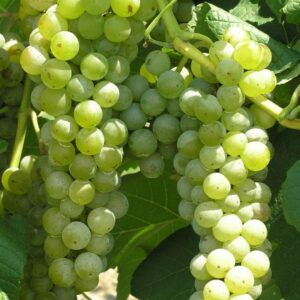
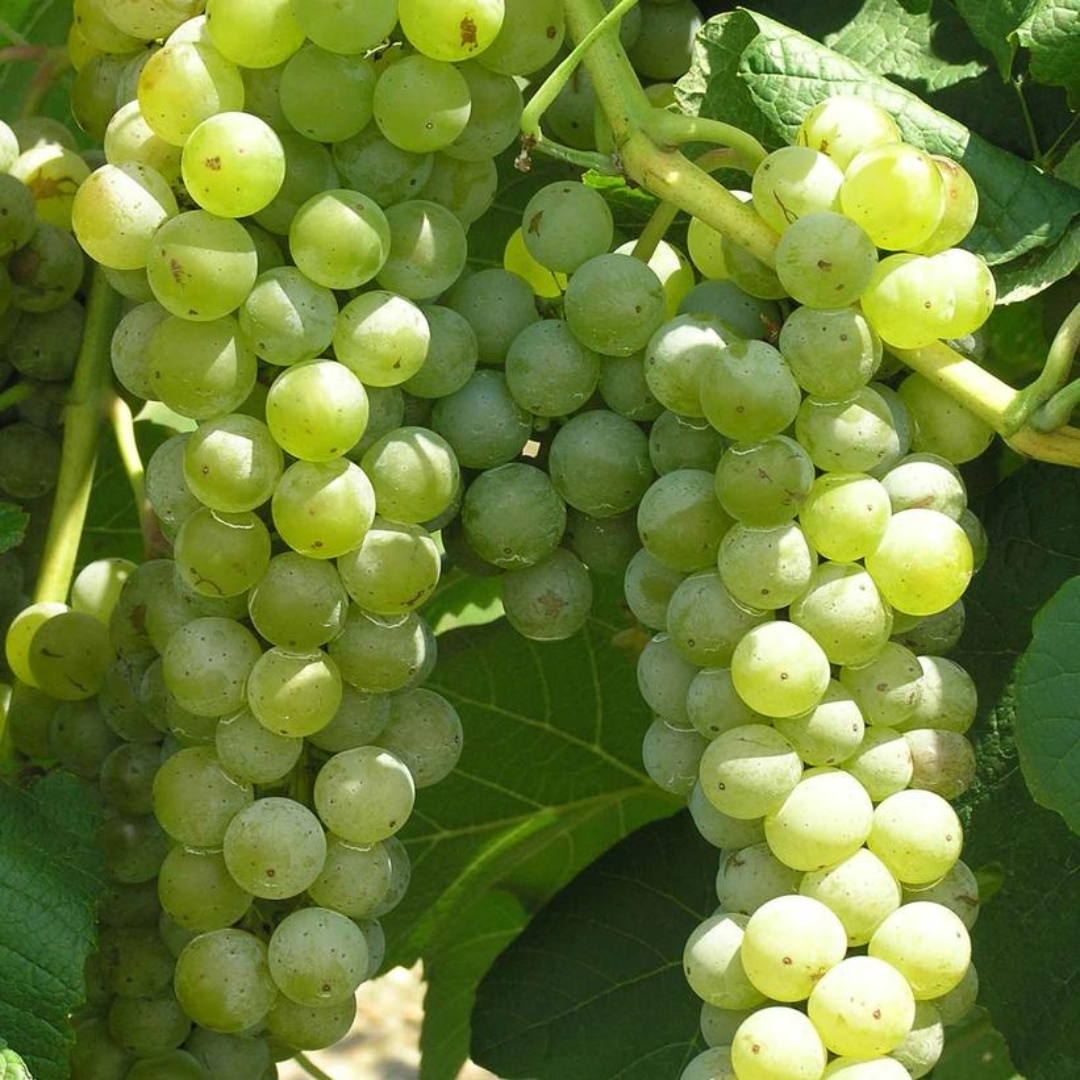
In late spring, Cayuga White produces small greenish flowers that attract pollinators such as honey bees and butterflies, laying the groundwork for a heavy cluster sets of grapes. Over summer, lush green foliage covers the climbing vine, providing attractive texture and shade on trellises, pergolas, arbors, and fences. By late summer to early fall (typically September), the vine ripens clusters of white to pale green grapes with a clean, fruity flavor. They are excellent for fresh eating but especially prized for making high-quality white wines, including dry, semi-dry, sparkling, and aromatic styles reminiscent of Riesling.
Cayuga White is known for its vigor and heavy yields, often producing large clusters when well-tended. The vine itself can reach approximately 10–12 feet tall and wide (or larger when fully trained), climbing or sprawling over supports. It thrives in USDA Hardiness Zones 5–8, where the cool climate and moderate moisture support robust growth and excellent fruit quality. This variety also offers excellent disease resistance, making it easier to grow than many other wine grape cultivars while still delivering outstanding flavor and productivity even for novice grape growers.
Care Instructions:
Planting: Choose a site with full sun exposure, at least 6–8 hours of direct sunlight daily, for maximum fruit production and quality.
Soil: Plant in well-drained, fertile soil. Cayuga White prefers slightly acidic to neutral soil and will not tolerate waterlogged conditions.
Watering: Water deeply and regularly during establishment and throughout dry spells. Consistent moisture during flowering and fruiting improves yield and berry size.
Fertilizing: Apply a balanced, slow-release fertilizer in early spring before new growth begins to support vigorous growth and fruit set.
Mulching: Spread a 2–3″ layer of organic mulch around the base to conserve moisture, moderate soil temperatures, and suppress weeds. Keep mulch a few inches from the crown.
Training & Support: Install a trellis, arbor, pergola, fence, or support structure at planting. Train young vines to the support to improve airflow, sunlight exposure, and fruit development.
Pruning: Prune annually in late winter or early spring while dormant. Remove old or weak wood, shape the vine, and encourage new canes for next season’s fruit.
Spacing: Space vines 10–12 ft apart or more, depending on support and training system, to allow airflow and avoid overcrowding.
Maintenance: Monitor soil moisture, mulching, and trellis training annually. Watch for common fungal diseases and manage with proper pruning and airflow.
Pollinator: No. This plant is self-fertile and will set fruit independently, though bees and other pollinators improve fruit set and yield.
Whether you’re planning a backyard vineyard, a grape arbor for shade and fruit, or a DIY wine-making project, Cayuga White grape provides exceptional edible and ornamental value throughout the growing season. Its attractive foliage and bountiful clusters make it a standout in edible landscapes as well as functional plantings designed for harvest.