
Big Red Peach
Prunus persica ‘Big Red’Big Red Peach is a popular, high-quality peach cultivar known for its large, sweet, and juicy fruit as well as its reliable productivity in home orchards. This freestone variety is prized for fresh eating, baking, preserving, and canning. Well-suited to USDA Hardiness Zones 5–9, Big Red Peach adapts to a range of soil types and climates, making it a dependable choice for backyard orchards.
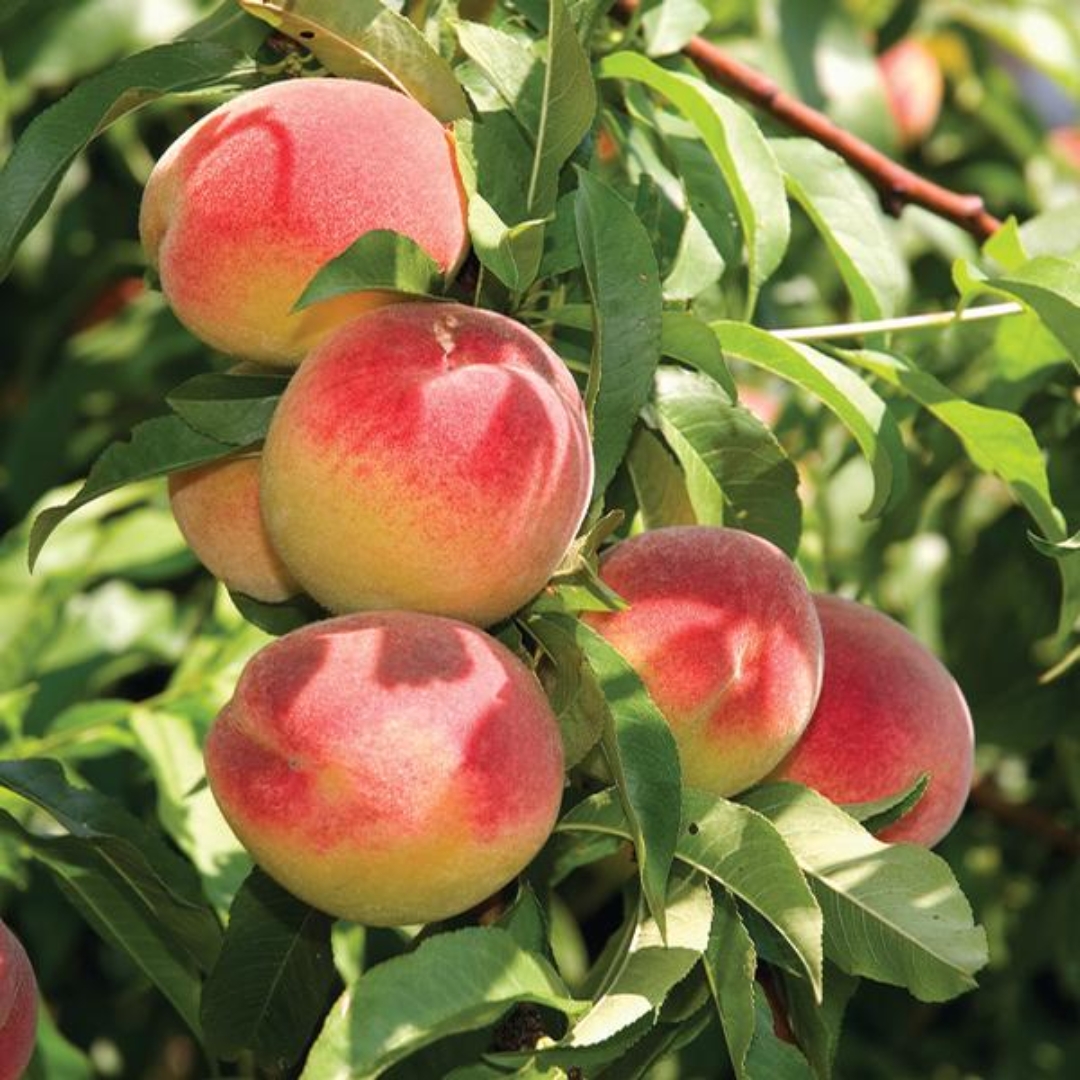
In spring, Big Red Peach produces showy pink blossoms that attract honey bees and other beneficial pollinators, ensuring a strong fruit set while adding ornamental beauty to landscapes. By mid- to late summer, the tree yields large, deep red-skinned peaches with golden-yellow flesh. The fruit is aromatic, sweet, and juicy, ideal for enjoying fresh, baking pies, or making jams and preserves.
The tree grows upright and vigorous, typically reaching 15–20 feet tall with a spread of 12–15 feet, providing abundant fruit production and a striking presence in the garden. Big Red Peach can serve as a specimen tree, in small garden plantings, or in backyard orchards alongside other peach and nectarine varieties. Proper pruning and maintenance help sustain health, encourage larger fruit, and improve overall yields.
Care Instructions:
Planting: Choose a location with full sun exposure. At least 6–8 hours of direct sunlight daily for best fruit production.
Soil: Plant in well-drained, fertile soil. Amend heavy clay soils with compost or organic matter to improve drainage and fertility.
Watering: Water deeply and consistently, especially during establishment and dry spells. Avoid waterlogging.
Fertilizing: Apply a balanced, slow-release fertilizer in early spring before new growth begins. Supplement mid-season if needed.
Mulching: Apply a 2–3″ layer of organic mulch (such as bark or wood chips) around the base to conserve moisture, suppress weeds, and regulate soil temperature. Keep mulch a few inches from the trunk.
Pruning: Prune in late winter while dormant to remove dead or crossing branches, open the canopy, and maintain a manageable tree size.
Spacing: Space trees 15–20 ft apart for mature growth, airflow, and easy access for harvesting.
Maintenance: Monitor soil moisture, apply mulch annually, and thin fruit as needed to improve size and reduce branch stress.
Pollinator Required: This tree is partially self-fertile. For best fruit set, plant alongside compatible peach or nectarine varieties such as ‘Redhaven,’ ‘Cresthaven,’ or ‘Belle of Georgia.’
Big Red Peach thrives in full sun and well-drained, fertile soil. Consistent watering, fertilization, and mulching are key to maintaining fruit quality and tree health. While partially self-fertile, planting additional peach varieties nearby can improve pollination and increase fruit set.