

Berry Blue Honeyberry
Lonicera caerulea ‘Berry Blue’Berry Blue Honeyberry is a cold-hardy, early-season fruiting shrub valued for its sweet, tangy berries and dependable performance in cooler climates. Belonging to the honeysuckle family (often called haskap or honeyberry), this plant originates from northern Asia and Eastern Europe, where it has historically thrived in frigid conditions, making it an excellent choice for gardeners in USDA Hardiness Zones 3–8 who want a unique edible shrub that ripens fruit earlier than many berries.
In spring, Berry Blue™ produces clusters of small cream-colored flowers that attract bees and other pollinators, adding ecological value to edible gardens and landscapes. These blossoms emerge before many other fruiting shrubs, setting the stage for early summer harvests, often around late May to early June, depending on climate and site conditions.
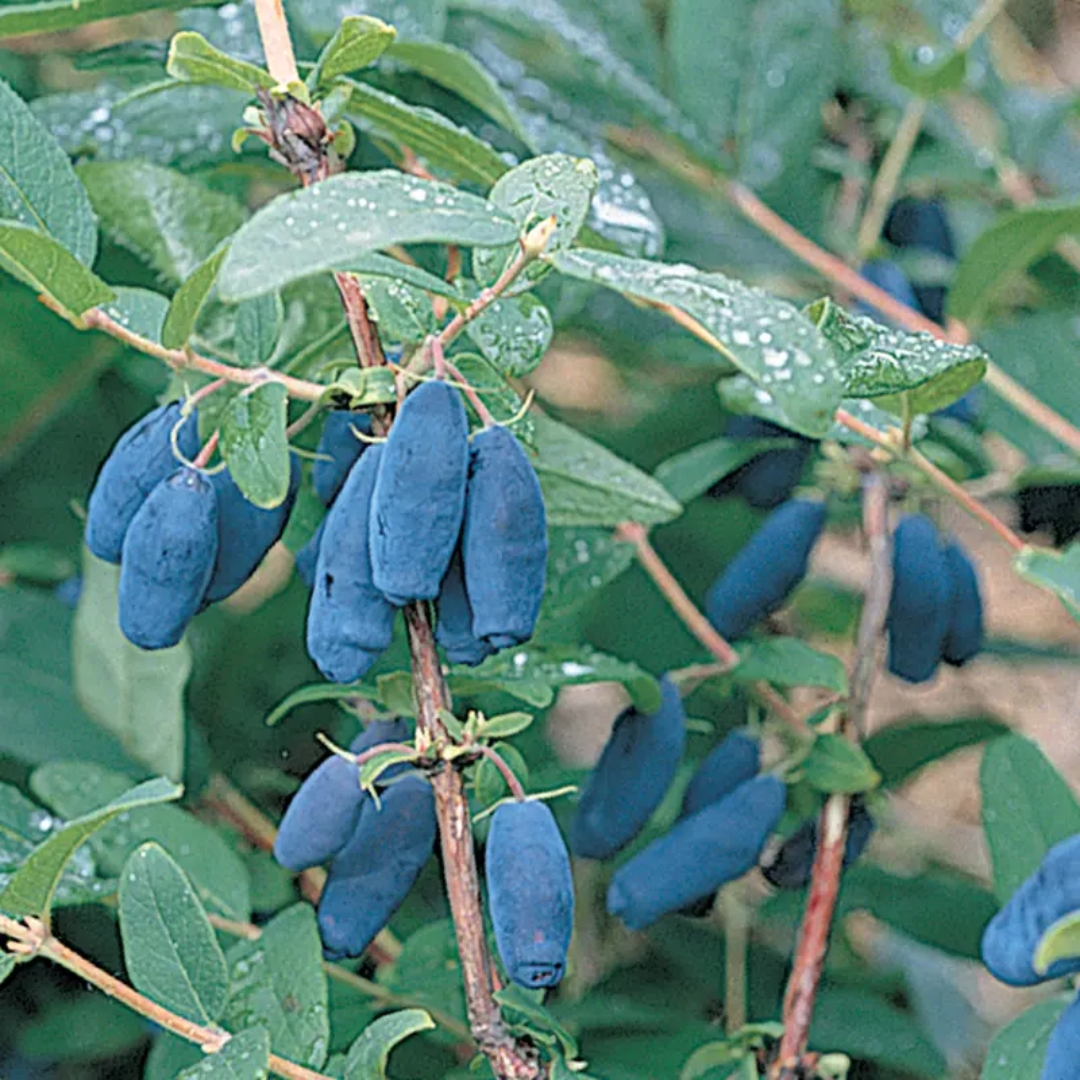
The berries themselves are a distinctive deep blue, sweet yet slightly tangy, and are flavorful both fresh off the bush and in preserves like jams, jellies, pies, and sauces. Their flavor is often likened to a combination of blueberry and currant, offering a slightly more exotic taste profile than standard blueberries.
Berry Blue™ Honeyberry typically forms an upright, deciduous shrub that can reach roughly 3–5 feet tall and 3–5 feet wide at maturity, fitting well into edible borders, berry patches, permaculture gardens, or mixed shrub plantings. Its attractive green foliage also contributes to summer garden texture, and the plant’s structural form provides winter landscape interest after leaves drop.
Care Instructions:
Planting: Select a site with full sun exposure for best fruit production and plant vigor (morning sun with light afternoon shade can still yield good results).
Soil: Plant in well-drained, fertile soil with a pH between about 5.5–7.5. Honeyberries appreciate moisture-retentive but not soggy ground.
Watering: Water deeply and regularly through establishment and dry periods. Maintain consistently moist soil without extended soggy conditions.
Fertilizing: Apply a balanced, slow-release fertilizer in early spring before new growth begins. Avoid over-fertilization that favors leaf growth at the expense of flowers and fruit.
Mulching: Spread 2–3″ of organic mulch around the base to conserve moisture, suppress weeds, and moderate soil temperatures. Keep mulch a few inches away from stems.
Pruning: Prune in late winter or early spring while dormant to remove dead wood, shape the plant, and encourage vigorous new growth.
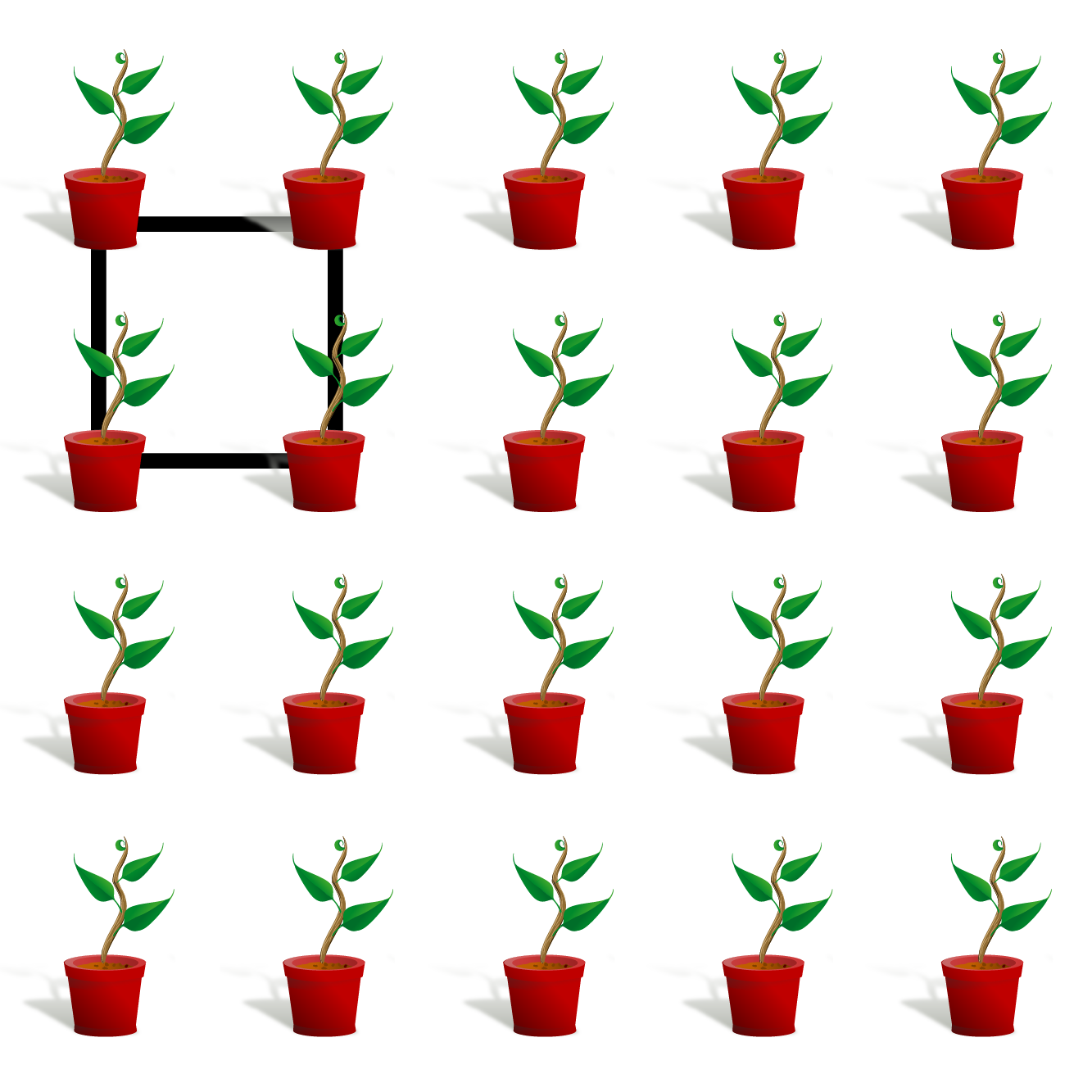
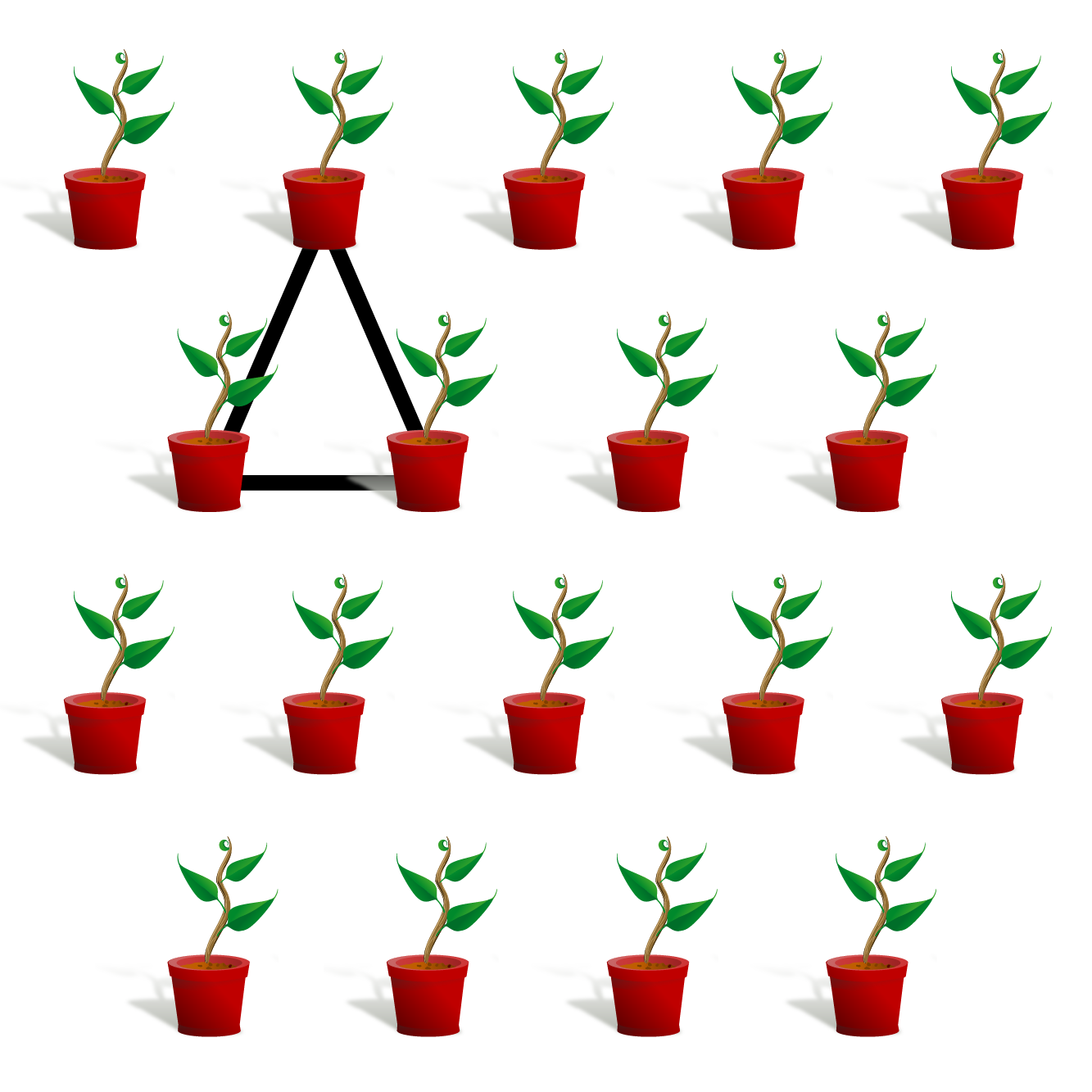
Spacing: Space plants 3–8 ft apart to allow room for mature growth and good airflow.
Maintenance: Monitor soil moisture and acidity, mulch annually, and prune older canes to maintain plant health and productivity.
Pollinator: Yes. This plant requires cross-pollination with the same or another honeyberry variety that blooms at the same time (e.g., Blue Belle, Aurora, Borealis) for best fruit set.
Because honeyberries require cross-pollination for fruit production, Berry Blue™ performs best when planted alongside another early-blooming honeyberry variety that flowers at the same time. This requirement ensures robust berry set and overall yield.