

Bartlett Pear
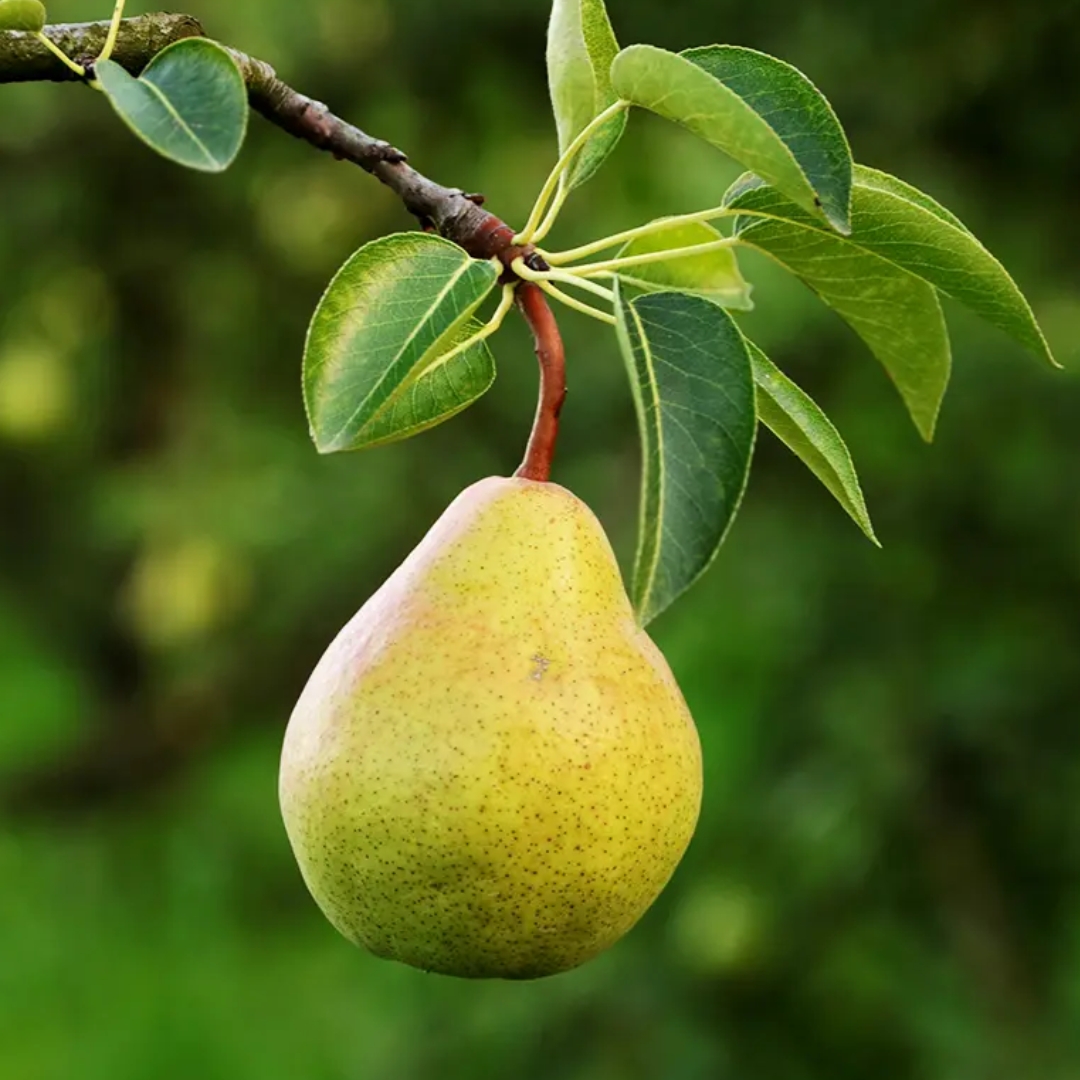
Pyrus communis ‘Bartlett’Bartlett Pear is one of the most widely recognized and beloved pear varieties, renowned for its classic pear shape, smooth yellow skin, and exceptionally sweet, aromatic flavor. Often considered the standard by which other pears are judged, this European pear variety has long been favored for both fresh eating and culinary use. Its reliable productivity, attractive spring bloom, and versatile fruit make it a cornerstone of home orchards and edible landscapes.
In early spring, Bartlett Pear trees are covered in clusters of showy white blossoms that create a striking floral display while attracting pollinators to the garden. These blooms appear before the foliage fully emerges, adding early-season interest and setting the stage for successful fruit development. As the season progresses, the tree develops a dense canopy of glossy green leaves that provide structure and ornamental value throughout summer.
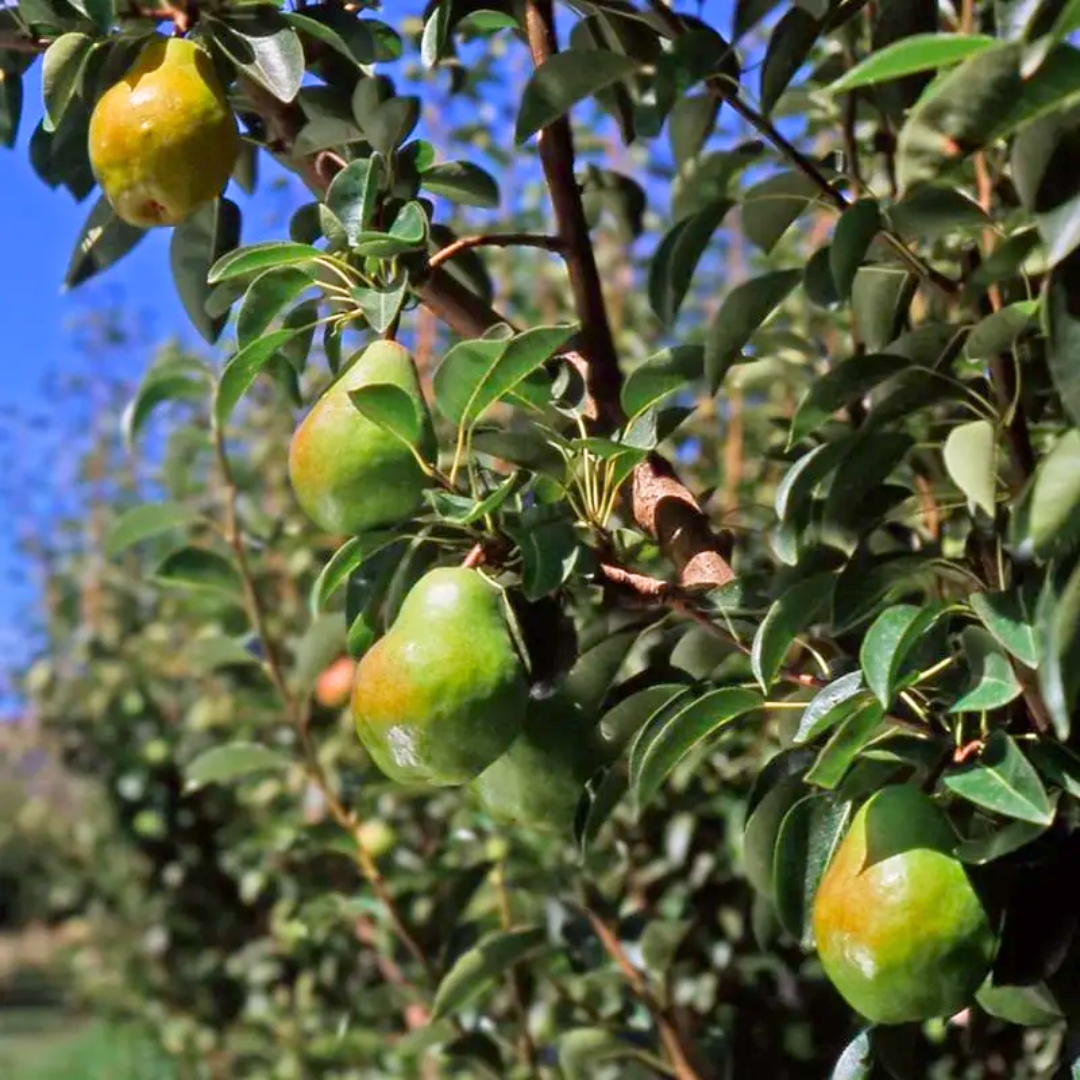
Fruit ripens in late summer, earlier than many other pear varieties, and is medium to large with smooth green skin that turns golden yellow as it matures. The flesh is creamy white, juicy, and tender with a rich sweetness and pronounced pear aroma. Bartlett pears are excellent for fresh eating, canning, baking, sauces, and preserves, and are especially well known for producing high-quality canned pears due to their flavor and texture. The fruit also ripens well off the tree, allowing for flexible harvest timing.
Care Instructions:
Planting: Choose a full sun location with at least 6–8 hours of direct sunlight daily to encourage flowering and fruit production.
Soil: Plant in well-drained soil. Amend heavy or clay soils to improve drainage and root health.
Watering: Water regularly during establishment and maintain consistent moisture during dry periods and fruit development.
Fertilizing: Apply a balanced fertilizer in early spring before new growth begins.
Pruning: Prune annually in late winter to early spring to remove crossing branches and maintain an open canopy.
Thinning: Thin fruit after set to improve fruit size and reduce limb stress.
Spacing: Space trees 15–20 ft apart to allow for mature growth and adequate airflow.
Maintenance: Mulch annually, monitor for pests and disease, and prune consistently.
Pollinator Required: Yes, this variety requires cross-pollination with compatible European pear varieties such as Bosc, D’Anjou, or Comice.
Bartlett Pear trees typically reach 15–20 feet tall and wide, forming an upright to spreading habit that fits well in backyard orchards and mixed edible plantings. They perform best in full sun with well-drained soil and consistent moisture during fruit development. This variety is not self-fertile and requires cross-pollination from another European pear cultivar to produce fruit. When planted with a compatible pollinator and given routine care, Bartlett Pear delivers dependable harvests with moderate maintenance year after year.